Freed October 7 Hostage Eli Sharabi Recounts 491 Days of Captivity in Gaza in New Memoir
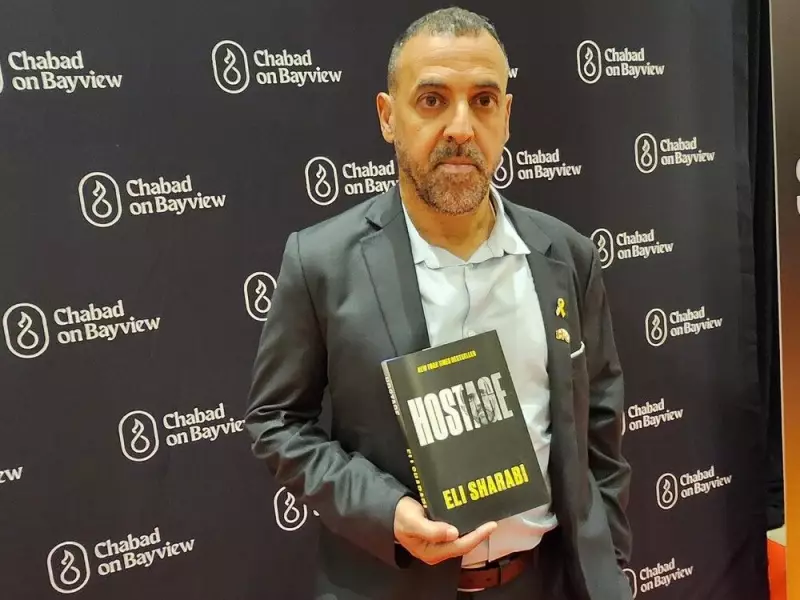
In a harrowing new memoir titled Hostage, Eli Sharabi, a freed Israeli captive, details the 491 days he spent as a prisoner of Hamas in Gaza. The Yemenite-Moroccan Israeli, who appeared at a Toronto-area speaking event on January 21, 2026, organized by the Chabad on Bayview synagogue, shares his traumatic experiences of starvation, beatings, and underground confinement in Hamas tunnels.
A Tragic Decision to Surrender
On October 7, after seeing phone messages and videos that kibbutzim were being ravaged, Sharabi believed surrendering himself to Hamas terrorists would save his British-born wife, Lianne, and their two daughters, Noyia and Yahel. Instead, he was dragged from their Kibbutz Be’eri home and spent over 16 months in captivity. Upon his release in February 2025, he learned the devastating truth: his family had been murdered minutes after he was taken.
"The hardest part came when I heard of the death of my wife and daughters," Sharabi told the National Post. "And the part where I’m going to the graveyard to apologize, and to promise them that nobody will forget them." He emphasized that writing the book was a way to cherish their memories and ensure the facts of history remain unchanged.

Life in Captivity: Starvation and Psychological Terror
Sharabi's memoir recounts the brutal conditions he endured. He described surviving on just one meal a day—often a pita and a half, a bowl of pasta, or rice—while his captors ate four to five times daily. He witnessed dozens of boxes of humanitarian aid that he believes were stolen by Hamas. His weight plummeted from 70 kilograms on the day of his capture to a mere 44 kilograms upon release.
The psychological torment was relentless. Sharabi, fluent in Arabic, served as a translator between other hostages and the terrorists, navigating a delicate and volatile relationship. "They can change their minds in a second," he said. Hostages were subjected to psychological terror, including false claims that the Israeli government had abandoned them and that Israel had been destroyed. "You have to be very, very strong, day after day, to not pay attention to things like that," Sharabi stressed.
Finding Strength and Faith Underground
Despite describing himself as "not religious," Sharabi turned to Jewish prayers during his ordeal. He began saying prayers while in the terrorists' car and continued daily in captivity, including special Sabbath prayers and rituals. "All these ceremonies just remind us how we are Jewish, which gave us lots of strength as a group," he told the audience at the Chateau Le Jardin Event Venue in Woodbridge, Ontario.
He shared a profound spiritual awakening: "I found God again 50 metres underground. I felt someone protecting me." Sharabi recounted at least ten instances where he believed he was near death but felt something keeping him alive, expressing deep gratitude for these moments.
A Legacy of Testimony and Remembrance
Sharabi's memoir is the first full-length account by a released hostage from the October 7 massacre. He includes stories of improvised quiet acts of defiance to keep fellow prisoners alive in spirit. Reflecting on his unexpected fame, he said, "I didn’t choose to be famous, you know, and unfortunately, it’s become like that. I would prefer not to be." However, he felt compelled to speak for the remaining hostages and write his testimony to preserve historical accuracy.
Recalling every aspect of his captivity was not difficult, Sharabi noted, as it will "be with me all of my life. It’s not something you forget." His story serves as a powerful testament to resilience and the enduring impact of trauma, while honoring the memory of his lost loved ones and fellow hostages.