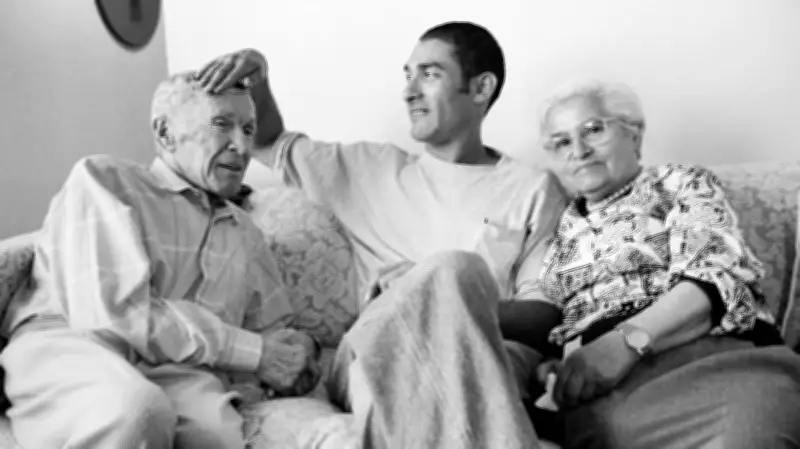
Daniel Gamburg, a documentary filmmaker and photographer, shares a deeply personal story about his grandparents, Tsipa and Volf, and how photography helped him navigate their final years. Diagnosed with dyslexia at 13, Gamburg found solace in images, eventually using his camera to document the lives of his grandparents, who survived World War II and faced the challenges of Alzheimer's and Parkinson's.
Early Life and the Power of Images
Words never came easily to Gamburg, but pictures provided a way to hold feelings without explanation. In college, he studied great photographers and learned that there is no such thing as a detached observer. His photojournalism class assigned a portrait of someone close to him. His father suggested his grandparents, saying, "They lived through tragic times. You can learn something from them — maybe something about love."
Tsipa and Volf: A Love Story
Tsipa, nicknamed Tsipachka, was a short, sweet woman with soulful eyes and large apple cheeks. She had a simple rule: "You sit and eat, and I'll ask a few questions." Over matzo ball soup, she would gently interrogate Gamburg about his life. When he was heartbroken, she advised, "Love needs to be earned. It takes commitment and work." She then placed almond nougat See's candies on the table, saying, "This will help you forget her."

Volf, her second husband, was a hunchback from a childhood injury who coped by singing Yiddish songs and telling jokes. Their marriage was arranged after both lost their spouses and children in World War II. Volf often joked, "We went through fire and water, and copper pipes!"
Documenting the Decline
When Gamburg arrived to take their portrait, Tsipa was in the kitchen while Volf sang into a tape recorder, later revealed to be his attempt to hold onto his memory as Alzheimer's set in. Gamburg asked Tsipa, "You've been living with Volf for 49 years — do you love him as your husband?" Volf exclaimed, "She's my life!" But Tsipa replied, "What is love? You can only love once in your life. ... With grandfather, we lived a very difficult life. We lived through fire and ice together. One thing that you must learn is that romance comes and goes, maybe it comes back, maybe not. In the end it's all about conscience and commitment to each other. I show my love by cleaning and cooking for him."
Over the years, as Volf's Alzheimer's worsened, Tsipa cared for him with unwavering commitment. Gamburg continued to film and photograph their story, finding that these conversations became a balm for Tsipa's trauma.
Moments of Joy and Sorrow
One day at Safeway, Volf wandered off and was found by police. He broke down crying, embarrassed and afraid. Gamburg's father tried to lighten the mood by asking if Volf would like his picture taken. Another time, at a senior daycare center, the song "Jitterbug" played, and a nurse asked Volf to dance. For a few minutes, music bypassed the damaged areas in his mind, restoring his sense of humor.
When Volf could no longer be cared for at home, he was moved to an assisted living facility. Tsipa visited often, feeding him and repeating her mantra: "Love is conscience and commitment."
The Final Goodbye
Gamburg did not photograph Volf in his final stage, feeling it was intrusive. When his father called for the final visit, Gamburg left his camera behind. Volf lay under a white sheet, eyes closed. His father spoke softly in Russian, "Papa ... do you hear me?" Volf's eyelids opened, revealing his blue eyes. His father asked him to squeeze his hand if he understood, but Volf stared blankly. Watching this, Gamburg realized he was not looking at his father, but at someone else's son — a kid searching for a way to mourn.
That night at a Chinese restaurant, his father received a call: Volf had passed away. At the funeral, Tsipa tried to jump into the grave, and his father held her tight.
Tsipa's Final Days
A year later, Tsipa was admitted to the same home. She helped other patients and held their hands as they grieved. At 90, Parkinson's and pneumonia had weakened her. She begged her father to stop treatment, ready to let go. On May 11, 2003, Gamburg visited her for the last time. Unlike Volf, Tsipa was fully conscious and gave her consent: "From beginning to the end, Daniel, you have my consent."

As he photographed her, memories flooded back. His father leaned in and whispered, "Tsipachka..." She opened her eyes and said, "Misha. Oh, Mishachka," then shared a vision of her first husband, Yakov, at a train station, asking her to jump aboard. She closed her eyes and fell asleep. Gamburg felt shame for recording the moment but finished the roll and left.
The next day, Tsipa passed away. Gamburg stashed the negatives in a box, unable to look at them for 22 years.
Finding Closure
After his son Sasha was born, named after Tsipa's 4-year-old who died in the war, Gamburg began to unarchive his photography. He found the missing negatives and saw Tsipa again. The shame disappeared. He realized that the "recording-angel of death" was just a scared kid trying to cope. Photography gave him a way to connect, savor moments, and love his grandparents. Now, these photos have brought them back, and he has found the courage to write down these memories for his son.