Vatican Completes Major Restoration of Michelangelo's Masterpiece
In a significant art conservation achievement, the Vatican has successfully removed a persistent and damaging salt film from Michelangelo's iconic fresco, "The Last Judgment." The restoration work, which took place in the Sistine Chapel, addressed a white crystalline coating that had gradually formed on the surface of the 16th-century masterpiece over hundreds of years.
Addressing Centuries of Accumulation
The salty deposit, primarily composed of calcium carbonate and other minerals, had developed through a combination of environmental factors and previous restoration attempts. This film not only obscured the vibrant colors and intricate details of Michelangelo's work but also posed a long-term threat to the fresco's structural integrity. The Vatican's conservation team employed specialized techniques and careful manual cleaning to dissolve and remove the salt layer without harming the underlying paint.
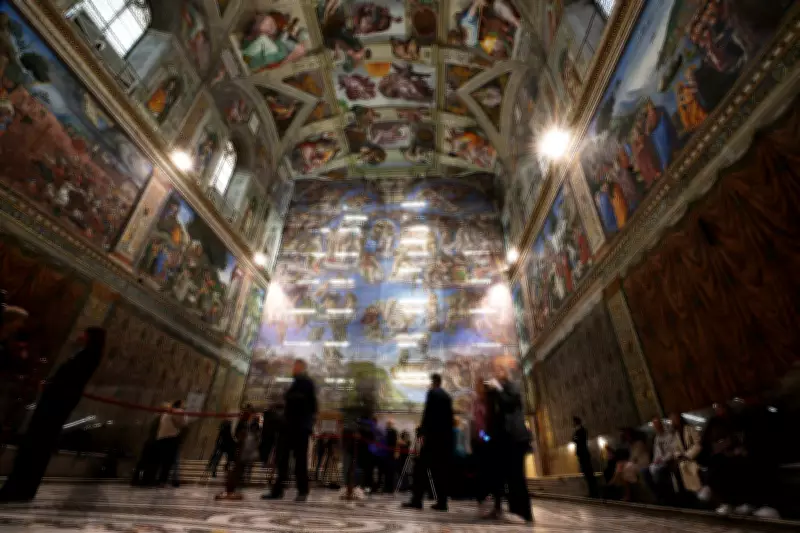
The restoration process was unveiled to the press on February 28, 2026, with scaffolding and protective coverings still visible in the chapel. A large screen displaying a digital replica of the fresco was used to illustrate the conservation work being performed behind the scenes. This approach allowed experts to continue their meticulous efforts while minimizing disruption to the sacred space.

Preserving a Cultural Treasure
"The Last Judgment," painted by Michelangelo between 1536 and 1541, covers the entire altar wall of the Sistine Chapel and is considered one of the most important works of Renaissance art. The recent conservation project represents the latest chapter in the fresco's preservation history, following major restorations in the 1990s that removed centuries of candle soot and grime.
This latest intervention specifically targeted the salt efflorescence that had re-emerged following those earlier cleanings. The phenomenon occurs when soluble salts within the plaster and paint layers migrate to the surface as moisture evaporates, leaving behind crystalline deposits that can eventually cause flaking and paint loss if left untreated.
Technical Challenges and Solutions
The conservation team faced several complex challenges:
- Identifying the precise chemical composition of the salt film
- Developing cleaning solutions that would dissolve the deposits without affecting the original pigments
- Working on the massive scale of the fresco, which measures approximately 13.7 by 12.2 meters
- Ensuring minimal disruption to the functioning of the Sistine Chapel as an active place of worship
The successful removal of the salt film has revealed previously obscured details in Michelangelo's work, including subtle color variations and finer elements of the composition that had been dulled by the white coating. Art historians anticipate that the restoration will provide new insights into Michelangelo's techniques and the original appearance of this monumental work.
The Vatican Museums' conservation department has indicated that ongoing monitoring will be essential to prevent the reformation of salt deposits, with climate control systems in the Sistine Chapel playing a crucial role in maintaining stable environmental conditions for the preservation of this irreplaceable cultural heritage.