Canadian Art World Mourns Loss of Influential Figure Eric Cameron at 90
The Canadian contemporary art community has lost one of its most distinctive voices with the passing of Eric Cameron at the age of 90. The influential artist and educator died on January 29, 2026, in Didsbury, Alberta, leaving behind a substantial legacy that has shaped generations of artists across the country.
A Transatlantic Journey in Art and Education
Born in Leicester, England in 1935, Cameron made the significant decision to move to Canada in 1969, where he would establish himself as both a groundbreaking artist and dedicated educator. His teaching career spanned several prestigious institutions, beginning with positions at the University of Guelph and the Nova Scotia College of Art and Design.
From 1987 until his retirement in 2020, Cameron served as a professor at the University of Calgary, where he mentored countless emerging artists and contributed to the development of Western Canada's contemporary art scene. His dual role as both practitioner and teacher allowed him to influence Canadian art from multiple angles, fostering critical thinking and innovative approaches among his students.

Signature Artistic Techniques and Philosophical Approaches
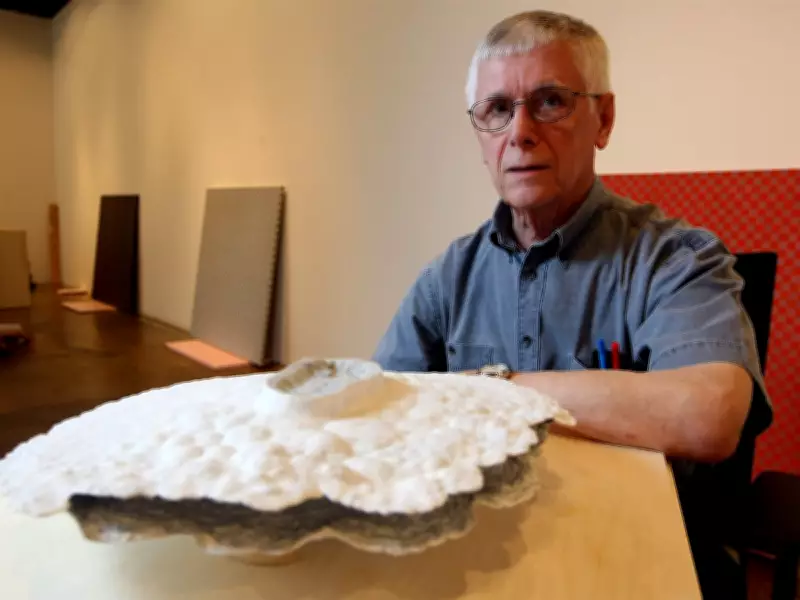
Cameron developed several distinctive artistic methods that became hallmarks of his career. He was particularly renowned for his Thick Paintings, an innovative technique involving the application of thousands of layers of gesso to everyday objects. This painstaking process would continue until a museum or collector acquired the work, creating pieces that evolved through both time and institutional recognition.
Earlier in his career during the 1960s, Cameron pioneered what he called Process Paintings. This method involved deliberately obscuring unsatisfactory paintings by wiping them away, applying crisscross patterns of masking tape, and rubbing additional paint onto the surface to create new visual textures and patterns.
In his later years, beginning at age 74 in 2009, Cameron embarked on his Thanatos series. He described this work as involving the suspension of poppies from his basement studio ceiling using fish wire, dipping each flower into colorful latex paint or white gesso. The title Thanatos, meaning "Peaceable Death," reflected what Cameron described as "an acceptance of — and reconciliation to — the inevitable end of life."
Recognition and Institutional Legacy
Throughout his distinguished career, Cameron received numerous prestigious awards and honors that recognized his contributions to Canadian visual culture:
- The 2004 Governor General's Award in Visual and Media Arts
- The Gershon Iskowitz Prize
- The 1994 Victor Lynch-Staunton Award
- Membership in the Royal Canadian Academy
His work has been featured in significant exhibitions both nationally and internationally. In 2009, a solo exhibition curated by Catherine Bédard at the Canadian Culture Centre in Paris showcased his Thick Paintings alongside a comprehensive catalogue. More recently, his work appeared in "I have been thinking about forever" at the University of Toronto's Jackman Humanities Institute in 2016-2017 and "Voices: artists of art" at the Southern Alberta Art Gallery in Lethbridge.
Enduring Presence in Public Collections
Cameron's artistic legacy is preserved in numerous important public collections across Canada and internationally, ensuring his work will continue to inspire future generations. His pieces can be found in:
- The National Gallery of Canada
- The Glenbow Museum in Calgary
- The Art Gallery of Ontario
- The Musée d'art contemporain de Montréal
- The Centre national des arts plastiques in Paris
Eric Cameron is survived by his spouse Margaret and their three children, Gregory, Ede and Matilda. A celebration of life is planned to take place in May, providing an opportunity for the art community and those who knew him to honor his remarkable contributions to Canadian culture.