Alberta Studio Reconstructs 20-Metre Blue Whale Skeleton in East Coulee
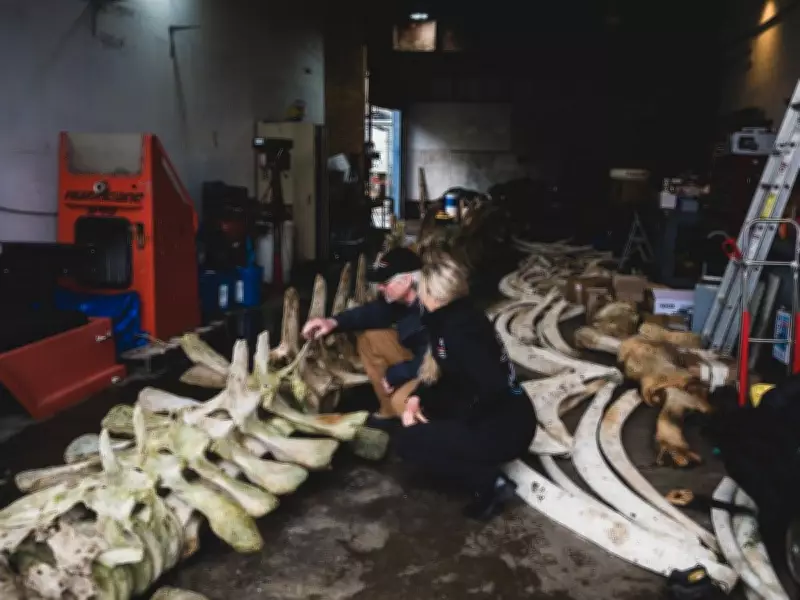
In the heart of Alberta's Badlands, where dinosaurs once dominated the landscape, a remarkable marine project is underway. Dinosaur Valley Studios in East Coulee is meticulously reconstructing a rare 20-metre blue whale skeleton, bringing a piece of oceanic history to a landlocked region. This ambitious endeavor highlights the studio's growing reputation for handling some of the largest skeletal assemblies in the world.
A Serendipitous Discovery Leads to a Major Project
The journey of this blue whale skeleton began with an unexpected twist of fate. Frank Hadfield, president of Dinosaur Valley Studios, conducted a Google search in 2019 for his late uncle, Charlie Hadfield, a Second World War veteran and engineer. Among the search results, he stumbled upon a news article about the Hatfield Marine Science Center in Newport, Oregon, which was dealing with a blue whale carcass that had washed ashore in 2015 after a ship strike.
The coincidence was striking—Hadfield's last name closely resembled the Oregon center's name. Intrigued, he reached out to the researchers, who had submerged the whale remains in Yaquina Bay for over three years to allow seawater and invertebrates to clean the bones. Hadfield offered his studio's expertise, and the collaboration was born.

Expertise in Massive Marine Reconstructions
Dinosaur Valley Studios is no stranger to large-scale skeletal projects. The team has previously assembled a 14-metre humpback whale skeleton and a 12-metre sperm whale skeleton for a museum in Newfoundland. They have also worked on a four-metre ichthyosaurus skull and replicated a 7.5-metre blue whale skull. However, this full blue whale skeleton marks their most significant challenge yet.
The blue whale is the largest creature to have ever evolved on Earth, surpassing even the mightiest dinosaurs in weight and size. As Hadfield explains, "It's the largest skeleton we've ever done of real bones. The lower jaws of a blue whale are the largest single bone that has ever evolved." This project underscores the studio's specialized skills in preserving and articulating such immense specimens.
Technical Challenges and Scientific Value
The reconstruction process involves preserving the bones and constructing a robust steel display structure to support the articulated skeleton. Currently, the team has successfully raised one of the whale's lower jaws into position—a feat that requires precision and engineering prowess. The project is scheduled for completion by April of this year.
Once finished, the skeleton will be displayed at the Hatfield Marine Science Center in Newport, Oregon, where it will be accessible for public viewing and ongoing scientific research. The bones will remain intact, allowing researchers to study them while educating visitors about marine biology and conservation.
Bridging Land and Sea Through History
This project not only showcases Dinosaur Valley Studios' technical capabilities but also bridges the gap between Alberta's prehistoric past and contemporary marine science. Hadfield notes, "It's a common misconception that dinosaurs were the largest things that ever lived. Ocean-dwelling creatures like blue whales don't have gravity to contend with, allowing them to reach incredible sizes."
The reconstruction serves as a testament to human curiosity and collaboration, turning a chance online search into a landmark project that celebrates the natural world's grandeur. As work continues in East Coulee, this blue whale skeleton stands as a symbol of both artistic craftsmanship and scientific inquiry.