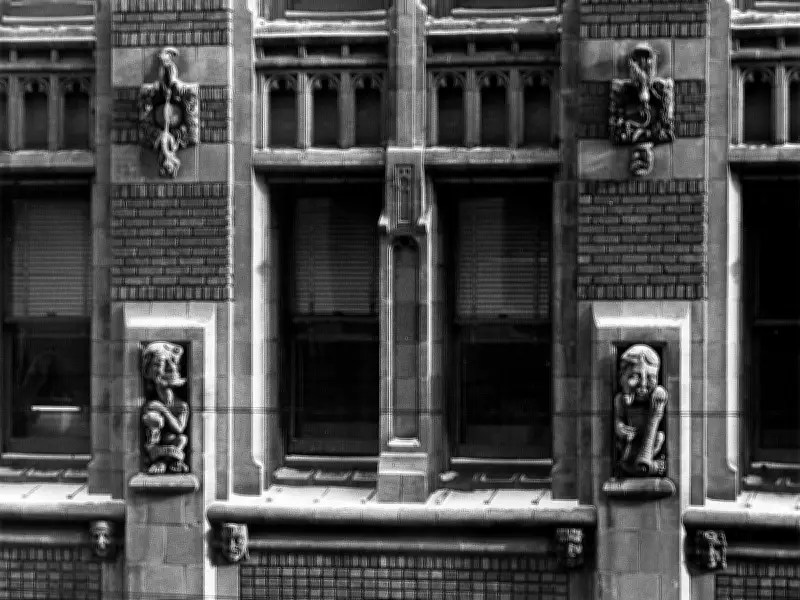
Historic Calgary Gargoyles from Demolished Herald Building Head to Auction
Art collectors and history enthusiasts have a unique opportunity to acquire a tangible piece of Calgary's architectural past. Sixteen stone grotesques, originally from the facade of the historic Southam building, are being offered at auction this week through Levis Fine Art Auctions and Appraisal.
A Century-Old Legacy
The sculptures originally adorned the Southam building, also known as the Herald building or the Greyhound building, which stood on the 600 block of 1st Street S.W. from its construction in 1912 until its demolition in 1972. These architectural elements represent a significant chapter in Calgary's urban development during the early 20th century.
The building's complete collection included 380 grotesques commissioned from Royal Doulton in London, England. These were designed by artist Mark Villars Marshall and are believed to be among his final works. The sculptures were created not only for the Southam building but also for the Southam Chambers across the street, where the Herald newspaper relocated in 1932.

Artistic Character and Historical Significance
Several of these stone carvings featured caricatures of newsroom personalities, including 'The Editor,' 'The Stenographer,' 'The Typesetter,' and 'The Printer's Devil.' Others depicted various animals and masks, showcasing the artistic diversity of the collection.
Andrea Lowe, co-owner of Levis Fine Art Auctions and Appraisal, explained the sculptures' journey: "Since then, they went all over the place. There were some that went to the Alberta Government Telephone building, the Alberta Hotel, the Telus Convention Center, Fort Calgary, U of C." Many remain on display in these locations today.
Preservation and Dispersal
The history of these architectural artifacts includes both preservation and loss. Approximately 40 sculptures were destroyed during the Southam Chambers' remodel in the mid-1960s, while 20 were donated to the Glenbow Museum. When the Greyhound building was demolished in 1972, all remaining grotesques were removed, with most sold to the City of Calgary.
In 1994, the city auctioned 240 of these pieces, retaining 46 for the Public Art Collection. Lowe noted that many others "ended up in private collections, they ended up in corporate collections, they were destroyed, moved to other locations."
Auction Details and Expectations
The current auction features 16 pieces being sold unreserved, meaning there is no minimum bid. "They all start at a dollar," Lowe stated, though she expects final prices to range between $2,000 and $5,000 depending on size and condition. Previous auctions have seen a large gargoyle sell for $3,000, with smaller architectural details typically fetching mid-to-high hundreds.
Prospective buyers should note the logistical challenges involved. Some of the larger sculptures weigh between 750 and 850 pounds, requiring careful planning for transportation. "The buyer has to take on the responsibility of having them moved," Lowe emphasized.
These grotesques represent more than mere architectural decoration. They embody Calgary's journalistic history, artistic heritage, and urban evolution. For those interested in Gothic architecture or local history, these stone carvings offer a rare connection to a building that once defined part of Calgary's cityscape.
The auction closes on April 25, providing a limited window for collectors to acquire these historic artifacts. Each piece serves as a physical reminder of Calgary's architectural past and the craftsmanship that characterized early 20th-century building design in Western Canada.