Sixteen-year-old Taven Jeffrey already knows how to weld, but she recently had the opportunity to see where her skills might take her in the future. Describing herself as an artistic person, Jeffrey says she picked up Stick and MIG welding in her hometown of Hudson Bay, Sask. She is also drawn to the idea of becoming a hairdresser.
“I was thinking maybe do a hairdressing course at college or something, and then at the same time be an apprenticing welder,” she said about her post-high school options while in Saskatchewan Polytechnic’s power engineering lab on Thursday.
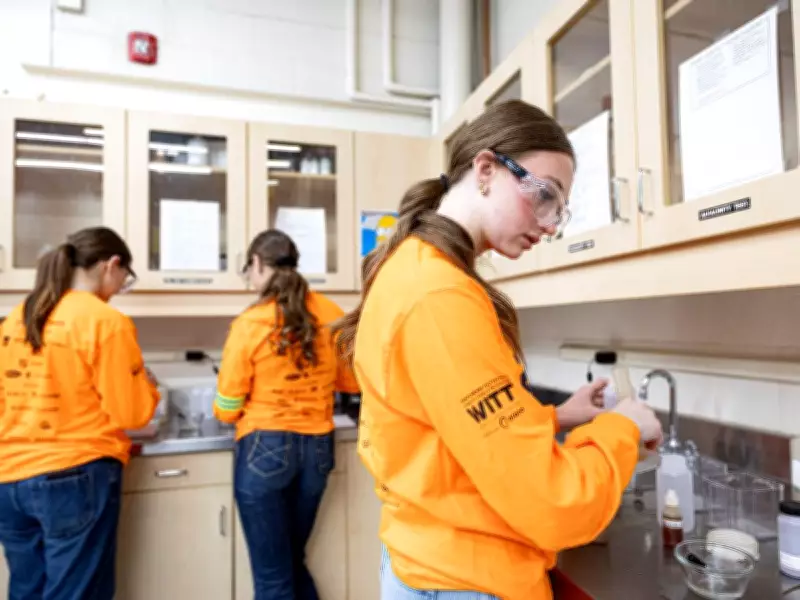
Jeffrey gathered with other teenage girls from across the province to see a day’s worth of demonstrations of trades and technology skills as part of a Saskatoon Jill of all Trades event put on by the Women in Trades and Technology (WITT) group.

Hands-On Learning for Future Careers
As Jeffrey and her peers face a plethora of future career options, the federal government has implemented incentives to boost Canada’s Red Seal workforce. Power engineering instructor Stacey Morrison, who entered the profession based on the results of a personality test, says that although there is still cultural progress to be made for women in the trade and technology sectors, those entering the workforce should know they are being looked out for.
“If you feel like it fits for you, the supports are there, the opportunities are there, and the women that are in these trades and industries … (We) will do everything we can to make sure that you’re supported and successful, and I feel like that’s consistent throughout any of the trades,” she said.
Personal Journey into Power Engineering
Drawn to the “inquisitive” aptitude needed for on-the-job problem solving, Morrison entered power engineering after an injury, while being retrained under workers’ compensation. At the time, she says she knew nothing about power engineering, but had a positive experience working in construction in high school.
“I never knew what I wanted to do, but I just knew that I didn’t want to do the things that were traditionally available. I did construction in high school, and I was really good at it, top of my class, but I was told, ‘You won’t get a job because you’re a woman,’ so I never followed that dream,” she recalled.
“So, yeah, I was almost 30 when I came to school here, and I wish that I had known about it years before.”
Power Engineering Instructor: Education Needed for Inclusion
Power engineering involves operating and maintaining the systems that power industrial boilers, pumps, and air conditioning and refrigeration systems. The profession doesn’t follow a Red Seal path, but has similar certification levels. At the event, Morrison and her fellow instructor, Angela Chevrefils, gave directions on how to perform a water hardness test (to prevent scaling on equipment) and how to start an industrial boiler.
Chevrefils, who worked in power plants near Estevan before becoming an instructor, says her experience being a woman in the field was marked by the trust-building typical of other jobs. The event aimed to show young women that trades and technology offer rewarding careers with strong support networks.