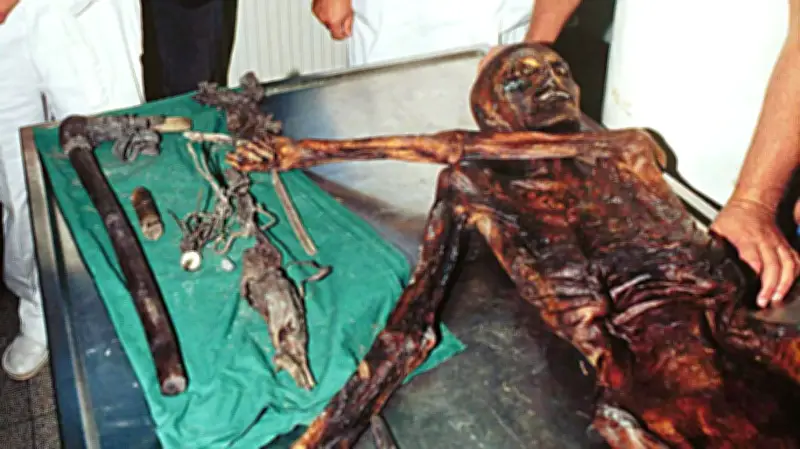
Scientists have made a remarkable discovery by finding yeast in the intestines of Ötzi the Iceman, a 5,300-year-old mummy found in the Alps. The yeast, preserved in his gut, was successfully used to bake bread, providing a unique glimpse into ancient food practices.
Ötzi's Last Meal
Ötzi, discovered in 1991 on the Similaun glacier, has been extensively studied. Researchers analyzing his stomach contents identified remnants of a yeast strain, likely from bread or beer consumed shortly before his death. The yeast was still viable after millennia, allowing scientists to culture it and bake a loaf of bread.
Implications for Ancient Diets
This finding suggests that Ötzi's diet included fermented foods, such as bread or beer, which were common in Neolithic Europe. The successful revival of the yeast opens new avenues for studying ancient microbial life and food preservation techniques.

The research team, led by scientists from the University of Innsbruck, emphasized the significance of the discovery. "This yeast is a direct link to the past," said Dr. Anna Müller, a microbiologist involved in the study. "It allows us to recreate a food product that Ötzi himself might have eaten."
Bread-Making Experiment
The yeast was cultured in a laboratory and used in a traditional bread recipe. The resulting loaf had a distinct flavor, described as earthy and slightly sour, similar to ancient sourdough. The experiment was documented and shared with the public, highlighting the intersection of archaeology and gastronomy.
Future Research
The team plans to sequence the yeast's DNA to understand its evolutionary history and compare it with modern strains. This could shed light on the domestication of yeast and its role in early agriculture.
Ötzi continues to fascinate scientists and the public alike, offering insights into the life and death of a Copper Age man. This latest discovery adds a new dimension to our understanding of ancient human diets and the microbial world that accompanied them.