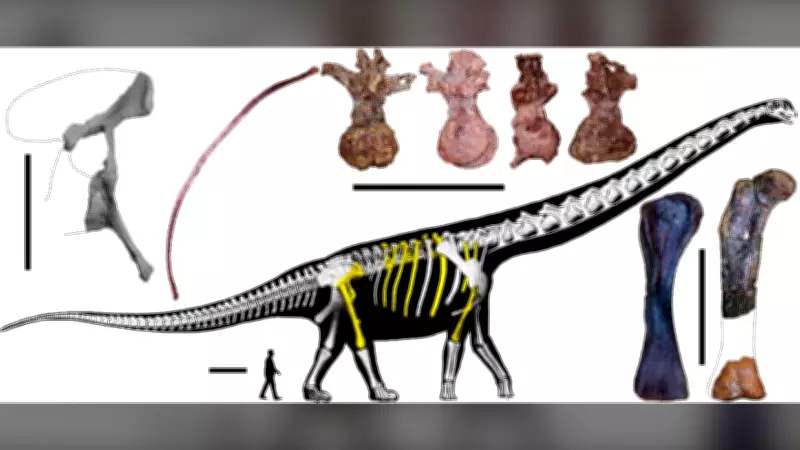
Paleontologists in Thailand have unearthed the largest dinosaur ever discovered in Southeast Asia, a new species that roamed the region during the Cretaceous period. The find, reported in the journal Scientific Reports, sheds new light on the diversity of dinosaurs in the area.
Discovery and Significance
The dinosaur, named Nagatitan chaiyaphumensis, was excavated in the Chaiyaphum province of northeastern Thailand. The partial skeleton includes vertebrae, ribs, and limb bones, indicating a massive sauropod dinosaur. Based on the size of the bones, researchers estimate the creature was over 30 meters long and weighed more than 50 tons, making it comparable in size to some of the largest dinosaurs known worldwide.
Preserved Remains
The fossilized remains were found in sedimentary rock layers dating back to the Early Cretaceous period, approximately 130 million years ago. The preservation of the bones is exceptional, allowing scientists to reconstruct the animal's anatomy in detail. The study highlights that Nagatitan is a member of the titanosaur group, which includes some of the largest land animals ever to have lived.

Implications for Paleontology
This discovery is a major breakthrough for Southeast Asian paleontology, as large dinosaur fossils are rare in the region. The find suggests that the area once hosted a diverse ecosystem of giant herbivores and predators. The research team, led by scientists from the Department of Mineral Resources in Thailand, plans to continue excavations to uncover more remains and possibly additional species.
The new species name honors the Nagas, mythical serpent-like creatures in Thai folklore, and the province where it was found. The discovery underscores the importance of continued fossil exploration in Southeast Asia and provides valuable insights into the evolution and distribution of sauropod dinosaurs.