The Fear Was So Palpable: How Activists Smothered Debate
Toronto filmmaker Ric Esther Bienstock investigates how academia came to stifle ideas — and how campus flashpoints have migrated beyond university grounds. Her new documentary, Speechless, now available on CBC Gem, delves into the political upheaval transforming universities in North America and the U.K.
Bienstock, an Emmy Award–winning director, recalls her own university experience: “For me, university was a place where you wrestled with new ideas. Sex, politics, religion, war – we argued about all of it. But somewhere along the way, the climate changed. Students didn’t just disagree with ideas. They felt harmed by them. And the only way to feel safe was to silence the people expressing them.”
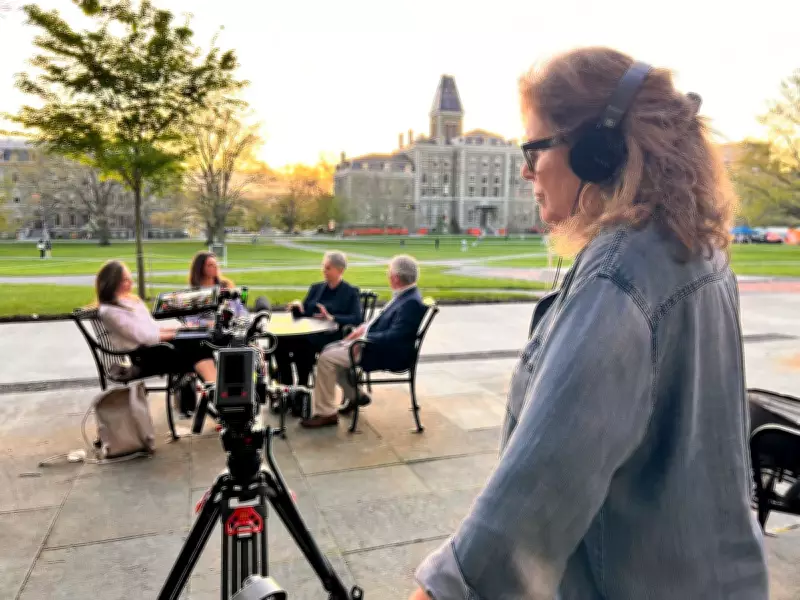
The Montreal-born filmmaker, who has long resided in Toronto, embedded with students, professors, and administrators at institutions including Harvard, Yale, Cornell, Stanford, Penn State, Evergreen State College, the University of Sussex, and New College of Florida. What emerges is a character-driven portrait of how debates over race, gender, and social justice have escalated via viral outrage, reputational shrapnel, and institutional instability — and how campus flashpoints have migrated beyond university grounds.

Voices Across the Ideological Spectrum
Speechless brings together voices from across the ideological spectrum, from progressive organizers and critics of campus orthodoxy to conservative activists and institutional reformers. Her cameras were rolling at New College of Florida as it became the first U.S. institution to dismantle its DEI office and eliminate its gender studies program.
Bienstock’s previous work includes Enslaved: The Lost History of the Transatlantic Slave Trade (with Samuel L. Jackson), The Accountant of Auschwitz, and Tales From the Organ Trade. She has won Emmys, two Edward R. Murrow Awards, and multiple Canadian Screen Awards, and is an Officer of the Order of Canada.
Interview with Ric Esther Bienstock
Walk me through how the film came about.
When I started filming, my kids were university age, and I started hearing stories coming out of campuses, about students wanting protection from ideas, and feeling harmed by words. I actually read an article in 2015 called “The Coddling of the American Mind” by Jonathan Haidt that became a book, and it talked about safe spaces, microaggressions, and cultural appropriation. I just thought, ‘Wow, that didn’t mirror my university experiences.’ Of course, words can hurt people, but I didn’t see words or knowledge as harmful. Students asking for safe spaces from emotional harm — I found that just interesting, and I thought it would make for a good film.
An example is Bret Weinstein, former professor of evolutionary biology at Evergreen State College in Washington, who opposed the school’s 2017 “Day of Absence” change. It demanded whites leave campus. He was called racist. I started filming when there were intense protests. He ultimately resigned when the school settled his suit.
The documentary captures the palpable fear on campuses, where debates over race, gender, and social justice have led to viral outrage and institutional instability. As Bienstock notes, the flashpoints have now migrated beyond university grounds, affecting broader society. Speechless offers a compelling look at how the culture of free speech has been transformed, and what it means for the future of education and public discourse.