Remembering David Harpp: The McGill Professor Who Made Chemistry Come Alive
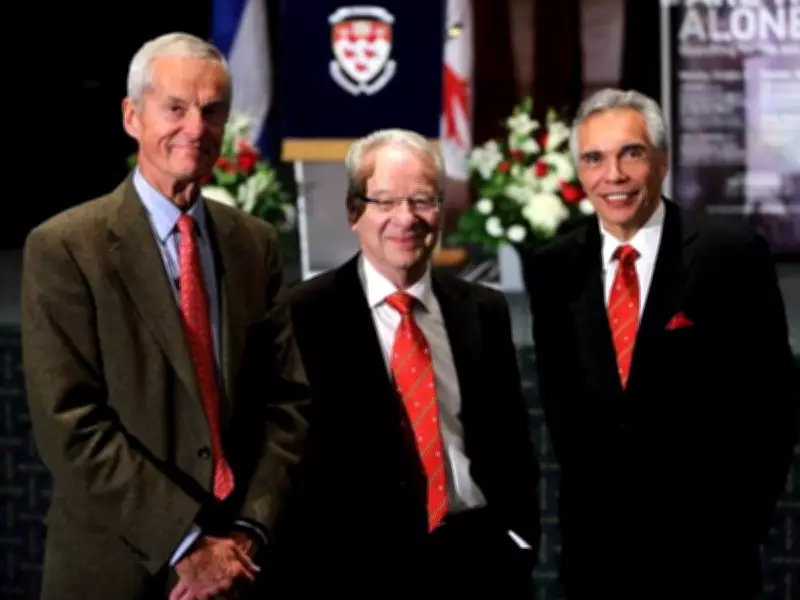
The McGill University community is mourning the loss of Professor David Harpp, a cherished educator, mentor, and pioneer in chemistry education who passed away in February 2026. Harpp, who co-founded McGill's Office for Science and Society alongside colleagues Ariel Fenster and Joe Schwarcz, leaves behind a legacy of inspiring approximately 50,000 undergraduate students through his innovative and engaging teaching methods.
A Transformative Teaching Approach
Harpp's impact on chemistry education began in the fall of 1966 when he first introduced organic chemistry to large lecture halls filled with skeptical students. Unlike traditional approaches that often dampened student interest, Harpp immediately captured attention by demonstrating chemistry's real-world relevance. He connected complex concepts to everyday life—from plastics and pharmaceuticals to household products and environmental issues—making the subject matter both accessible and fascinating.
"Organic chemistry was not simply an intellectual exercise," recalled colleague Joe Schwarcz. "It was relevant. It could be applied when cooking supper, washing the dishes, and when reading the list of ingredients on our cereal boxes."

Innovative Educational Techniques
Professor Harpp revolutionized classroom presentations through what he called "registered lap-dissolve projection," a technique using two slide projectors to create dynamic visual displays of molecular structures and chemical processes. This innovation allowed students to see molecules moving, bonds rearranging, and conformations changing in real time, transforming abstract concepts into tangible understanding.
His commitment to educational innovation continued throughout his career. Harpp was among the first educators to digitize slides for PowerPoint presentations and pioneered lecture recording. He also developed a sophisticated computer program that analyzed patterns in multiple-choice exam answers to detect potential collaboration, a system now widely implemented at McGill University that has significantly reduced academic dishonesty.
Beyond the Classroom: Public Science Engagement
Harpp's passion for chemistry extended far beyond university walls. He elevated public science communication to new heights, organizing major exhibitions that attracted hundreds of thousands of visitors. In 1980 and 1981, he helped coordinate demonstrations and lectures for the UNESCO pavilion at Montreal's Man and His World exhibition. Later, in 1995, he spearheaded The Chemistry Show at Expotec, which drew over 400,000 attendees.
Perhaps his most significant institutional contribution was conceptualizing and helping establish McGill's Office for Science and Society, a unique initiative dedicated to demystifying chemistry and providing unbiased information on scientific controversies to both the public and media.
A Legacy of Mentorship and Collaboration
With more than 200 peer-reviewed research publications and numerous administrative roles—including department chair, Senate member, and graduation marshal—Harpp maintained an impressive academic career while prioritizing mentorship. His graduate students not only developed research expertise but also gained exceptional teaching and communication skills, with many assuming leadership positions in their fields.
"He was a communicator par excellence and a pillar of the McGill community," said Schwarcz, who collaborated with Harpp for five decades. "Dave Harpp has always been the first to give credit to others, being perhaps overly modest about his own achievements."
Beyond professional accomplishments, colleagues remember Harpp as a daily conversational partner who discussed everything from basketball scores to punctuation in articles. His personal warmth matched his professional dedication, making his loss deeply felt across multiple dimensions of the university community.
As the educational community reflects on Harpp's legacy, his approach to teaching serves as an enduring model. While mediocre teachers tell and good teachers explain, David Harpp demonstrated that great teachers inspire—a category he unquestionably embodied throughout his remarkable career.