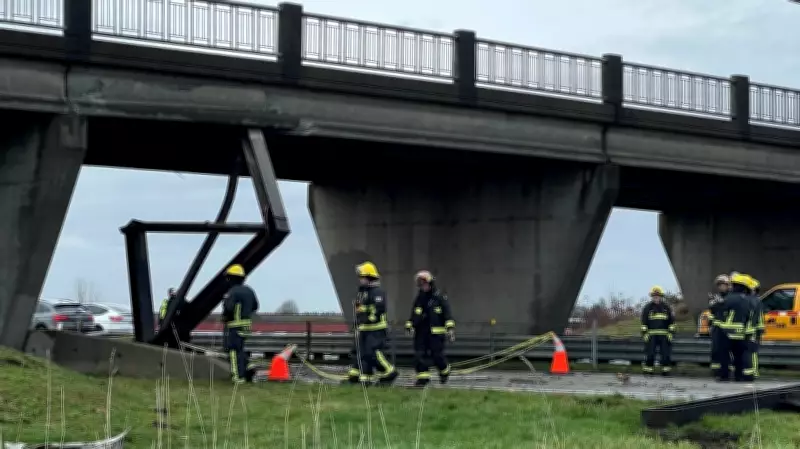
Advanced Technology Deployed to Combat Overpass Collisions in Delta
The Ministry of Transportation is implementing a high-tech solution to address a persistent safety issue at a problematic overpass in Delta, British Columbia. This initiative comes in response to a significant incident where a truck struck the overpass on December 28, 2023, highlighting the urgent need for improved infrastructure protection.
Comprehensive Safety Measures Unveiled
The new system integrates multiple layers of technology designed to prevent similar accidents. It includes state-of-the-art sensors that can detect oversized vehicles approaching the overpass, radar systems to monitor traffic flow and vehicle dimensions in real-time, and flashing warning lights to alert drivers of potential height restrictions. These components work together to create an early warning system, aiming to reduce the risk of collisions that can cause extensive damage, traffic disruptions, and safety hazards.
Officials from the ministry have expressed optimism that this proactive approach will significantly enhance safety at the site, which has been identified as a high-risk location due to previous incidents and traffic patterns. The installation is part of a broader effort to modernize transportation infrastructure across the region, leveraging technology to address specific problem areas.

Background and Implementation Timeline
The decision to deploy these measures was influenced by the 2023 collision, which underscored the vulnerabilities of existing safety protocols. Overpass strikes are a recurring issue in many urban areas, often resulting from driver error, inadequate signage, or vehicle malfunctions. In Delta, the ministry has conducted thorough assessments to tailor the technology to the site's unique characteristics, including traffic volume and geometric constraints.
Implementation is expected to proceed in phases, with initial testing and calibration scheduled for the coming months. The ministry plans to monitor the system's effectiveness closely, with potential adjustments based on performance data and feedback from transportation experts. This project aligns with ongoing investments in smart infrastructure aimed at improving road safety and efficiency.
Expected Outcomes and Community Impact
By preventing overpass strikes, the ministry aims to minimize repair costs, reduce traffic congestion, and enhance overall public safety. Community stakeholders, including local residents and businesses, have welcomed the initiative, noting that it addresses a long-standing concern. The technology is also designed to be scalable, with potential applications at other high-risk locations if proven successful.
In summary, the deployment of sensors, radar, and flashing lights represents a forward-thinking strategy to mitigate risks at a critical transportation juncture. As the ministry moves forward with this project, it underscores a commitment to innovative solutions that prioritize safety and resilience in infrastructure management.