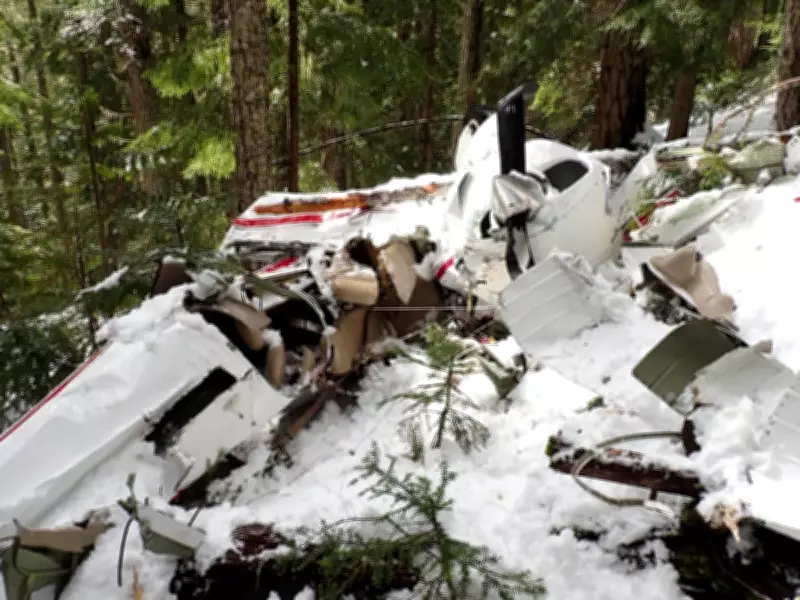
Instructor's Mountain Flying Inexperience Contributed to Fatal Chilliwack Crash
A flight instructor's lack of proper training for flying over mountainous terrain likely played a significant role in a fatal plane crash that claimed two lives near Chilliwack in April 2025, according to a recent investigation by the Transportation Safety Board of Canada.
Details of the Fatal Training Flight
On April 5, 2025, a Cessna 172S aircraft operated by Chinook Helicopters departed from Abbotsford airport at approximately 12:30 p.m. for an instrument flying training session. The flight was last detected on radar just ten minutes after takeoff before crashing in the mountainous terrain of the Chilliwack River Valley around 1 p.m., resulting in the deaths of both the flight instructor and student pilot on board.
Insufficient Mountain Terrain Preparation
The TSB investigation revealed that while the instructor held a commercial pilot license with approximately 1,600 total flying hours—primarily in Cessna aircraft—their preparation for mountain flying was inadequate. Although the instructor had completed three mountain familiarization training flights in 2020, these sessions failed to properly prepare them for actual mountainous conditions.

Critical training deficiencies included:
- Canyon turn simulations conducted at 7,500 feet above sea level rather than in genuine mountainous terrain
- No evidence of training for course reversals while flying in actual mountain environments
- Failure to file a flight plan or itinerary for the training session
Student Pilot Background and Flight Tracking Issues
The student pilot possessed a commercial helicopter license with 140 hours of flying experience, but only about nine of those hours were in fixed-wing aircraft like the Cessna 172S. The investigation determined that weather conditions and aircraft maintenance were not contributing factors to the crash.
Flight tracking presented additional complications. While a whiteboard entry at Chinook Helicopters noted the instructor and student names with an estimated arrival time and indication of training in the Sumas practice area, the actual flight path extended approximately 20 miles further east and south. Since the crash occurred on a weekend when no employee was assigned to track flights, there was no active monitoring of the training session.
Crash Site Analysis and Safety Recommendations
Rescue teams located the wreckage on a forested mountainside at approximately 4,000 feet above sea level. Damage to the aircraft was consistent with tree impact, and investigators found no evidence suggesting the plane wasn't fully intact before the crash.
The Transportation Safety Board emphasized that "flying in mountainous terrain is best approached with specialized knowledge, thorough pre-flight planning, and disciplined inflight decision making." This tragic incident underscores the critical importance of comprehensive mountain flying training for flight instructors and proper flight tracking procedures for training organizations.