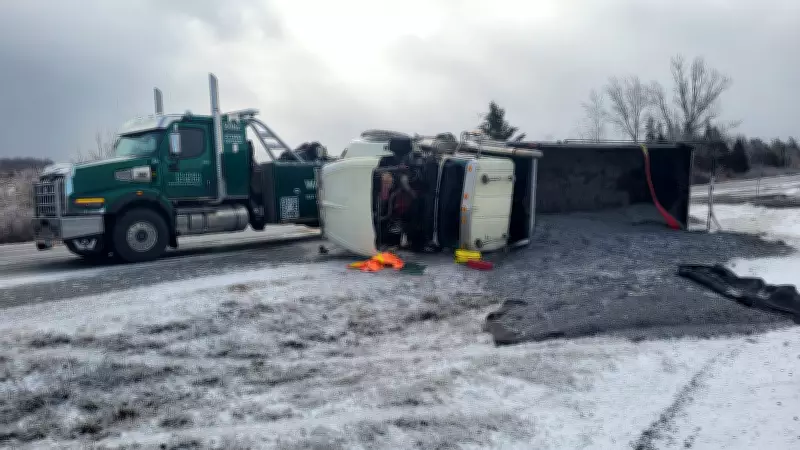
Icy Conditions Trigger Two Truck Rollovers on Eastern Ontario Highways
Treacherous winter weather created hazardous driving conditions across eastern Ontario on Wednesday, resulting in two separate truck rollover incidents that disrupted traffic and prompted safety warnings from authorities. The most significant accident occurred on Highway 7 near its intersection with Highway 417, where a dump truck completely overturned, blocking lanes and requiring extensive emergency response.
Emergency Response to Highway Incidents
Ontario Provincial Police responded to both accidents, confirming that icy road surfaces were the primary contributing factor in each case. The first incident involved a commercial dump truck that lost control and rolled onto its side, spilling its contents across the roadway and creating significant obstructions for morning commuters. Emergency crews worked diligently to clear the scene while ensuring the safety of other motorists navigating the slippery conditions.
"These incidents serve as a stark reminder of how quickly winter driving conditions can deteriorate," stated an OPP spokesperson. "Even experienced commercial drivers can encounter difficulties when roads become unexpectedly icy, especially during transitional weather periods."

Winter Driving Hazards and Safety Recommendations
Transportation officials noted that the accidents occurred during a period of fluctuating temperatures that created ideal conditions for black ice formation. This invisible hazard poses particular danger to larger vehicles like trucks, which have higher centers of gravity and require greater stopping distances. Police emphasized several critical safety measures for all drivers:
- Reduce speed significantly below posted limits when ice is possible
- Increase following distance to at least eight seconds behind other vehicles
- Avoid sudden braking or sharp steering maneuvers
- Ensure tires have adequate tread depth for winter conditions
- Keep windshield washer fluid reservoirs full with winter-grade solution
Weather forecasts indicate that similar conditions may persist throughout the week, with overnight temperatures dropping below freezing while daytime readings hover near the melting point. This pattern creates repeated freeze-thaw cycles that generate particularly slippery road surfaces during morning and evening commuting hours.
Broader Implications for Transportation Safety
The twin accidents highlight ongoing challenges for transportation infrastructure during Canada's extended winter season. While no serious injuries were reported in either incident, the economic impact was substantial, with hours of traffic delays affecting commercial shipping and personal travel. Transportation analysts note that such incidents typically increase insurance claims and repair costs during winter months, placing additional strain on the logistics industry.
Local municipalities have increased road salting and sanding operations in response to the accidents, but officials acknowledge that no amount of preparation can completely eliminate winter driving risks. The OPP continues to monitor conditions closely and has deployed additional patrol units to high-risk areas, particularly along major transportation corridors where commercial traffic is heaviest.
As climate patterns evolve, transportation experts are studying whether changing weather conditions might lead to more frequent ice-related incidents during traditionally milder periods. For now, authorities urge all drivers to exercise extreme caution, plan for additional travel time, and consider postponing non-essential trips when winter weather warnings are issued.