High-Speed Rail Project Faces Rural Resistance But Must Advance for National Good
The ambitious $60 to $90 billion high-speed rail corridor connecting Toronto to Quebec City has ignited significant controversy, particularly among rural farmers and property owners in eastern Ontario. While their concerns about land loss and community disruption are valid, allowing localized opposition to derail this transformative national infrastructure initiative would set a dangerous precedent for progress across Canada.
Understanding Rural Apprehensions
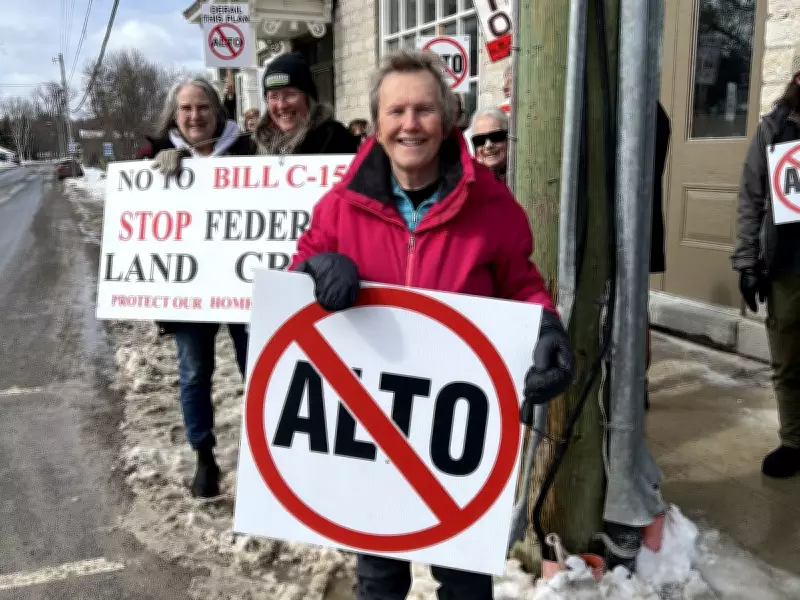
Protests have emerged along the proposed 1,000-kilometer route, with demonstrations like the "No Alto" gathering in Camden East drawing participants including semi-retired doctor Sandra Cowan and concerned residents Susan Foley and Julie Nizman. Signs opposing the project line fences in communities like Stone Mills Township, reflecting widespread anxiety about how high-speed trains cutting through hayfields and cornfields might impact agricultural livelihoods.
Specific concerns are substantial. Vankleek Hill beekeepers Russell Gibbs and Andrea Glenn, who operate Gibbs Honey as a third-generation family business, fear their enterprise could be destroyed by the project. Glenn is organizing a pressure group demanding the entire initiative be abandoned, arguing that years of toil and investment would come to nothing.

The National Imperative
However, if individual or local interests consistently trumped national priorities, Canada would never achieve transformative infrastructure development. The "not-in-my-backyard" syndrome, if allowed to prevail universally, would paralyze progress across the country.
Historical perspective provides crucial context. Ottawa itself transformed from a rural backwater into the nation's capital through similar processes. The suburbs surrounding the city—Kanata, Stittsville, Riverside South, and Orleans—all occupy what was once farmland. These communities would not exist today if landowners had possessed veto power over development.
Progress inherently requires that new opportunities sometimes displace existing arrangements. This dynamic occurs regularly in national development, and high-speed rail represents precisely this type of forward-looking initiative.Balancing Concerns with Compensation
The federal government must ensure that those whose lands may be needed for the project receive adequate compensation, even as it maintains its expropriation authority. While some agribusinesses may face losses and communities experience division, proper compensation mechanisms can address these legitimate concerns without sacrificing the broader national interest.
Work on the initial Ottawa-Montreal segment is scheduled to begin by 2029, with public consultations already underway. Opposition has emerged along the potential corridor, including in Quebec, as residents exercise their democratic right to express reservations about a project they view as threatening their way of life.
Learning from Past Infrastructure Lessons
Project planners must heed cautionary tales from previous Canadian infrastructure endeavors. The Pickering Airport project never materialized despite massive property expropriations. Toronto's Spadina Expressway faced similar expropriations before being abandoned. Montreal's Mirabel Airport, which opened in 1975 after thousands of acres were expropriated, never reached its potential and was decommissioned in 2004.
These examples underscore the importance of ensuring high-speed rail's economic feasibility and long-term viability. The project must not become another wasteful expenditure of public resources and disrupted lives.
Ultimately, while opponents focus understandably on individual interests, high-speed rail represents a nation-defining undertaking with enormous potential benefits for travelers and national connectivity. The concerns of rural communities must be addressed through fair compensation and thoughtful planning, but the project itself must proceed to advance Canada's transportation infrastructure into the 21st century.