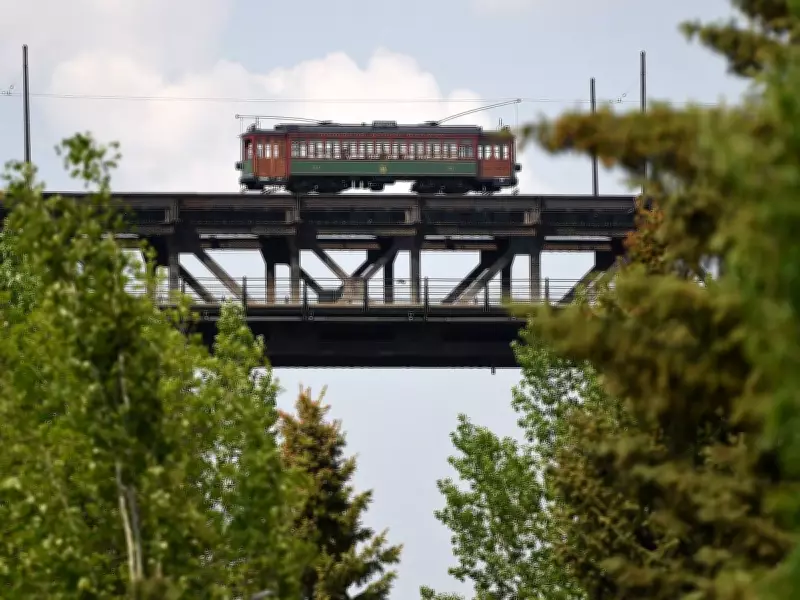
Edmonton's iconic High Level Bridge, a 113-year-old historical structure, is at the end of its lifespan and may be replaced by a 'mega bridge' that could accommodate multiple modes of transportation. The city's infrastructure committee reviewed a report on Monday that highlighted the need for replacement by 2042, alongside its Low Level counterpart by 2034.
Mayor Raises Concerns Over Scope and Funding
Mayor Andrew Knack expressed doubts about the practicality and cost of a bridge that would include vehicle lanes, bus rapid transit, multi-use paths, a streetcar connection, and potentially high-speed rail for airport access. 'It feels like it will need to be a mega bridge,' Knack said during the meeting.
Financial Challenges Ahead
Ward Anirniq Coun. Erin Rutherford questioned whether the city could bear the financial burden alone, suggesting that provincial and federal assistance would be necessary. She emphasized that Edmontonians likely desire a generational structure rather than a barebones functional crossing.

City planners noted that decisions on costs and scope will evolve over the next several years, pending the release of the province's rail master plan and the city's mass transit planning. Natalie Lazurko, director of transportation planning, stated, 'We've got the time to allow a few things to happen.'
Preservation vs. Replacement Debate
Kyle Schole, a local history advocate, urged the city to consider preserving the bridge instead of demolishing it, citing examples from New York, Paris, and Seoul where historic bridges were adapted into pedestrian promenades, linear parks, and cultural spaces. He questioned the value of heritage designations if they cannot protect such resources.
The High Level Bridge currently supports four modes of transportation—rail, streetcar, automobiles, and pedestrians—making it a unique structure. However, the cost of replicating this in a new bridge could strain city resources without external support.