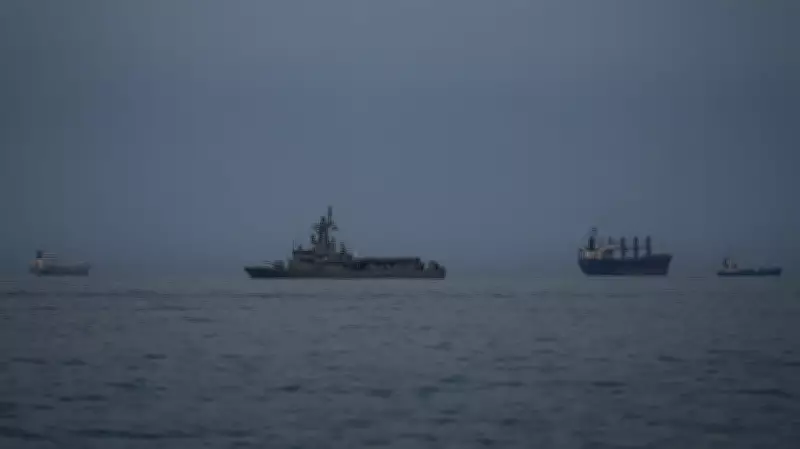
In response to a recently announced ceasefire agreement between the United States and Iran, shipping companies and oil refiners are actively seeking clarity on the logistics required to revive tanker traffic through the critical Strait of Hormuz. This development comes as most stranded oil and gas tankers remain anchored inside the Gulf, according to the latest LSEG shipping data.
Ceasefire Announcement and Initial Reactions
President Donald Trump revealed the two-week ceasefire, emphasizing that the U.S. would assist in managing the significant traffic buildup in the region. Shortly after, Iran's Foreign Minister, Abbas Araqchi, stated that if attacks against Iran cease, Tehran would halt counter-attacks and facilitate safe passage through the strait. This coordination would involve Iran's armed forces, with due consideration given to technical limitations.
Current Shipping Backlog and Challenges
Data from ship tracker Kpler indicates that approximately 187 laden tankers, carrying a staggering 172 million barrels of crude oil and refined products, were afloat inside the Strait of Hormuz as of Tuesday. Daejin Lee, the global head of research at Fertmax FZCO, highlighted the immense challenge ahead, noting that with over 1,000 ocean-going vessels trapped within the gulf, clearing the backlog could take more than two weeks even under normal conditions.

Lee expressed skepticism about the short timeframe, stating, "A 14-day window is simply too short to restore the level of confidence needed to fully unwind the embedded uncertainty premium - particularly for Arabian Gulf loading routes." He added that many details remain unclear, including the specific actions ships and charterers must undertake to gain passage. Consequently, numerous blue-chip shipowners may adopt a wait-and-see approach, delaying vessel commitments until the ceasefire proves stable.
Industry Caution and Technical Coordination
Jakob Larsen, chief safety and security officer at the shipping association Bimco, underscored the industry's cautious stance. He emphasized that the shipping sector is awaiting technical details from both the U.S. and Iran before making any moves. "Leaving the Gulf without prior coordination with the U.S. and Iran would entail heightened risk and would not be advisable," Larsen warned.
Background of the Blockade and Economic Impact
The blockade was initiated by Iran in retaliation to U.S. and Israeli attacks that commenced on February 28. This action effectively closed the vital waterway, which typically handles 20% of global oil and liquefied natural gas cargoes. The resulting disruption sent energy prices soaring and rattled economies and markets worldwide. The ceasefire, announced just 90 minutes before Trump's deadline to reopen the strait, led to an immediate plunge in oil prices, offering some relief to strained markets.
Refiners and Shipowners Adopt Wait-and-See Mode
Two shipbrokers reported that shipowners are likely to remain in a wait-and-see mode before allowing vessels to enter the Gulf. Meanwhile, inquiries for very large crude carriers to load Middle East crude for Asia surged on Wednesday. Key players such as Reliance Industries, Indian Oil Corp, Nghi Son Refinery and Petrochemical, CNOOC, Abu Dhabi National Oil Co, Glencore, and TotalEnergies are actively seeking vessels, according to three shipping sources. While Glencore and TotalEnergies declined to comment, other firms named have not yet responded to requests for comment.
Danish shipping giant Maersk acknowledged that the ceasefire may create transit opportunities for vessels in the Strait of Hormuz but cautioned that it does not yet provide full maritime certainty. This sentiment reflects the broader industry's apprehension about the stability and logistics of the agreement.

International Efforts and Diplomatic Moves
On the diplomatic front, Indonesia's foreign ministry is collaborating with Iranian authorities to secure the passage of two Pertamina vessels stranded in the gulf. Ministry spokesperson Vahd Nabyl Achmad Mulachela noted, "Several technical matters are being followed up to ensure safe passage through, including matters such as insurance and crew readiness." Similarly, China's foreign ministry expressed hope that all parties would work together to facilitate the early resumption of normal trade through the strait. Japanese Prime Minister Sanae Takaichi also engaged in talks with Iran's president, highlighting the global significance of the issue.
Economic Ramifications and Future Projections
Asian economies, as the primary buyers of oil shipped through the Strait of Hormuz, have been particularly hard-hit by the disruption. Anoop Singh, global head of shipping research at Oil Brokerage, provided insights into the expected phased resumption of traffic. "We expect tankers and oil flowing to Iranian-friendly countries to be the first ones to transit," he said. Singh anticipates that most crude tankers will be allowed to pass, with projections indicating more than 50 Very Large Crude Carriers and about 15 Suezmaxes exiting the strait in the initial phases.
As the shipping industry navigates this complex situation, the focus remains on obtaining clear logistical guidelines and ensuring the ceasefire holds. The coming days will be critical in determining whether normalcy can be restored to one of the world's most crucial maritime chokepoints.