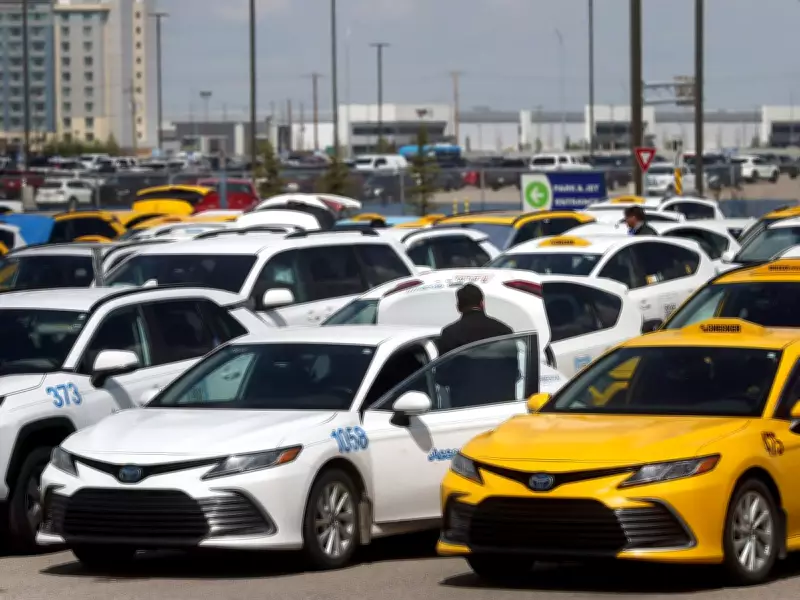
Calgary Taxi Drivers Grapple with Mounting Financial Pressure from Surging Fuel Costs
As gas prices continue their upward trajectory across Alberta, Calgary's taxi drivers are confronting yet another substantial financial burden in an industry already fraught with challenges. The sharp increase in fuel expenses is compounding existing pressures, creating a precarious situation for many long-time drivers who depend on their vehicles for livelihood.
Operational Costs Skyrocket for Veteran Drivers
Shammi Uppal, a driver with Associated Cabs for twelve years, illustrates the dramatic shift in expenses. "Before, it was $35 to $40 to fill the tank, but now you're looking at $55 to $60," Uppal reported after a recent fill-up near Calgary International Airport. "I just paid $58." This represents nearly a doubling of fuel costs in a short period, with Uppal noting that prices surged approximately thirty cents per liter over just three to four days.
The financial strain extends beyond mere fuel expenses. Uppal explains that drivers face multiple fixed costs regardless of business volume:

- $500 weekly cab rental fees paid to companies
- Vehicle maintenance expenses
- $250 weekly insurance premiums
- Airport drop-off fees
- Annual taxi plate and license renewals
After accounting for these substantial overheads, Uppal estimates that Calgary cab drivers typically net only about $100 per twelve-hour shift, making the additional fuel costs particularly burdensome.
Competitive Disadvantage Against Ride-Hailing Services
The taxi industry faces additional challenges when compared to ride-hailing platforms like Uber, which can implement dynamic pricing models including gas surcharge fees during periods of high fuel costs. "We have to charge the meter," Uppal explained. "And on top of that, if customers want to pay any extra tip or no, that's totally their choice. We cannot force them to do that."
Paradoxically, Uppal notes that ride-hailing services sometimes charge passengers significantly more than traditional taxis. "Uber is charging double, triple or four times the charges, then everybody rushes to the taxis," he observed. "Otherwise, nobody wants to call a taxi because they are a little cheaper than us. Many times, people realize that they are paying more money to Uber than taxis."
Industry Leadership Calls for Government Intervention
Jeff Garland, General Manager of Associated Cabs, confirms that even with their predominantly hybrid fleet, drivers are experiencing significant cost increases. "The cost of cars filling up after a shift increased by an average of $7 a day," Garland calculated. "Which is about $35 a week, $140 a month, you know, so it comes right out of the driver's pocket."
Garland emphasizes that the transportation industry's challenges will ultimately affect consumers across multiple sectors. "Not just taxi fares or anything going up, and I don't see any of that happening on the horizon, but if these gas prices stay up, we're going to pay for it at the grocery store and everything you consume, because it's all shipped in on trucks or trains or whatever, right? They all have the same issue that we have."
Uppal and fellow drivers report that industry representatives met with provincial officials late last year, receiving assurances that assistance was forthcoming. However, drivers have yet to see tangible relief since those December 2024 discussions.
The combination of slow business, intense competition from ride-hailing services, and now dramatically increased fuel costs has created what many drivers describe as an unsustainable situation. As one driver summarized the predicament: "Lots of waiting for us to get the trips, even outside in the city or at the airport, hours and hours waiting. On top of that, this hike in gas prices is really killing us."