The International Air Transport Association (IATA) has released a new forecast indicating that global airline profits will be cut in half this year, even as the number of passengers continues to rise. The projection, published Sunday, highlights the significant impact of high fuel prices and geopolitical disruptions on the aviation industry.
Passenger Growth Continues
IATA, which represents 370 member airlines accounting for 85 percent of global air traffic, expects carriers to transport 5.1 billion passengers in 2026. This represents a 2.4 percent increase from 2025, when passenger traffic was estimated at 4.98 billion. The industry first surpassed the four billion mark in 2023.
Willie Walsh, IATA’s Director General, addressed the impact of the Middle East conflict compared to the COVID-19 pandemic. “I don’t see this as a crisis,” he said. “You’re looking at an industry that is forecasting growth. If you extract the impact of the Middle East, we’re looking at growth of 3.5 percent.”

Profitability Under Pressure
Despite the increase in passenger numbers, profitability is expected to weaken substantially. IATA projects net profits will fall from $45 billion in 2025 to $23 billion in 2026. Net margins are forecast to shrink from 4.2 percent to 2.0 percent. The net profit per passenger is expected to drop to $4.50, half of the 2025 figure.
“Under the circumstances, that shows resilience. But it won’t even buy you a hot dog at most of the FIFA World Cup venues and it does not leave much of a buffer should other costs or taxes start rising,” Walsh said in a statement.
Fuel Price Shock and Regional Variations
Rising fuel costs are a major factor behind the profit decline. Airlines are passing some of these increases on to passengers through higher ticket prices, but not enough to fully offset the impact. IATA noted that revenue is expected to grow nine percent to $1.165 trillion, yet the bottom line is squeezed.
“Airlines are bearing the brunt of the fuel price shock. While air fares are rising, airlines are still absorbing part of the hike in their bottom lines,” the organization said.
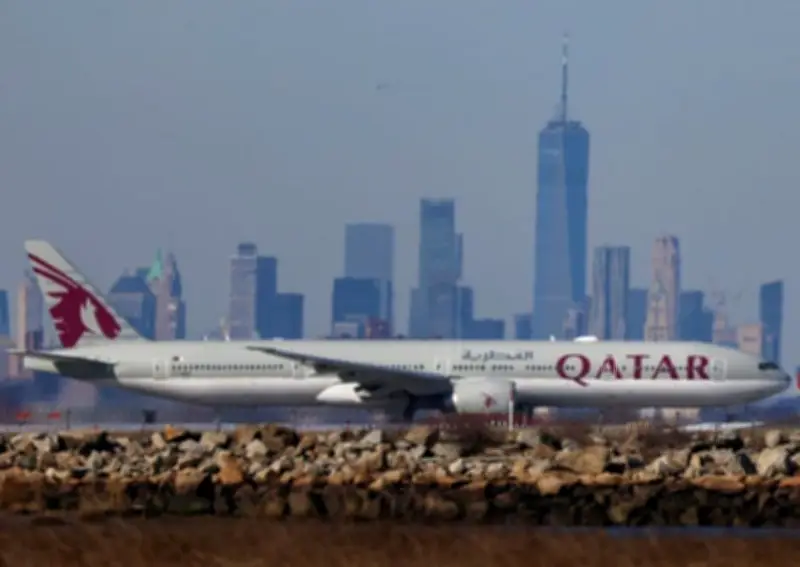
Profitability varies significantly by region. Middle Eastern airlines, including Emirates and Qatar Airways, are expected to face a particularly difficult year, with net margins projected to turn negative. These carriers have traditionally benefited from abundant fuel supplies but are now hit by war-related disruptions and surging fuel costs. IATA noted that for these airlines, “the immediate recovery path is likely to be driven more by pricing than by a rapid return of volumes.”
European airlines are forecast to be the most profitable, with a net margin of 3.1 percent, followed by North American carriers at 2.5 percent and Asia-Pacific airlines at 2.1 percent.
Outlook and Demand
Despite significant geopolitical uncertainty, IATA remains confident in demand. The association highlighted that the average airline ticket price has fallen 26 percent over the past decade, helping to sustain travel demand. Walsh emphasized that the industry is still growing, albeit with thinner margins.
“War-related disruptions in the Middle East and rising fuel costs have shifted the outlook for airlines to the worse,” he said. However, he reiterated that this is not a crisis comparable to the pandemic, as the industry continues to expand.