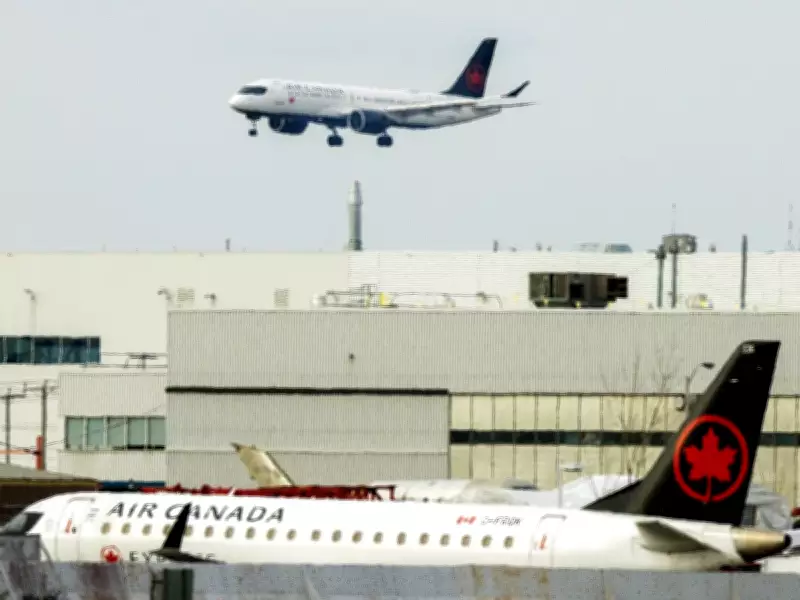
Air Canada Suspends Select U.S. Routes as Fuel Prices Soar and European Oil Crisis Deepens
Even if diplomatic negotiations resolve the conflict with Iran in the coming days, the oil shock triggered by the war continues to adversely affect Canadian air travelers, with disruptions expected to persist throughout the summer season. The escalating cost of jet fuel has already forced significant operational changes across the aviation sector.
Flight Suspensions and Schedule Adjustments
Air Canada has announced the suspension of flights departing from both Toronto and Montreal to New York's John F. Kennedy International Airport, effective June 1 through October 25. This decision directly results from the dramatic increase in jet fuel prices, which have doubled since the onset of the Iran conflict.
Peter Fitzpatrick, Air Canada's manager of corporate communications, explained in a Friday email that while the airline sees no imminent operational impact from jet fuel shortages, certain routes have become economically unviable. "Some lower profitability routes and flights are no longer economic, and we are making schedule adjustments accordingly," Fitzpatrick stated.

These adjustments include removing overnight flights on routes where alternative options exist, such as Vancouver-Toronto services, in addition to the suspended New York routes from Toronto and Montreal.
Global Fuel Supply Chain Disruptions
The aviation industry faces a perfect storm of challenges. Iran's blockade in the Strait of Hormuz initially severed approximately 20 percent of global fuel supplies from reaching destinations worldwide, driving oil prices as high as $200 per barrel. Although prices retreated after Iran declared the Strait open, this announcement was explicitly linked to the ten-day Israel-Lebanon ceasefire that commenced Thursday evening.
Fatih Birol, executive director of the International Energy Agency, warned in an Associated Press interview that Europe may have only about six weeks of remaining jet fuel supplies. This looming shortage threatens to create significant operational hurdles for airlines operating transatlantic routes.
Canadian Airlines Monitoring the Situation
While several international carriers including Air France-KLM, Air India, Lufthansa, and United Airlines have announced cancellations, Canadian airlines operating international flights have not yet reached that point. However, industry experts warn that challenges are mounting.
John Gradek, an aviation industry specialist and lecturer at McGill University in Montreal, highlighted the particular vulnerability of return flights from Europe. "The availability of fuel in Europe is going to be a big issue," Gradek told National Post last week. "It's not what you can pay. You're not going to be able to buy."
Gradek pointed to BP Oil's declaration of shortages in Italy as an early indicator, predicting that major U.K. airports including Heathrow and Gatwick would likely face similar constraints next. These developments could potentially lead to Canada-Europe flight cancellations in the near future.
Long-Term Impacts and Industry Outlook
Dan McTeague, a gas prices analyst and president of Canadians for Affordable Energy, recently told National Post that stabilizing the fuel supply chain could take months. The oil shock continues to disrupt the intricate network of fuel distribution, with an estimated 1,600 oil tankers currently trapped in the Persian Gulf.
As the summer travel season approaches, airlines worldwide are grappling with the dual challenges of skyrocketing operational costs and potential fuel availability issues. The situation remains fluid, with industry observers closely monitoring developments in both fuel markets and geopolitical negotiations.
For Canadian travelers, the immediate impact manifests as reduced flight options and potential schedule changes, particularly on transborder routes to the United States. The broader implications for international travel from Canada will depend on how quickly fuel supplies stabilize and whether European airports can maintain adequate jet fuel inventories throughout the peak travel months.