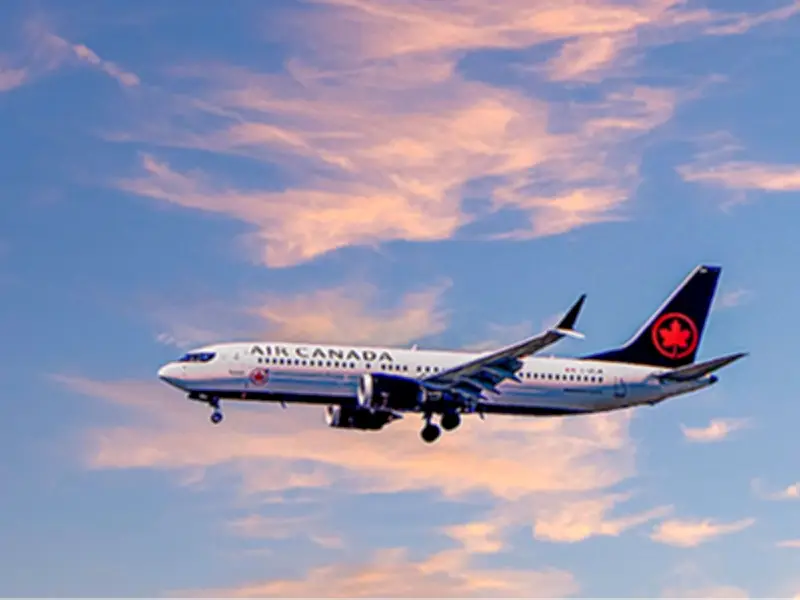
Air Canada is reassuring customers that there will be no fuel shortage disrupting overseas flights this summer, including European destinations. In an email sent to customers, the airline stated that it fully expects to operate its current summer schedule.
Just six weeks after airlines operating in Europe seemed to be facing disruptive fuel supply shortages, Air Canada and Lufthansa are now saying it is safe for customers to book their summer holiday trips.
Background on Fuel Concerns
In April, a wave of concern swept the travel industry after Fatih Birol, head of the International Energy Agency, warned that there might be only six weeks of jet fuel left due to Iran's blockade preventing oil tankers from passing through the Strait of Hormuz amid the Iran-U.S. conflict.

However, in an email to Air Canada customers shared with National Post on Thursday, the airline assured prospective flyers that it is completely safe to book. The email, provided by Air Canada’s manager of communications, Peter Fitzpatrick, reads: "You may have seen recent headlines about the global fuel supply and its impact on travel to Europe and wondered what it means for your personal travel. Please be assured that we are fully expecting to operate our current summer schedule. While global fuel markets remain dynamic, Air Canada has a diversified and sophisticated fuel supply in place. There is no fuel shortage affecting our operations, including across Europe, and we do not anticipate any significant impact through the summer."
Air Canada continues in the email to point out that it has a sizable roster of destinations across Europe and therefore customers can feel confident when they book their travel.
Canada's Own Jet Fuel Sources
Contrary to Europe, Canada has its own sources of jet fuel, as previously reported by National Post. The fuel concern became an issue in April for international operators flying back from Europe. One aviation expert cited a fuel shortage in northern Italy. Shortly after, Air Canada announced the cancellation of flights from Montreal and Toronto to New York’s JFK airport. Several other international carriers, such as Air France-KLM, Air India, Air New Zealand, Cathay Pacific, Lufthansa, United Airlines, and Vietnam Airlines also announced cancellations.
But Lufthansa has changed its tune. The airline’s chief commercial officer, Dieter Vranckx, said in a recent interview shared on the airline’s website that "there are no signs from our suppliers that fuel supply will be at risk this summer." Echoing Air Canada’s position, he said Lufthansa’s summer flight operations are not expected to be disrupted by fuel supply concerns, including flights across its six European hubs: Frankfurt, Munich, Zurich, Vienna, Brussels, and Rome.
Vranckx noted that less than a quarter of jet fuel shipments destined for Europe need to pass through the Strait of Hormuz. To compensate for any shortfall, he explained that "imports are now increasingly reaching us from other continents — for example, from North America and Africa. In addition, European refineries have ramped up their jet fuel production to maximum capacity." When asked whether it is safe to book a holiday, he responded: "Absolutely — fuel supply is stable so summer’s good to go."
Separate Issue: Fuel Costs
It should be noted, however, that supply and the cost of fuel are separate issues. In mid-April, Air Canada announced fuel-price-based cuts to domestic, U.S., and international destinations, including cuts to JFK, as well as routes out of Montreal to Algiers and Mexico. "Jet fuel prices have doubled since the start of the Iran conflict, affecting some lower profitability routes and flights which now are no longer economically feasible," Air Canada said in an April 18 statement. "Schedule adjustments including some frequency reductions are being made in response."
Jet fuel prices have since been volatile, but they have recently fallen, according to the latest weekly data from the International Air Transport Association. However, that may not translate into a reduction in ticket prices. As National Post has reported, many airline executives have indicated that current high prices may become the new normal, even if fuel costs ease.