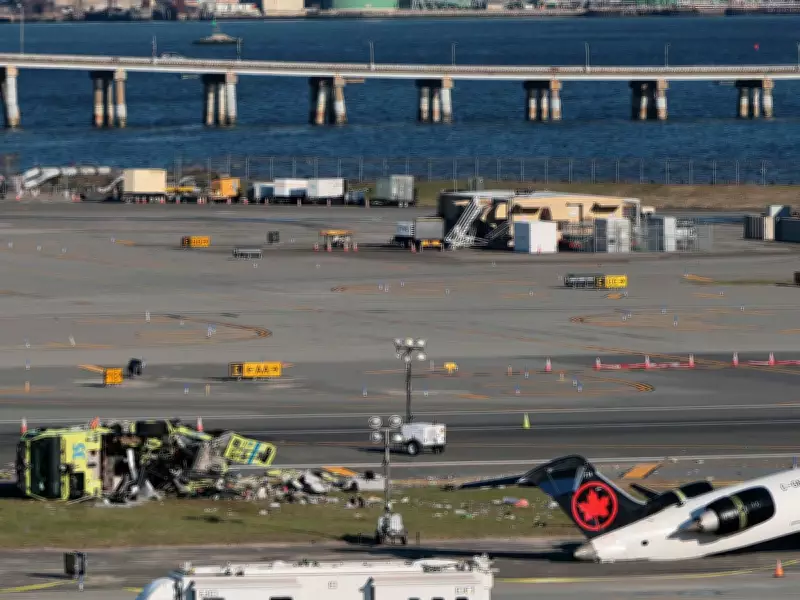
Air Canada Crash at LaGuardia: Shared Responsibility and Missing Safety Tech
Aviation lawyers indicate that both the air traffic controller and the fire truck driver share responsibility for the deadly Air Canada Express crash at LaGuardia Airport on Sunday night. The collision occurred when the CRJ-900 jet, operated by Jazz Aviation on behalf of Air Canada, landed on a runway where a Port Authority fire truck was present, resulting in the deaths of both pilots and injuries to dozens of passengers and crew.
Investigation Reveals Critical Safety Gap
The National Transportation Safety Board (NTSB) disclosed in a press conference that the fire truck was not equipped with a transponder, a device that would have displayed its location to the control tower and activated a runway warning system. NTSB Chair Jennifer Homendy emphasized that while there is currently no requirement for airport vehicles to have transponders, she suggested they should be mandatory to enhance safety.
"Air traffic controllers should know what’s before them, whether it’s on the airport surface or in the airspace. They should have that information to ensure safety," Homendy stated, highlighting the need for improved technological safeguards in airport operations.

Experts Caution Against Premature Conclusions
Dennis Wyche, a former Canadian air traffic controller with decades of experience, cautioned that determining all factors leading to the collision at this early stage would be "nigh on" impossible. He described such incidents as typically involving "a cascade of events" and advised against assigning full blame to any single party.
"I would not blame 100 per cent the air traffic controller, nor would I blame 100 per cent the truck driver. There’s a combination," Wyche explained, noting that air traffic controllers often manage both aircraft and ground vehicles in high-workload environments.
Unanswered Questions and Ongoing Probe
The NTSB investigation is ongoing, with several key questions remaining unanswered. Investigators have not yet spoken to the firefighters in the truck, so it is unknown if they heard the control tower's frantic warnings to "stop" seconds before the collision or if the truck attempted to brake or swerve. Additional factors under scrutiny include the air traffic controller's sleep patterns prior to the incident and the visibility conditions for the truck driver.
Homendy urged patience, noting that thorough investigations by Transport Canada or the Federal Aviation Administration take time, as debris is still being collected and analyzed. The crash, which occurred around 11:40 p.m. on Sunday, involved 72 passengers and four crew members, with nine people seriously injured among the dozens hurt.
Broader Implications for Aviation Safety
This incident underscores potential vulnerabilities in airport ground safety protocols. The absence of a transponder on the fire truck prevented the activation of a runway warning system, a gap that may prompt regulatory reviews. As the probe continues, the aviation community is reminded of the complex interplay between human factors and technological systems in ensuring safe operations.
Wyche concluded, "Anybody who says they know what happened at this point is blowing smoke," emphasizing the need for a comprehensive and methodical investigation to uncover the full sequence of events and prevent future tragedies.