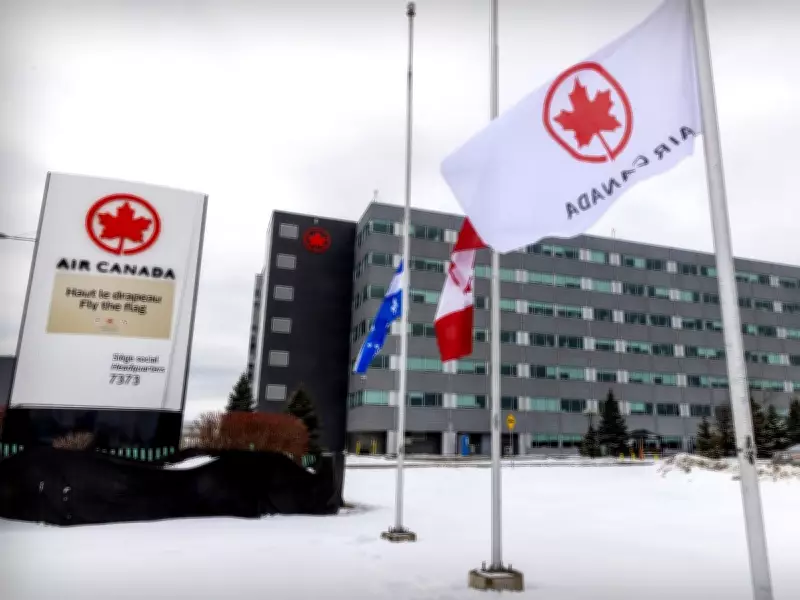
Air Canada Crash at LaGuardia: Miscommunication Suspected as Key Factor
An Air Canada flight from Montreal tragically crashed into a fire truck while landing at New York's LaGuardia Airport late Sunday night, resulting in the deaths of both pilots and injuries to dozens of passengers. The incident has raised serious questions about air traffic control procedures and systemic challenges within the United States aviation system.
Details of the Tragic Incident
The collision occurred at approximately 11:40 p.m. when Air Canada Flight AC8646 from Montreal's Trudeau airport struck an emergency vehicle on the runway during its landing approach. According to recordings of air traffic control communications, the fire truck had requested permission to cross the runway where the aircraft was scheduled to land. An air traffic controller initially granted clearance but then urgently repeated "stop" commands before the collision occurred.
Following the crash, the controller informed the pilots: "I see you collided with a vehicle there. Just hold position. I know you can't move. Vehicles responding to you now." In subsequent communications with another aircraft, the controller admitted: "We were dealing with an emergency earlier and I messed up."

Expert Analysis of Potential Causes
Aviation specialists emphasize that while it's premature to assign definitive blame, the incident points to significant procedural breakdowns. John Gradek, a faculty lecturer in aviation at McGill University, explained that emergency vehicles routinely use airport roadways, taxiways, and runways to navigate, but strict protocols should prevent such collisions.
"That truck should never have been even close to the runway," Gradek stated. "The ground controller should have held the truck back until such time as the aircraft had cleared. That's typical procedure."
Jim Brauchle, an aviation attorney and former U.S. Air Force navigator, detailed the complex coordination required between different air traffic control positions:
- Approach controllers guide aircraft toward the airport and designate runways
- Tower controllers provide visual oversight and grant landing clearance
- Ground controllers manage all vehicle movement on airport surfaces
"If ground control is going to let anyone cross the runway, they've got to get permission from the tower," Brauchle emphasized. "There's a hand-off that has to be taking place between the approach controllers and the ground controllers so that the ground controllers know which runways are being used."
Systemic Challenges in Air Traffic Control
The accident has brought renewed attention to chronic staffing shortages within the U.S. air traffic control system. Gradek noted there's currently a shortage of more than 3,000 controllers nationwide, with LaGuardia operating with 33 certified controllers against a target of 37, plus seven in training.
"That's been a typical issue that we have," Gradek said. "LaGuardia is not immune to that shortage."
Brauchle explained that the shortage stems from multiple factors:
- Experienced controllers reaching retirement age without adequate replacements
- Rigorous training programs with high attrition rates
- New controllers typically starting at smaller airports before progressing to major hubs
"There is kind of a knowledge vacuum that's going on right now within the Federal Aviation Administration," Brauchle observed.
Working Conditions and Human Factors
Experts raised concerns about potential human factors contributing to the accident, including controller fatigue and stress. Gradek questioned when the controller's shift began and whether adequate breaks were provided.
"The spatial awareness and the decision-making is really a function of the person's alertness level," Gradek explained. "Controllers have an unenviable job. Burnout happens pretty early in your career as a controller because you really have a lot of stress."
He suggested the investigation should examine scheduling practices, break times, and whether controllers have sufficient resources to perform their duties effectively.

Investigation and Next Steps
The National Transportation Safety Board (NTSB) and Transportation Safety Board of Canada have launched comprehensive investigations into the accident. Steven Marks, an aviation attorney who occasionally lectures at McGill University, noted that while air traffic control communications provide valuable information, the cockpit voice recorder will be crucial.
"It tells what was cleared, whether there was any warning given," Marks said of the control recordings. "The other half of the story — and it's often the more important half — is the cockpit voice recorder, which picks up the conversation that was occurring between the first officer and the captain."
Gradek anticipates preliminary findings within approximately three weeks, with a more detailed analysis of root causes expected in four to five months. The investigation will examine multiple factors, including:
- Controller shift schedules and alertness levels
- Break times and working conditions
- Coordination between different control positions
- Adherence to established safety protocols
Marks characterized the accident as particularly troubling given aviation's emphasis on redundancy systems. "This is not something that should ever happen," he stated. "I think this is a product of funding obligations of the government and a lack of resources at the federal level."
The tragedy has highlighted critical vulnerabilities in air traffic control systems and raised urgent questions about staffing, training, and resource allocation that will likely shape aviation safety discussions for months to come.