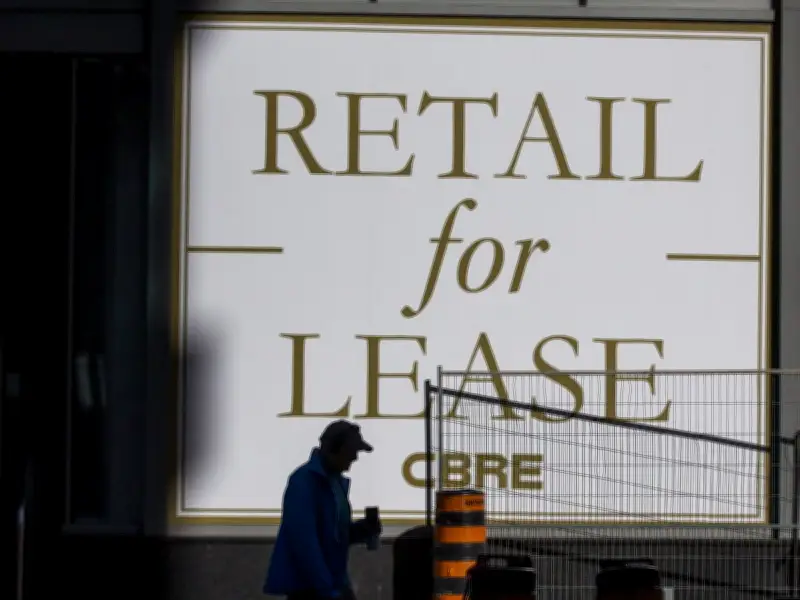
Swathes of retail space in Canada’s largest city are sitting empty after tenants were evicted or left, only for development projects to be put on hold amid a chill in the condominium market. This is an unanticipated consequence of the condo slowdown, and there are dramatic stories out there: A project to redevelop the 32-acre Cloverdale Mall in Etobicoke, for example, was cancelled by Mattamy Homes and Quadreal Property Group when only 10 per cent of the condos were sold and the mall is now actively courting tenants back on its website.
Across Toronto, landlords are attempting to lure businesses back and restructure deals, while others are simply waiting for a condo recovery or converting to other uses, such as parking lots.
Retail Business Decline
The vacancies come as a City of Toronto report released this week showed the number of retail businesses declined by 10.5 per cent across the city from 2011 to 2025, with some areas posting a decline of three times as much.

Greg Evans, president and broker of record with Behar Group, said some of the projects now in limbo had dynamic commercial uses and would have created new ground-level leases, but won’t be built any time soon. Instead, the priority is getting tenants back, with some landlords agreeing to longer leases.
“We just had a property where the (developer) saw the market had turned and agreed to a 10-year lease,” he said, noting that condo launches are just not happening today. “A tenant today is pretty confident they are not going anywhere for seven or eight years.”
Condo Cancellations
Condo research firm Urbanation has said that projects totalling 11,424 condo units have been cancelled since the beginning of 2024, while only a third have gone ahead, leaving most of the rest sidelined indefinitely.
Adam Jacobs, head of research at Colliers, said streetscapes are vacant because “in theory, some 62-storey project” will happen — eventually.
“There are blank areas where you can see … where the towers are going to be, but are we going to wait six years?” he said, noting that the overall impact on retail vacancy for a city as large as Toronto is not significant.
Jacobs said some of the retail space throughout the city is hard to get a handle on because there are stores that have been around for decades and might be owned by individual mom-and-pop groups, but that suburban plazas are booming by comparison, and investors are gobbling it up.
Retail Market Buoyant
Mitchell Cohen, chief operating officer of Westdale Properties, concurred that the retail market is doing well.
“One thing I would say is that a vacant store site reflects the uncertainty in the development, not the retail market. The market is buoyant now,” said Cohen.
“In today’s retail market, uncertainty for the tenant is more expensive than rent. A retailer needs some certainty, and he needs some term.”
Arlin Markowitz, executive vice-president of the urban retail team at brokerage firm CBRE, said those costs can easily be $1,000 per square foot, so a decent-sized restaurant could cost $1 million to fit out. Not many tenants want to spend that kind of money on a short-term lease.