Federal Housing Construction Targets Face Early Hurdles as New Home Starts Decline
Prime Minister Mark Carney's commitment to construct 500,000 new homes per year within a decade to enhance affordability and reduce housing prices is encountering significant obstacles in its initial phases. Recent projections indicate that new home construction in Canada is set to decline through 2028, casting doubt on the feasibility of achieving these ambitious targets in the near term.
Economic Forecast Points to Construction Slowdown
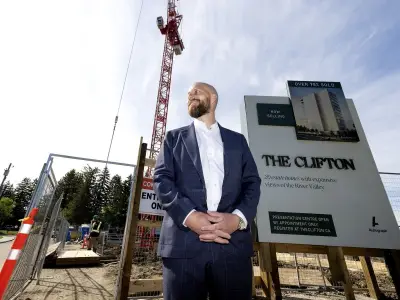
According to the Canada Mortgage and Housing Corporation (CMHC), the federal crown corporation responsible for administering the National Housing Act, Canada's economy is expected to grow slowly in 2026. The housing market outlook for this year reveals that developers are grappling with high costs, weaker demand, and an increasing number of unsold homes. This combination of factors is driving a projected decline in new home construction over the next several years.
Condominium starts will be particularly weak, while rental projects, which have been a key driver of new supply, are anticipated to moderate during the forecast period. This slowdown poses a direct challenge to the government's housing strategy, which aims to double the pace of construction over the next decade.

Parliamentary Budget Officer Raises Concerns
Interim Parliamentary Budget Officer Jason Jacques issued a report in December highlighting the modest expected contribution of the Carney government's newly-created Build Canada Homes bureaucracy. This initiative is designed to help reach the 500,000 new homes per year target, but Jacques predicts it will add only about 26,000 units over five years, with half of those being affordable housing.
Jacques noted that while Build Canada Homes is presented as part of the government's efforts to accelerate housing construction, "the government has not yet laid out an overall plan to achieve this goal." This lack of a comprehensive strategy raises questions about the program's effectiveness in addressing the housing crisis.
Budgetary Constraints and Private Sector Reliance
Further complicating matters, federal spending on housing programs is projected to decline by 56%—from $9.8 billion in 2025-26 to $4.3 billion in 2028-29—due to the expiration of several government initiatives aimed at increasing the housing supply. In response, the Carney government has emphasized that Build Canada Homes' initial $13-billion budget is just one component of a broader federal effort.
The government plans to offer an additional $51 billion in support to leverage private sector investment in housing construction. However, the success of this approach is contingent on the private sector's response, which remains uncertain given current economic conditions.
Long-Term Solutions for Immediate Problems
The housing targets are part of a series of long-term goals set by the Carney government, including doubling Canada's exports to non-U.S. markets within a decade to increase revenues by $300 billion and creating 125,000 new jobs through enhanced defence spending. These initiatives are designed to address immediate issues but rely on factors that are not guaranteed.
Their ultimate success will depend significantly on the uncertain future of Canada-U.S. trade, particularly in light of ongoing negotiations—or lack thereof—regarding the Canada-U.S.-Mexico Agreement scheduled for this year. This external economic environment adds another layer of complexity to achieving domestic housing objectives.
As Canada navigates these challenges, the gap between housing policy aspirations and on-the-ground realities continues to widen, underscoring the need for more immediate and effective solutions to the affordability crisis.