Edmonton's Quarters Revitalization Project Deemed a Multi-Million Dollar Failure
Edmonton's ambitious experiment to revitalize the Quarters district has been declared a significant failure, with taxpayers potentially facing nearly $64 million in cost overruns on the $100 million project. The initiative, which aimed to transform the area immediately east of Downtown Edmonton into a vibrant neighborhood, has fallen far short of expectations despite nearly a decade of effort and substantial public investment.
The Financial Reality of Failed Urban Planning
City council's executive committee will receive a critical report this week revealing that only about $36 million of the $100 million spent is likely to be recovered through the Community Revitalization Levy (CRL) mechanism. This special tax assessment was designed to fund neighborhood infrastructure with the expectation that private development would generate sufficient taxes to repay the city's initial investment.
The CRL approach allows municipalities to borrow money for infrastructure projects that theoretically attract private investors, whose subsequent property taxes would cover the original loans. However, in the Quarters district, this model has proven fundamentally flawed. Private development has failed to materialize at anywhere near the levels needed to generate the necessary tax revenue, creating a substantial financial shortfall that now threatens to burden all Edmonton taxpayers.

Concrete Examples of Development Disappointment
The Quarters revitalization effort has produced several high-profile disappointments that illustrate the project's shortcomings:
- Hyatt Place Hotel: Intended as a gleaming anchor for tourism and private development, this Jasper Avenue establishment gained notoriety for failing a health inspection when its ventilation system was found clogged with pigeon droppings
- Kinistinâw Park: This city-funded park has become a magnet for homeless individuals and was the scene of three overdose deaths
- The Armature: Marketed as a "green street" pilot project meant to serve as the neighborhood's commercial and social hub, this development has failed to deliver on promises of vibrant urban plazas, shopping districts, and entertainment areas
A Pattern of Municipal Overreach
This failure represents part of a broader pattern of ambitious municipal projects that have fallen short of expectations. Similar to the troubled Blatchford development on the old city centre airport lands—which remains years behind schedule and hundreds of millions over budget due to net-zero emissions requirements and city-led development rather than professional management—the Quarters project demonstrates the risks of municipal overreach in urban development.
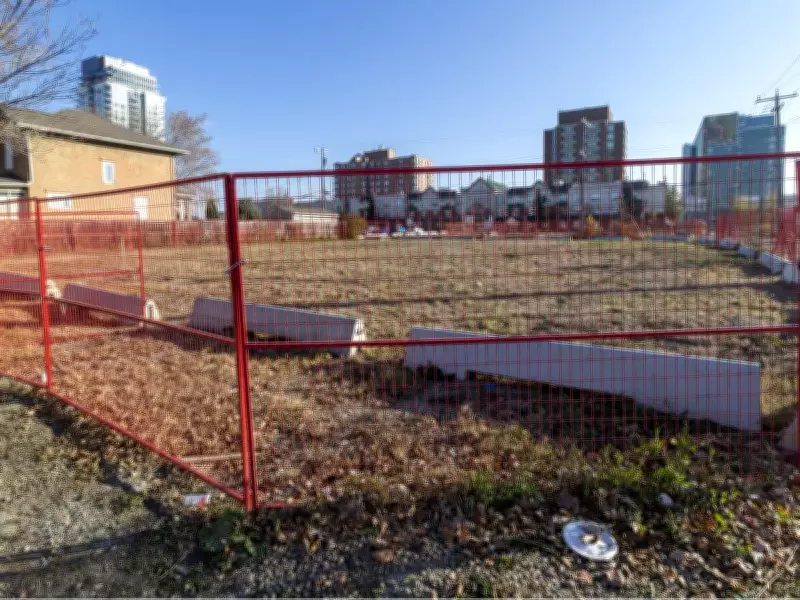
The district, while no longer dominated by derelict warehouses, flophouse hotels, porn shops, and decaying steam baths, remains far from the envisioned cozy, middle-class neighborhood within walking or biking distance of Downtown offices and attractions. Despite its proximity to the Valley Line LRT, the area has failed to attract the residential and commercial development necessary to justify the substantial public investment.
The Taxpayer Consequences
When private investment fails to materialize in sufficient quantities to generate the tax revenue needed to repay CRL loans, the financial burden inevitably falls on municipal taxpayers. Every Edmonton property owner now faces potential responsibility for covering the $64 million shortfall created by what critics describe as council and administration's "overheated dreams" of urban transformation.
This situation raises serious questions about municipal planning approaches, particularly the "if-we-build-it-they-will-come" philosophy that has guided much of Edmonton's recent urban development strategy. As the city prepares to sell land in the Quarters at deep discounts to non-profits promising transitional housing and office spaces, the fundamental viability of the original revitalization vision remains in serious doubt.