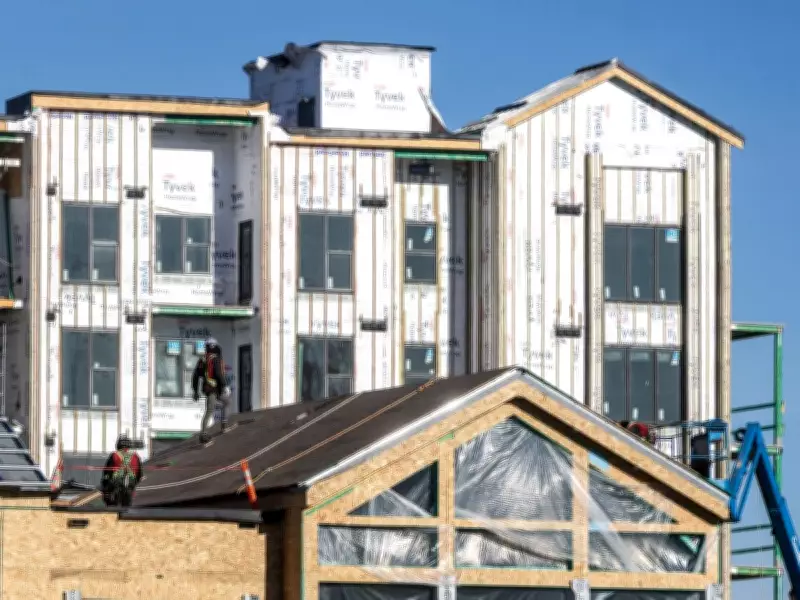
Calgary's Housing Boom Focuses on Medium-Density Family Homes
Calgary has experienced an unprecedented surge in residential construction over the past four years, setting consecutive records for housing starts. This building frenzy, driven by robust economic conditions and historic migration patterns, has now reached a point where new construction activity is outpacing population growth in the city.
Record-Breaking Construction Numbers
According to the Canada Mortgage and Housing Corporation's Spring 2026 Housing Supply Report, Calgary achieved a remarkable milestone in the final quarter of 2025, surpassing Toronto in housing starts for the first time ever. The city recorded 27,952 housing starts throughout 2025, representing a substantial 13 percent increase from previous years.
"New construction activity now outpaces population growth, so in that respect, Calgary is doing quite well," explains Taylor Pardy, lead economist for Prairies at CMHC. "This oversupply helps slow price growth, preventing rapid inflation of the cost of shelter."

The Rise of Medium-Density Housing
The report highlights Calgary's leadership in what urban planners call "missing middle" development. Approximately two-thirds of all housing starts in the city fall into medium-density formats, including row houses, semi-detached homes, laneway houses, basement suites, and ground-oriented multi-family units.
While single-family detached home starts declined nearly six percent year-over-year, and units under construction for this category fell 17 percent, apartment construction surged more than 29 percent. Row and semi-detached units under construction decreased in 2025, though starts for both categories showed modest growth.
Rental Market Expansion
New rental supply has been particularly robust in Calgary, increasing by nearly 29 percent. Rental starts grew an impressive 75 percent year-over-year, while condominium starts declined 11 percent. Builders are strategically responding to market demand, bringing diverse housing options to meet the needs of Calgary's growing population.
"Calgary and Edmonton are the remaining major centres within Canada with affordable housing for families," notes Pardy. He contrasts this with larger markets like Toronto, which struggled to add similar housing before experiencing significant price inflation, followed by demand contraction when interest rates increased.
Builder Strategies and Market Advantages
Developers from across Canada are taking notice of Calgary's housing market dynamics. Derek Goring, chief executive officer at Northcrest Developments, emphasizes that builders can address the missing middle by designing projects that align with contemporary financial and planning realities.
"Builders can help address the missing middle by designing projects that respond to today's financial and planning realities," says Goring, whose company is working on the YZD redevelopment project at Toronto's Downsview Airport lands. "We're doing this in our first neighbourhood by delivering a mix of small and mid-size projects including townhomes and buildings from six to 14 storeys."
Goring points out that smaller buildings require less capital investment, can be delivered more quickly, and present lower risk during periods of slow sales and leasing activity. This approach has proven advantageous for Calgary builders, who benefit from more favorable land development conditions compared to Vancouver and Toronto.
The combination of strategic medium-density development, favorable market conditions, and responsive building practices has positioned Calgary as a national leader in addressing housing needs while maintaining relative affordability for families.