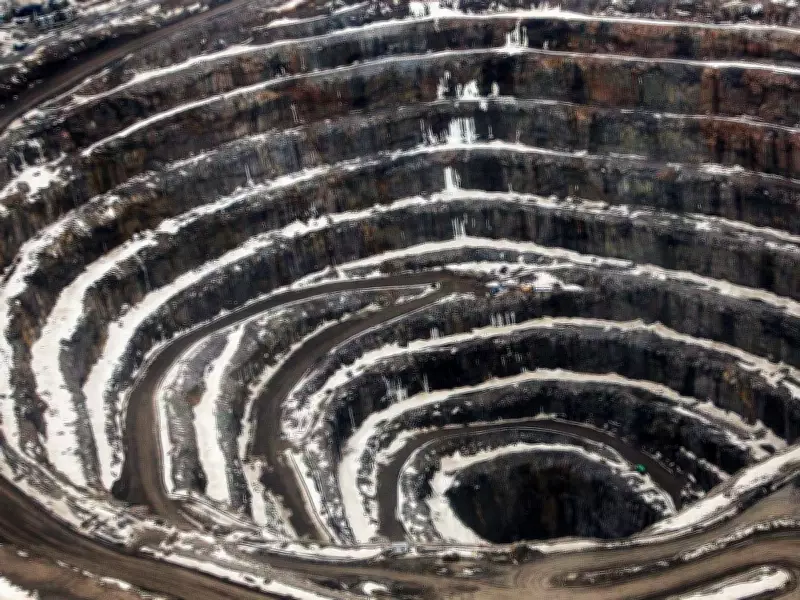
Rio Tinto Group has officially concluded its diamond mining operations with the closure of the Diavik mine in Canada's Northwest Territories, bringing an end to a business that spanned more than half a century. The world's second-largest mining company announced that Diavik, its last remaining diamond mine, has delivered its final production, with stones now set for cutting, polishing, and auction.
End of an Era in Diamond Mining
The closure of Diavik signifies Rio Tinto's complete exit from the diamond sector, as part of a broader strategic shift to concentrate on core commodities such as iron ore, copper, aluminum, and lithium. Additionally, the company plans to divest its titanium and borates businesses to streamline operations and enhance focus on these key areas.
Engineering Marvel and Historical Significance
Diavik was renowned as an engineering feat, situated beneath a frozen lake with steep walls constructed to prevent water intrusion. The mine yielded notable stones, including a massive yellow diamond weighing 552.74 carats. Rio Tinto's diamond history began with discoveries in Western Australia's Kimberley region, leading to the famous Argyle mine, which operated from the 1980s until its closure in 2020. Unlike Diavik, which primarily produced white and yellow diamonds, Argyle was famous for its pink gems that commanded premium prices.

Challenges in the Diamond Industry
In recent years, Rio Tinto's diamond business faced significant challenges, including a supply glut and competition from synthetic stones. The unit reported a loss of US$79 million in 2025, reflecting broader industry struggles. Even De Beers, the world's largest diamond producer, has encountered difficulties in sales and has implemented cuts to its exclusive diamond-buying club.
Sophie Bergeron, Rio Tinto's Managing Director for Iron & Titanium and Diamonds, highlighted the achievement, stating, "Forty years ago, few believed in diamonds in Canada. Reaching this milestone required vision and determination to mine in one of the world's most remote ecosystems." This closure marks a pivotal moment as Rio Tinto pivots toward a future centered on essential commodities, leaving behind a legacy of innovation in diamond extraction.