NorthWest Copper Corp. has announced positive outcomes from follow-up sorting test work conducted at its Kwanika project, revealing significant potential to enhance operational efficiency and project economics. The company, trading under TSX-V: NWST, shared these results as part of its ongoing efforts to optimize the mining process through advanced technology.
Improving Mill Feed Grades with Sorting Technology
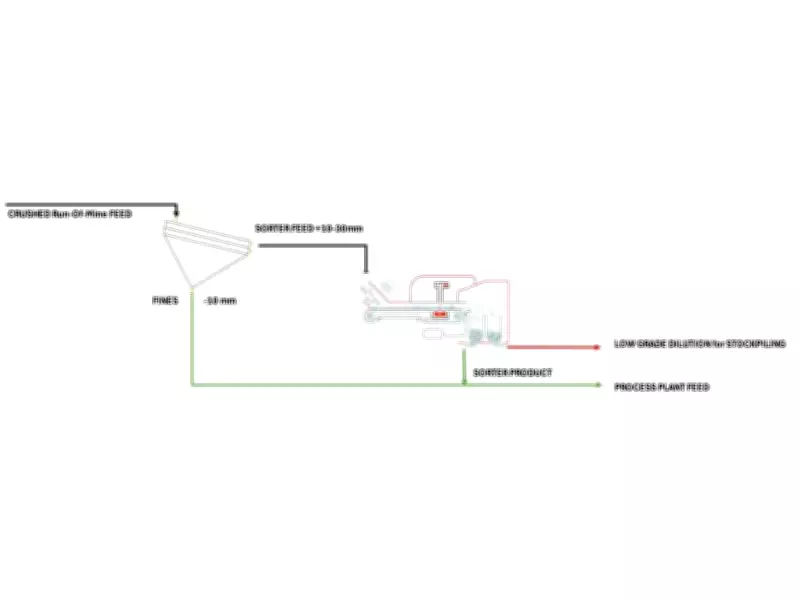
The sorting program evaluated the use of sensor-based technology to reject barren material before it reaches the processing plant. By incorporating this step, NorthWest aims to improve mill feed grades, defer processing of lower-grade material, and potentially reduce the required plant size while maintaining similar metal production levels. These findings will be integrated into a new Preliminary Economic Assessment targeted for mid-2026.
CEO Comments on Economic Benefits
Paul Olmsted, CEO of NorthWest, emphasized the encouraging nature of the results. "The sorting results demonstrate the opportunity to enhance mill feed grade at Kwanika early in the mine life, which improves overall project economics," he stated. Olmsted noted that incorporating sorting could lead to a reduction in mill size and lower upfront capital costs, all while sustaining comparable copper and gold production rates. He highlighted the advancements in sensor-based sorting technology in recent years and confirmed that its impact will be assessed to deliver a more economically compelling project in the upcoming PEA.

Test Work Highlights and Results
The sorting tests yielded impressive metrics, including a significant increase in sorted metal grades of approximately 19%. High sorter metal recoveries of about 89% were achieved using only 75% of the original mass. Additionally, the program facilitated the creation of a low-grade stockpile for processing later in the mine life, optimizing resource utilization.
Detailed material distribution data from the tests showed that the sorter feed comprised 77% of the sample, with screened fines making up the remaining 23%. The sorted product accounted for 53% of the mass, demonstrating efficient separation. Key upgrades included a 20% increase in copper grade, an 18% rise in gold grade, and a 19% improvement in silver grade, with metal recoveries reaching 90% for copper and silver, and 88% for gold.
Environmental and Operational Advantages
Geoff Chinn, VP of Business Development and Exploration, added that the results support the potential to remove barren dyke material and other dilution from mined rock. This could work in concert with low-cost bulk underground mining methods. Chinn also pointed out the environmental benefits, stating, "Sorting could enable us to reduce the overall environmental footprint of the project, significantly cutting greenhouse gas emissions, process water, chemicals, and energy requirements."
Details of the Sorting Test Program
NorthWest engaged Canenco Consulting Corp. and the Saskatchewan Research Council in late 2025 to conduct sorting tests using X-Ray Transmission technology. Samples were collected from five holes across different areas of the deposit to create a representative composite weighing approximately 312 kg, consisting of both mineralized and waste material.
After shipping to SRC in Saskatoon, Saskatchewan, the samples underwent screening to remove fine particles below 10.0mm. Approximately 241 kg of the sample was then tested through TOMRA's XRT machine at SRC's facility, under the supervision of Canenco. This rigorous testing process underscores NorthWest's commitment to leveraging cutting-edge technology for sustainable mining practices.