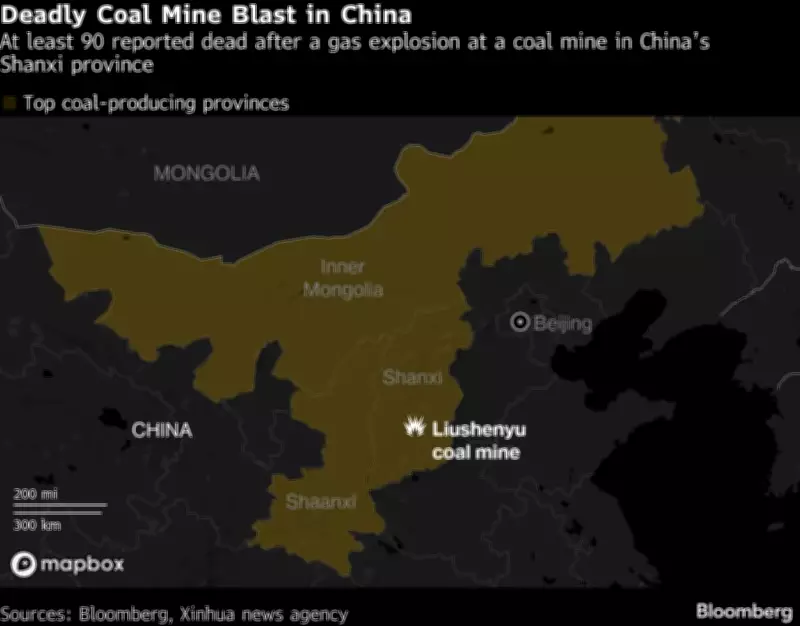
A devastating gas explosion at a coal mine in China's Shanxi province has claimed at least 90 lives, marking the deadliest coal mining disaster in the country since 2009. The blast occurred late Friday at a small operation in the city of Changzhi, and authorities are currently investigating the causes.
Government Response and Investigation
China Central Television reported that President Xi Jinping has ordered nationwide efforts to curb such major industrial accidents. He urged stronger risk inspections and hazard controls, emphasizing heightened vigilance during the current season, when heavy rain and floods are more common. Premier Li Qiang echoed these directives, calling for transparent information disclosure and tighter enforcement of safety responsibilities across key sectors, according to Xinhua News Agency.
The State Council has dispatched an investigation team to conduct a rigorous and thorough probe into the accident. The team will work to fully ascertain the causes, clarify the responsibilities of local authorities, industry regulators, and the company, and impose severe penalties in accordance with laws and regulations. Additionally, a nationwide review of mining safety measures has been ordered, along with a crackdown on illegal practices such as hidden work sites, falsified monitoring data, unclear worker counts, and improper subcontracting.

Emergency Response Efforts
Vice Premier Zhang Guoqing has been sent to Shanxi to oversee emergency response efforts, including search and rescue operations, medical treatment for the injured, and handling of the aftermath. He urged authorities to verify the number of missing workers and take measures to prevent secondary casualties.
Context of China's Coal Mining Industry
China has dramatically reduced coal mining fatalities in recent years, but the vast industry continues to juggle competing priorities. The government has pushed output to a record to meet energy security demands, even as safety officials crack down on over-stressed facilities and hold mine owners and operators accountable for accidents.
The mid-sized Liushenyu mine, owned by Shanxi Tongzhou Coal & Coke Group, has an annual production capacity of 1.2 million tons of mostly coking coal—a modest sliver of the province's overall output of 1.3 billion tons per year. Despite its size, the explosion is classified as a very serious accident under Chinese regulations.
This incident and the subsequent widespread security checks come at a challenging time for the domestic coal market. Supply is already tight due to summer demand and disruptions in exports from Indonesia, a major supplier. Even after years of dramatic renewable energy growth, coal remains a key pillar of China's energy mix, underpinning power generation and industrial activity. It is also one of the few options to compensate for current shortfalls in liquefied natural gas supply from the Persian Gulf.