

White House Deputy Chief of Staff Decries Supreme Court Tariff Decision
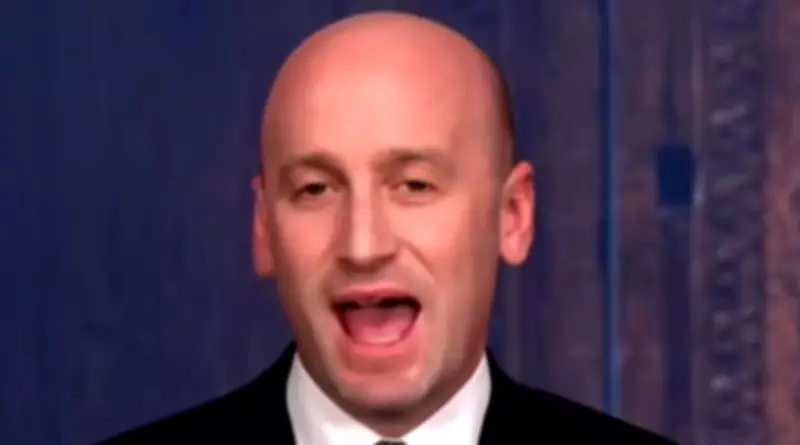
Stephen Miller, the White House deputy chief of staff, has strongly criticized the Supreme Court's recent ruling that struck down the "emergency" tariffs imposed by President Donald Trump. In an interview with Fox News host Laura Ingraham on Friday, Miller argued that these tariffs were instrumental in revitalizing U.S. manufacturing and warned that the administration has other methods to reinstate them.
Miller Defends Tariffs as Key to Economic Revival
Miller emphasized that President Trump's election was largely driven by a commitment to restore supply chains, reshore manufacturing, and repatriate jobs from overseas. "Over the last year, his historic program of tariffs has done exactly that," Miller stated. He credited the tariffs with contributing to record job growth, record wage increases, and a significant reshoring of vital manufacturing positions.
Additionally, Miller claimed that President Trump has successfully reduced inflation to 1.4%, which he described as an ideal benchmark according to economists. However, this assertion contrasts with data from the Bureau of Labor Statistics, which reported earlier this month that inflation currently stands at 2.4%.

Supreme Court Upholds Separation of Powers
The Supreme Court delivered a historic 6-3 decision on Friday, affirming a crucial separation of powers by ruling that the International Emergency Economic Powers Act (IEEPA) does not grant the president the authority to impose tariffs. This decision underscores the limits of executive power in trade matters.
In his dissent, Justice Clarence Thomas argued that Congress has consistently delegated commerce decisions to the president, including the power to impose duties on imports. Miller praised Thomas's dissent, describing it as "so brilliantly and eloquently" articulated, and reiterated that under the Emergency Economic Powers Act, the president retains the authority to regulate foreign trade, a term he insists historically includes the power to levy duties.
Administration Explores Alternative Legal Avenues
Despite the Supreme Court's ruling, Miller confirmed that the administration is not abandoning its tariff agenda. "The court also affirmed the president has the authority under Section 301, Section 232, Section 122, Section 338 ... that the president can levy tariffs on foreign nations," he explained. Miller asserted that Trump's tariff program will not only be fully reconstituted but also expanded using these statutory provisions.
This perspective is supported by Inu Manak, a senior fellow for international trade at the Council on Foreign Relations, who suggested in a Friday article that the aforementioned statutes could indeed enable Trump to proceed with his tariff plans. Meanwhile, President Trump has already taken action, announcing a 10% levy on all U.S. imports on Friday, which he increased to 15% on Saturday morning, following his November indication that he would find alternative ways to impose tariffs.
Public Reaction and Broader Implications
Miller's appearance on Fox News sparked significant backlash on social media, with users expressing frustration over his comments. The ongoing debate highlights the tension between executive authority and congressional oversight in trade policy, with potential implications for U.S. economic strategy and international relations.
As the administration seeks to navigate legal challenges, the future of U.S. trade policy remains uncertain, with both supporters and critics closely watching how these alternative avenues will unfold in the coming months.






