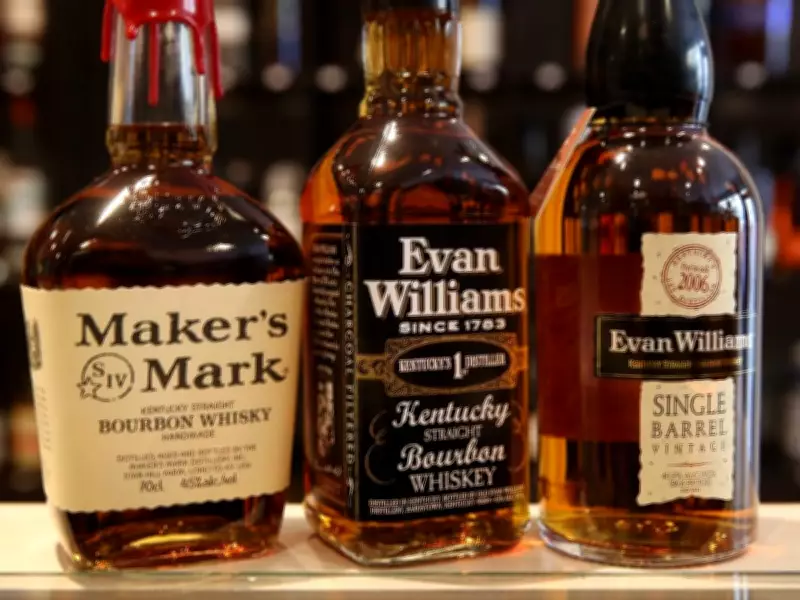
American exports of spirits to Canada saw a dramatic decline last year after the United States initiated a trade war with its northern neighbor. According to testimony before the Section 301 Committee, a 63% drop in exports occurred in 2025 due to retaliatory sales bans imposed by most Canadian provinces.
Industry Testimony Highlights Impact
Chris Swonger, President and CEO of the Distilled Spirits Council of the U.S. (DISCUS), testified last week at the Section 301 Committee, an agency under the Office of the U.S. Trade Representative Jamieson Greer. He expressed support for President Donald Trump's goal of increasing U.S. manufacturing and exports but urged trade officials to exempt distilled spirits from any current or future tariffs.
Swonger noted that when the European Union imposed tariffs on American whiskeys between 2018 and 2021, exports dropped 20% and rebounded by 60% once the tariffs were suspended. He warned that the recent Canadian bans have had a more severe impact, with a 63% decline in exports.

Retaliatory Measures Across Provinces
With the exception of Alberta and Saskatchewan, most Canadian provinces have implemented import bans on American alcohol as part of retaliatory measures against U.S. tariffs on steel, aluminum, lumber, and automobiles. This has effectively removed U.S. spirits from store shelves across much of Canada.
U.S. Trade Representative Jamieson Greer recently indicated that the United States might take enforcement action against Canada over the booze ban. He stated that Canada and China are the two countries that have retaliated economically against the U.S. in the past year, and that action may be necessary to address the issue on wine and spirits.
Ontario Premier Defends Ban
Ontario Premier Doug Ford defended the ban on American alcohol imports, stating that it will only be lifted when the trade war ends. He emphasized that the tariffs on Canadian products must be dropped first, including those on steel, aluminum, dairy, and lumber.
Broader Economic Impact
Swonger highlighted that tariff reductions on U.S. spirits in countries such as India, Argentina, Cambodia, Ecuador, Indonesia, Malaysia, Turkey, Switzerland, and Taiwan have benefited American distillers and farmers. The industry generates over $250 billion in economic activity and supports approximately 1.7 million U.S. jobs.
However, the industry is facing significant headwinds, with domestic sales down 2.2% and exports falling nearly 4%. According to the U.S. Bureau of Labor Statistics, American distilleries lost 3.5% of their workforce—nearly 1,000 jobs—from September 2024 to September 2025.
Swonger noted that even the threat of tariffs creates uncertainty, negatively impacting exports. He pointed out that the EU has repeatedly suspended planned retaliatory tariffs on U.S. spirits, extending the suspension until August 2026, but the uncertainty alone contributed to a 3% decline in exports to the EU.