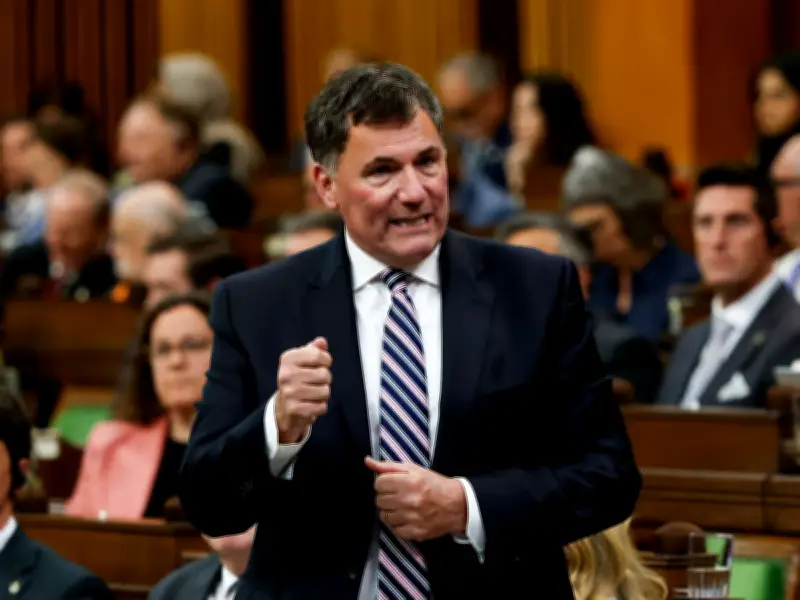
Canada-U.S. Trade Minister Dominic LeBlanc expressed confidence that side agreements with the United States will ultimately resolve ongoing trade disputes, following the Trump administration's decision not to renew the North American trade deal next month. LeBlanc characterized the July 1 review milestone for the Canada-U.S.-Mexico Agreement (CUSMA) as "not a cliff that everybody goes hurtling off."
July Review Not a Deadline
Speaking at an event in Toronto on Thursday, LeBlanc clarified that the July date is merely "a moment where the three countries could decide to extend the agreement" for 16 years. U.S. President Donald Trump has stated he does not wish to extend the pact at this time. However, LeBlanc emphasized that the agreement remains in effect for another 10 years with annual reviews, unless a formal withdrawal is initiated by one of the nations.
LeBlanc noted that Canada never anticipated a "rubber stamp" from the White House and acknowledged President Trump's tendency to inject uncertainty into negotiations. The U.S. has scheduled technical discussions with Mexico in July, but the three countries could still mutually agree to extend the agreement at any point.

Bilateral Arrangements Expected
"I would expect that we’ll have bilateral arrangements between Canada and the United States, between the United States and Mexico, sort of adjacent to the trilateral framework," LeBlanc said. He expressed hope that if these side deals address key issues, the extension could be achieved.
Prime Minister Mark Carney later confirmed that Canada is also pursuing a bilateral deal with Mexico. "We’ll work forward on that. But there would be some commonalities that are retained as part of CUSMA’s extension," Carney stated, using the Canadian acronym for the pact.
Pressure to Show Progress
The prime minister faces pressure to demonstrate progress as the U.S. intensifies its own negotiations with Mexico. Carney has recently advocated for a "Fortress North America" approach, arguing that expanded Canada-U.S. trade can "make America great again."
U.S. tariffs on autos, steel, aluminum, and lumber have significantly impacted Canadian industries, contributing to broader economic uncertainty. LeBlanc struck an optimistic tone regarding recent talks with U.S. Trade Representative Jamieson Greer, noting that Canada is "answering some of the longstanding concerns that the United States has publicly spoken about in terms of non-tariff barriers."
For instance, Carney's government withdrew a proposal that would have required entertainment companies like Netflix Inc. to increase financial contributions to Canadian film and television productions—a regulation that had irritated the U.S. administration.
"I had a sense that Ambassador Greer and his colleagues saw the progress that they had been looking for," LeBlanc said, adding that he believes "there’s a desire to get us on a track where we can have a bilateral conversation."