

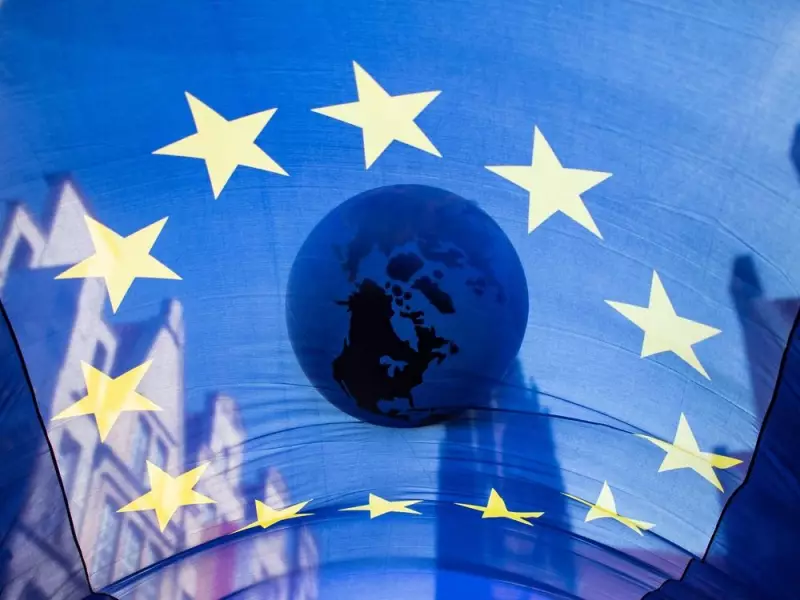
Europe's Critical Position in a World After Global Rupture
The recent World Economic Forum gathering in Davos provided stark contrasts in global leadership visions. While former U.S. President Donald Trump delivered his characteristic blend of grievance and grandiosity, it was former Bank of Canada Governor Mark Carney who offered the more substantive analysis of our current geopolitical moment.
The End of an Era and the Rise of Middle Powers
Carney's address focused squarely on what he termed a "rupture, not a transition" in the international order. Drawing parallels to Václav Havel's critique of communist systems, Carney argued that the "international rules-based order" had long been sustained by collective participation in rituals that many privately recognized as increasingly disconnected from reality.
The central insight was profound: In today's world of weaponized interdependence, nations can no longer maintain the fiction of mutual benefit through integration when that very integration has become a source of subordination for many.

Europe's Growing Responsibility in Global Affairs
With each passing day, the European Union finds itself thrust into greater global significance across multiple domains. As Carney noted, nostalgia for the old order is not a strategy. The question becomes: What comes next, and who will build it?
Europe emerges as a critical player in this equation. The continent possesses the economic heft, institutional experience, and diplomatic networks necessary to help construct a more equitable successor to the U.S.-led system that dominated the post-World War II era.
Assessing the Legacy of the Liberal International Order
Carney's analysis requires careful qualification. While he correctly identifies the rupture in global governance, his comparison between communist systems and the liberal international order risks oversimplification. The latter delivered substantial benefits that were far from fictional.
Consider these achievements:
- Effective dispute settlement mechanisms through GATT and WTO frameworks
- American provision of public goods including open sea lanes and financial stability
- Unprecedented global prosperity and health improvements
- Remarkable absence of direct great power conflict since the Korean War
The opening of the world economy to trade and investment contributed significantly to these outcomes, a fact recognized by sensible observers in emerging economies like China and India.
The Path Forward: From Hope to Strategy
Carney expressed hope that "from the fracture, we can build something better, stronger, more just." This aspiration, while noble, requires concrete strategic implementation. Europe's role will be crucial in translating this hope into reality.
The challenges are substantial. Protectionist movements, exemplified by Trump's chaotic policies, represent political choices that ultimately fail to help their intended beneficiaries. These approaches constitute what Carney might call "fraud" rather than genuine solutions.
Europe must navigate this complex landscape by leveraging its unique position as both a traditional power center and a potential bridge between established and emerging global actors. The continent's ability to foster multilateral cooperation while addressing legitimate concerns about sovereignty and equity will determine its success in helping build a more sustainable global order.
The task ahead is monumental, but Europe's growing influence across political, economic, and security domains positions it uniquely to help shape what comes after the rupture in global governance that Carney so accurately identified.






