Terence Corcoran: The Art and Illusion of Oil Price Forecasting
In the realm of economic journalism, few spectacles are as captivating as watching professional forecasters attempt to predict the future trajectories of global and national economies. The current focal point of this forecasting frenzy is the short-term outlook for oil prices, a topic of immense importance for consumers, industries, and governments alike.
The Volatile World of Oil Predictions
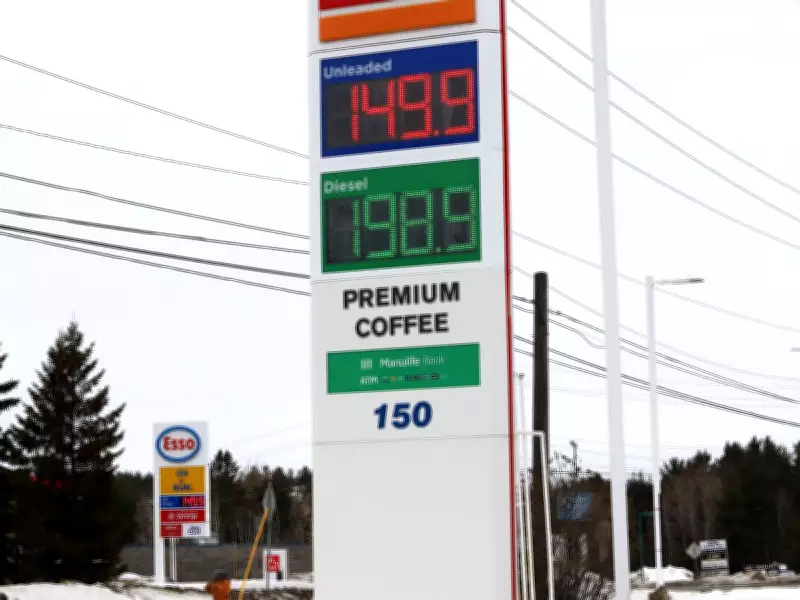
With oil recently surpassing US$100 per barrel and gasoline approaching $1.60 per litre in certain Canadian regions, everyone from automobile owners to factory operators is anxiously wondering where prices will head next. The answer, it seems, depends entirely on which forecaster is currently commanding the stage.
The U.S. Energy Information Administration (EIA) recently projected that oil prices would remain elevated above $95 per barrel for the next two months due to Middle East supply disruptions. Their forecast suggests a gradual decline to approximately $70 per barrel by late 2026, with an average of $64 anticipated for 2027.

Contrasting Forecasts and Market Interventions
Contrast this with the perspective from global consultancy Wood Mackenzie, which suggested just days ago that Brent crude could potentially surge beyond US$150 per barrel in the coming weeks, mirroring the 2022 spike following Russia's invasion of Ukraine. Their analysis even posits that US$200 per barrel "is not outside the realms of possibility in 2026."
In response to these alarming projections, 32 nations have initiated the release of 400 million barrels from global oil reserves, aiming to flood the market and counteract supply blockades in the Gulf of Hormuz. However, many forecasters remain skeptical about this intervention's effectiveness, with some arguing that the limited volume of the release might actually be sustaining higher prices.
"There is no policy response that can stop the rise in oil prices — none," declared one particularly pessimistic forecaster, highlighting the perceived limitations of governmental interventions in the face of powerful market forces.
Canada's Economic Outlook Amid Price Uncertainty
For Canada, Capital Economics has provided a more measured assessment that avoids sensationalism while acknowledging economic realities. Their analysis straightforwardly states: "Higher oil prices are positive for the Canadian economy."
The consultancy outlines three potential scenarios:
- A severe but short-lived conflict, with oil prices quickly retreating
- A prolonged conflict with limited damage to Gulf energy infrastructure, causing West Texas Intermediate crude to rise to $125 for three months before settling at $85 by year-end
- A protracted conflict with lasting damage to energy infrastructure, pushing WTI to $145 for six months and maintaining prices above $100 until the end of 2027
Under the most extreme scenario, Canada's GDP growth could increase by up to 0.4%, while inflation might rise by as much as 1.5% above current levels. Regarding interest rates, the analysis suggests that unless prices rise significantly further and remain elevated for several months, the Bank of Canada would likely refrain from implementing rate hikes, particularly with CUSMA renegotiations approaching.
Unsurprisingly, the Canadian oil industry stands to benefit from these developments, regardless of which forecasting scenario ultimately materializes. The fundamental truth that emerges from this analysis is that while forecasters provide entertaining speculation and varying perspectives, it is ultimately market dynamics—not sensational headlines or dramatic predictions—that shape economic realities.