Iran Conflict Triggers Oil Shock, Disrupting Canadian Economy and Agriculture
A global supply shock triggered by the war in Iran is sending powerful ripples through Canada's economy, creating a complex scenario where surging energy prices benefit oil and gas producers while simultaneously driving up costs for farmers, businesses, and consumers across the nation.
Immediate Fallout for Canadian Agriculture
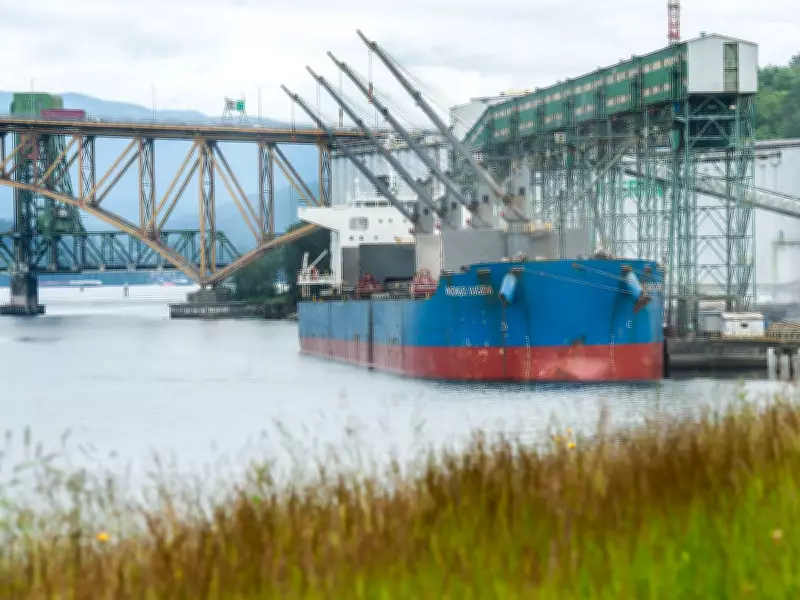
Less than two weeks after U.S.-Israeli strikes on Iran effectively closed the world's most critical oil transit route—the Strait of Hormuz—the economic consequences are spreading rapidly beyond energy markets. Shipping disruptions are already severely impacting grain sales for Canadian farmers.
Grain originally destined for Middle Eastern markets is now experiencing significant delays or being redirected to alternative markets like China and India, according to industry grain brokers. This temporary surge in supplies to those regions is weakening demand for Canadian pulse crops, including peas and lentils.

"None of our traders at the coast want to take product in Vancouver for export because they're not confident about when they would be able to ship it to India or China," explained Chevy Johnston, chief executive of Johnston's Grain, a Canadian agricultural brokerage. "They don't want to be stuck holding inventory with uncertainty about shipping timelines and costs, so they've backed off their bids. The bids basically just dried right up."
A Looming 'Calamitous' Oil Supply Crisis
Experts warn that more concerning than the immediate trade route disruptions is the potential for what they describe as a "calamitous" loss of physical oil supply in the coming weeks. This crisis stems from the closure of the Strait of Hormuz, which has shut in nearly seven million barrels per day of oil production capacity from major producers including Saudi Arabia, Iraq, the United Arab Emirates, and Kuwait.
In response to skyrocketing prices and the severe risk of a prolonged supply shock, the International Energy Agency announced an unprecedented move: member countries will release 400 million barrels of oil from their emergency stocks. This marks the largest strategic reserve release in history.
Crude oil prices have surged nearly 40 percent since the beginning of the year, reaching almost US$120 per barrel recently as the conflict chokes off roughly one-fifth of the world's total oil supply. Prices for refined fuels are climbing even more rapidly, market analysts caution.
- Gasoline, diesel, propane, and jet fuel prices are all experiencing sharp increases
- Jet fuel surpassed US$200 per barrel in Singapore last week as airlines scrambled to secure supply
- Natural gas prices are also rising following reports that liquefied natural gas shipments from Qatar—the world's second-largest LNG exporter—stopped five days ago
Long-Term Economic Implications
Even if the crisis were to end immediately and the Strait of Hormuz reopened, industry experts note it would take considerable time to restore the lost production to full capacity. "Right now, there is no base case forecast," said Rory Johnston, oil market researcher and founder of Commodity Context, who previously worked as a Scotiabank economist.
"The question on everyone's mind—and what the market is attempting to handicap in real time—is essentially how long the strait remains closed and what the White House is going to do in the interim to soften this calamitous loss of supply," Johnston added.
The U.S. Energy Information Administration has sharply raised its price outlook for the second quarter, now forecasting that benchmark U.S. West Texas Intermediate crude will average $84.56 per barrel from April through June. The agency cited supply disruptions directly linked to the ongoing Middle East conflict.
Higher oil prices—and their ripple effects on gasoline, transportation, food, and manufacturing costs—could place significant pressure on consumers and businesses for several months ahead, creating challenging economic conditions across multiple sectors of the Canadian economy.