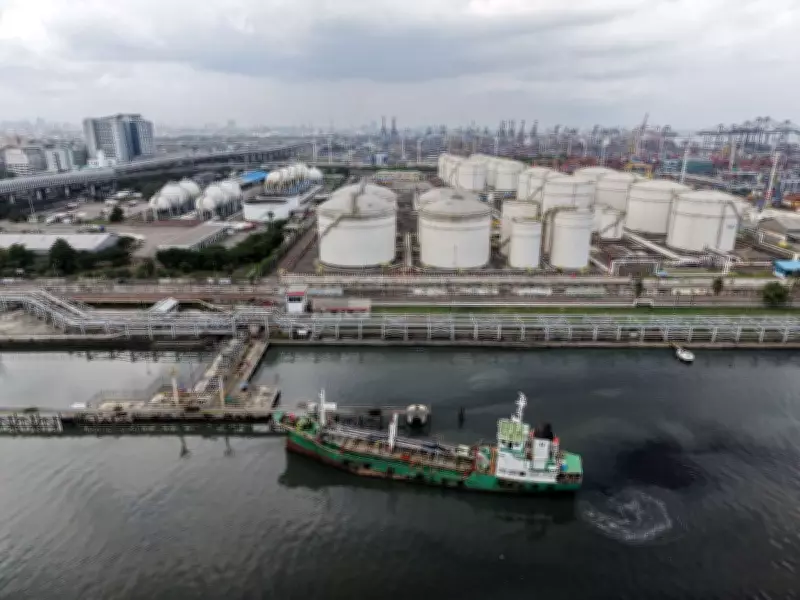
The world has burned through oil inventories at a record speed as the Iran war throttles flows from the Persian Gulf, eating into the very buffer that protects against supply shocks.
Rapid Depletion of Stockpiles
The rapidly shrinking stockpiles mean that the risk of even more extreme price spikes and shortages is getting ever-closer, leaving governments and industries with fewer options to cushion the impact of the loss of more than a billion barrels of supply, two months into the near-closure of the Strait of Hormuz. The sharp depletion will also mean the market stays vulnerable for longer to future disruptions even after the conflict ends.
Morgan Stanley estimates global oil stockpiles dropped by about 4.8 million barrels a day between March 1 and April 25 — far exceeding the previous peak for a quarterly drawdown in data compiled by the International Energy Agency. Crude accounts for almost 60% of the decline, and refined fuels the rest.

Operational Minimum Concerns
Crucially, the system also requires a minimum level of oil, which means that the “operational minimum” is reached long before the inventories actually hit zero, said Natasha Kaneva, JPMorgan Chase & Co.’s head of global commodities research. “Inventories are acting as the shock absorber of the global oil system,” she said. But “not every barrel can be drawn.”
There are some signs that the drawdown may have slowed slightly in recent days, according to Goldman Sachs Group Inc., which pointed to weaker demand from China, the world’s top oil importer — leaving more available for other buyers. Still, global visible oil stocks are already close to their lowest since 2018, the bank said.
Stress Points in Asia and Europe
The most immediate points of stress are in a handful of fuel-import-reliant countries in Asia, with traders pointing to Indonesia, Vietnam, Pakistan and the Philippines as the biggest worries, potentially hitting critical levels of supplies in as little as a month. Larger economies in the region, particularly China remain comfortable for now.
However, European jet-fuel stocks are also depleting fast just as summer vacations approach, and some analysts predict they could hit critical levels as soon as June.
JPMorgan's Warning
JPMorgan’s Kaneva warns that inventories in the Organisation for Economic Co-operation and Development could reach “operational stress levels” early next month, if the strait doesn’t reopen, and then “operational minimum” floors by September. That’s the point when the world hits the bare minimum amounts of oil needed for pipelines, storage tanks and export terminals to function properly.
The US, which has become the supplier of last resort to the world, has already drawn down domestic inventories of crude and fuels to below historical averages as exports surge. US crude stocks, including the nation’s Strategic Petroleum Reserve, have dropped for the last four straight weeks, according to government data. US distillate stockpiles were at their lowest point since 2005 at the end of last week, while gasoline stockpiles were hovering near their lowest seasonal levels since 2014.