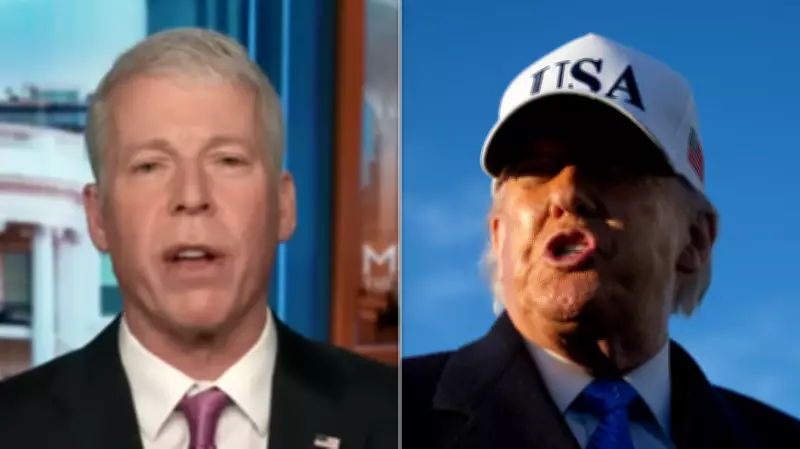
Energy Secretary Links Fuel Price Spikes to Ongoing Iran Conflict, Predicts Eventual Relief
Energy Secretary Chris Wright has characterized the recent surge in gasoline and diesel prices as a temporary disruption directly linked to the United States' military engagement with Iran. During an appearance on NBC's "Meet the Press" with moderator Kristen Welker, Wright acknowledged the significant financial strain on American consumers but emphasized that resolution hinges on the conflict's conclusion.
Substantial Price Increases Since Hostilities Began
Welker highlighted the dramatic escalation in fuel costs, noting that the national average for gasoline has risen by 24 percent, while diesel prices have skyrocketed by 32 percent since the war's inception. When pressed on when Americans might see relief, Wright responded unequivocally: "After the conflict is over." He elaborated that Iran's aggressive actions, including obstructing the critical Strait of Hormuz and launching attacks against neighboring nations, underscore the imperative to neutralize the regime, which he labeled "the greatest supporter of terrorism in the world."
Administration's Stance and Military Objectives
Wright defended President Donald Trump's decision to engage, asserting that previous administrations had avoided direct confrontation despite Iran's role in American military casualties over two decades. "It's just this president did not want to kick this can down the road to the next administration," he stated. The Energy Secretary expressed pride in Trump's actions, declaring that "the world simply can't see a nuclear-armed Iran" and that the current disruption, while painful, will ultimately eliminate a major threat to global energy security.

Wright projected a more stable energy future, saying, "We'll go to a world more abundant in energy, more affordable in energy, and less risky for American soldiers and commerce in the Middle East."
Timeline for Conflict Resolution and Price Normalization
When Welker inquired if the war could conclude within weeks, Wright indicated that a timeframe of four to six weeks was initially anticipated to dismantle Iran's military capabilities. He reported significant progress, citing the destruction of Iran's navy, air force, and long-range missile infrastructure, with ongoing operations targeting short-range missiles and drones. Despite this, Wright cautioned, "There's no guarantees in war," and the exact duration remains uncertain.
Contradictory Statements on Oil Pricing Benefits
The interview also addressed a recent Truth Social post by President Trump, which seemed to celebrate higher oil prices due to increased U.S. production revenue. Welker questioned the apparent contradiction with the administration's usual advocacy for lower consumer fuel costs. Wright clarified that the president remains committed to affordable energy, explaining that while elevated oil prices generate economic income, their impact is less severe in the U.S. compared to other nations. "He's all about low gas prices, low diesel prices, low energy prices," Wright affirmed, because "100% of Americans are affected by that."
Summer Travel Season Outlook
Earlier in the discussion, Welker asked if gasoline could fall below three dollars per gallon by the busy summer travel period. Wright expressed optimism, responding, "There's a very good chance that'll be true." He noted that achieving this price point is a clear administrative goal and entirely plausible, though he reiterated the inherent unpredictability of wartime circumstances.
In summary, Energy Secretary Chris Wright frames the current fuel price inflation as an unavoidable, short-term consequence of confronting Iran, with eventual declines contingent on military success. He assures the public of the administration's dedication to restoring affordable energy, despite the complex economic dynamics at play.