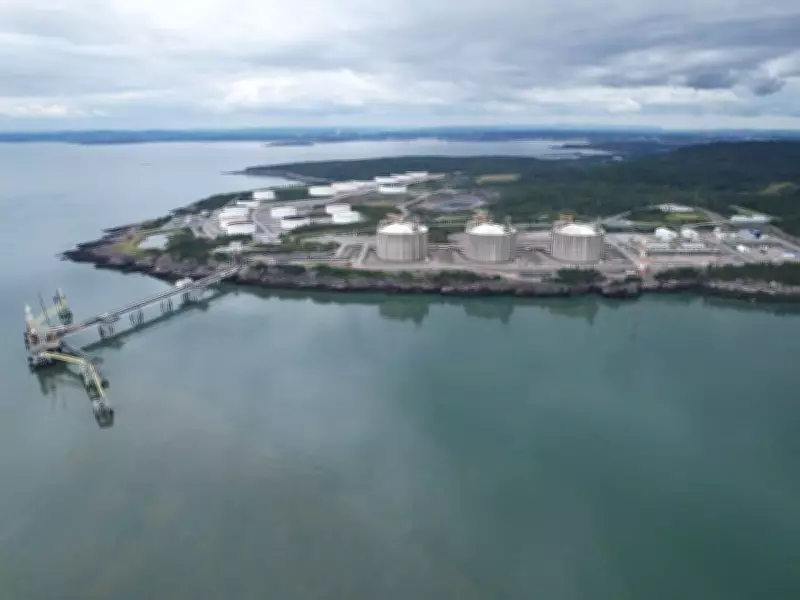
In a 2022 news conference, former Prime Minister Justin Trudeau said there wasn't a clear business case for building liquefied natural gas (LNG) terminals to export to Europe. This past week, Mark Carney suggested in a media interview that the first thing European authorities are interested in when they sit down with Canada is not our energy. He went on to say that energy is something Canada raises as being part of the solution in respect to nuclear and LNG.
Yet international agendas are typically coordinated well in advance. It is difficult to ignore the possibility that the Liberal Government, facing a politically sensitive domestic debate over pipelines and LNG development, may prefer not to place energy security at the centre of these public discussions. That does not change the underlying reality. Europe continues to require large, reliable long-term energy supplies, and Canada is well-positioned to help meet that demand. What is missing is not demand. It is Canadian execution.
Europe's Energy Transformation
Since Russia's invasion of Ukraine, Europe has fundamentally restructured its energy system. Russian gas imports, which once totaled roughly 150 billion cubic meters annually, have largely disappeared. That shortfall has been replaced by a surge in LNG imports, now in the range of 130 to 150 billion cubic meters per year. LNG today accounts for roughly one-third and, in some periods, almost 40 per cent of Europe's gas supply. Overall consumption remains in the range of 400 to 500 billion cubic meters annually, with the continent continuing to import more than half of its total energy needs, according to data from the International Energy Agency and Eurostat.

This is not a marginal market. It is one of the largest energy markets in the world, and it is actively seeking stable, politically reliable suppliers. European utilities are signing long-term contracts again, often spanning 10 to 20 years, because security of supply now matters as much as price. Companies such as Uniper, RWE, and TotalEnergies are not negotiating these agreements out of curiosity. They are doing so out of necessity.
Canada's Missed Opportunity
Canada, meanwhile, produces approximately 20 billion cubic feet of natural gas per day and nearly 5 million barrels of oil per day. Yet we export roughly 97 per cent of our oil to a single customer, the United States. We have built a system that leaves us price takers in a continental market while global prices are set elsewhere. The result is a persistent discount on Canadian crude, often in the range of 10 to 20 dollars per barrel.
The economic implications of accessing European markets are straightforward. A single Atlantic LNG facility with a capacity of 10 to 15 million tonnes per year could generate roughly 4 to 7 billion dollars annually under current price assumptions. On the oil side, the ability to move 500,000 to 1 million barrels per day to tidewater could generate between 13 and 30 billion dollars annually, depending on global prices and throughput. The uplift from narrowing the persistent discount on Canadian crude, often in the range of 10 to 20 dollars per barrel, could add several billion dollars more each year.
Canada must act now to build the necessary infrastructure. The only LNG terminal on the Canadian Atlantic coast is currently an import terminal, not an export one. This must change. Ottawa must prioritize energy export projects to unlock tens of billions in economic benefits and strengthen energy security for our allies.