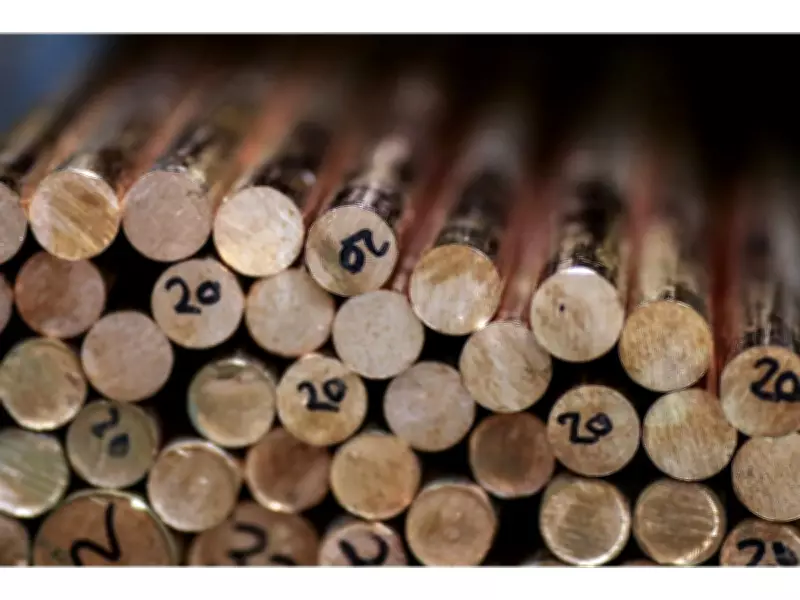
Copper surged the most in over a month, approaching a record intraday high as it shrugged off the apparent stalemate between the United States and Iran over ending the conflict and reopening the Strait of Hormuz.
Market Resilience Amid Geopolitical Uncertainty
All major metals contracts on the London Metal Exchange posted gains, following the bourse's combined price gauge ending Friday at an all-time high. Metals from copper to zinc have shown resilience during the Middle East war, partly due to signs of demand outstripping supply.
Last week's upward momentum carried into Monday despite U.S. President Donald Trump rejecting Iran's latest peace proposal as "totally unacceptable," with the two sides far apart on a framework to end the conflict. Metals rose as equities steadied, suggesting investors are not greatly concerned about a serious escalation.

"The market has moved on from the impact of the US-Iran conflict, and copper has its own distinct price trend now," said Jia Zheng, trading manager at Suzhou Chuangyuan Harmony-Win Capital Management Co. This is primarily due to factors such as tight supply and declining inventories in China, she added.
Record Closing Price
Copper rose 2.7% to settle at $13,943 a ton, a fresh record closing price, surpassing the previous peak of $13,618 hit on January 29. Most base metals are now solidly higher so far this year, despite sharp dips in the opening weeks of the Iran war as investors fretted about serious fallout for the global economy. Copper is up about 12% since the end of 2025, and there were plenty of bullish takes at a major gathering of metals-market participants in Hong Kong last week.
Drivers of Copper's Strength
Industrial metals are also getting a boost from China's robust exports — the April headline figure rose 14% from a year earlier — including booming shipments of clean-tech goods, which tend to be copper-intensive. Demand for metals for the energy transition and defense, coupled with supply headwinds, will boost copper's resilience in a worst-case scenario that entails a prolonged closure of the Strait of Hormuz, according to Citigroup Inc. analysts.
Traders are also monitoring market disruptions in China, where a regulatory crackdown on a form of metals-backed financing has triggered turmoil for some companies. The issue has limited supplies of scrap, narrowing the usual discount between scrap prices and refined copper, said Zheng.
Aluminum and Nickel Gains
Aluminum rallied more than 2% while nickel gained 1.9%. The closure of Hormuz impacts aluminum smelters in the Gulf and nickel producers elsewhere who depend on the region for supplies of sulfur. "Aluminum continues to underperform on 'de-escalation' days for the Middle East conflict, but given the long timeframe needed to restart smelters, we think this may offer buying opportunities," Morgan Stanley analysts led by Amy Gower said in a note. "Aluminum could also see further support, in LME prices or regional premiums, if we see further curtailments in the Middle East if the Strait of Hormuz is closed for longer."
—With assistance from Yvonne Yue Li.