Canada's Energy Crossroads: Global Conflict Highlights Supply Potential
As military conflict escalates in Iran, creating worldwide energy supply concerns, Canada finds itself at a critical juncture regarding its oil and gas export capabilities. Energy Minister Tim Hodgson recently stated that Canada would "do its part" to support the International Energy Agency's release of 400 million barrels from strategic global stockpiles to stabilize oil prices. However, the minister notably declined to specify what that Canadian contribution would entail, revealing underlying limitations in the nation's current energy infrastructure.
Infrastructure Constraints and Missed Opportunities
While exploring methods to increase Canadian oil production represents a positive development, significant obstacles remain due to what many describe as self-inflicted wounds from government infrastructure decisions over the past decade. Unlike numerous other nations, Canada lacks a strategic oil reserve, which severely restricts its ability to respond swiftly to global supply disruptions. This fundamental limitation explains the non-committal nature of Minister Hodgson's statements—Canada's capacity for meaningful intervention remains marginal rather than transformative.
For a country blessed with vast energy resources, the Iran conflict should serve as more than a temporary crisis. It represents a crucial message about the importance of consistently developing energy capacity in an increasingly volatile world where stable suppliers have become invaluable. Canada possesses both the resources and geographic position to become that reliable energy partner for allies across the globe.

Pipeline Progress and Economic Impact
Fortunately, Canada hasn't been entirely negligent in its energy development. The completion of the Trans Mountain pipeline expansion in 2024 has proven particularly timely, with pipeline flows now doubled and operating near capacity. This infrastructure achievement translates into substantial economic benefits: during its first year of operation, the expanded pipeline boosted oil industry revenues by $12.6 billion while contributing $5.4 billion to Alberta government revenues and $1.7 billion to federal coffers. These funds support everything from imported consumer goods to essential government services including healthcare and education.
Critical Infrastructure Projects That Never Materialized
Despite this progress, Canada's energy potential remains underdeveloped due to canceled pipeline projects that would have dramatically enhanced export capabilities. The Energy East pipeline, with a projected capacity exceeding 1.1 million barrels daily, would have transported crude to eastern Canada and the Atlantic coast. Beyond reducing eastern Canada's dependence on imported oil, this project would have enabled direct exports to Europe from a terminal in Saint John, New Brunswick, providing both economic and geopolitical advantages.
Similarly, the Northern Gateway pipeline to northwest British Columbia would have added over half a million barrels to daily export capacity, creating direct access to Asian markets. The absence of these projects represents significant missed opportunities that would have positioned Canada more favorably during current global energy uncertainties.
LNG Developments and Future Prospects
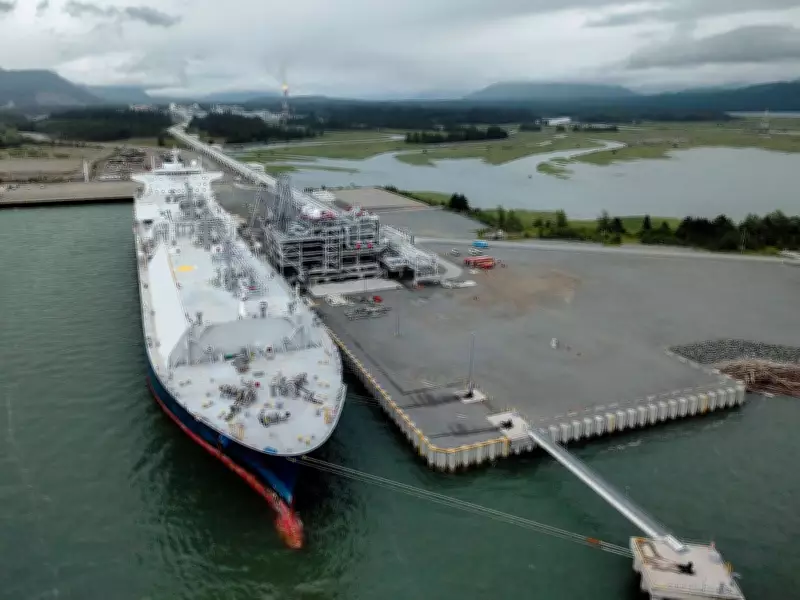
The energy landscape isn't entirely bleak. In British Columbia, LNG Canada completed construction in 2025 and has increased exports since the Iran conflict began. A final investment decision regarding LNG Canada's second phase could emerge this year, potentially doubling export capacity. Additional projects including Cedar LNG in Kitimat (scheduled for 2028 completion) and Ksi Lisims LNG off British Columbia's northwest coast (planned for 2029) will further enhance Canada's ability to supply global energy markets.
These liquefied natural gas developments should be universally celebrated and leveraged as catalysts for additional energy infrastructure projects. As global instability makes reliable energy suppliers increasingly valuable, Canada faces both immediate challenges and long-term opportunities to establish itself as the stable energy superpower its allies desperately need.