Asian LNG Market Weakness Creates Decision Crossroads for Major British Columbia Projects
Short-term fluctuations in global liquefied natural gas markets during early 2026 are coinciding with critical decision points for two multibillion-dollar LNG proposals in British Columbia. LNG Canada's proposed Phase 2 expansion and the Ksi Lisims LNG project are both navigating final investment determinations against a backdrop of market oversupply and shifting demand patterns.
Market Dynamics and Strategic Positioning
Recent developments highlight the complex market environment facing Canadian LNG exporters. Bloomberg News reported Australian LNG producers redirecting a cargo to a re-gasification terminal in Saint John, New Brunswick, as part of efforts to diversify beyond traditional Asian markets. While some observers interpret this as evidence of weakening Asian demand, others view it as a temporary response to weather-related price spikes on the U.S. East Coast rather than a fundamental market shift.
The timing is particularly significant as these market movements occur while LNG Canada contemplates doubling its Kitimat facility's capacity through Phase 2, and Ksi Lisims LNG evaluates its floating export facility proposal north of Prince Rupert. Together, these projects would substantially increase Canada's LNG export capabilities.

Project Details and Market Context
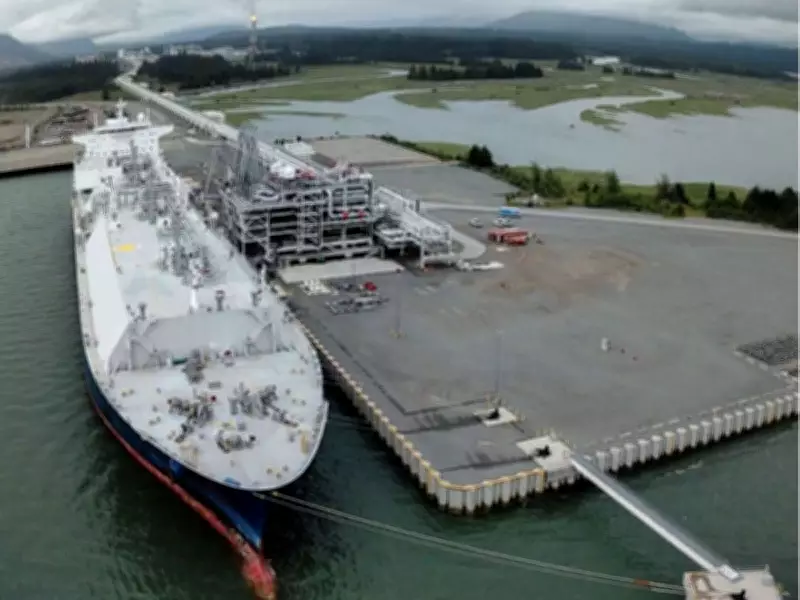
LNG Canada's Phase 1 facility, which began operations last June with 14 million tonnes annual capacity, established Canada's initial foothold in LNG exports. The proposed Phase 2 expansion would significantly increase this capacity. Meanwhile, Ksi Lisims LNG would add 12 million tonnes per year, complementing the smaller Cedar LNG project at Kitimat and Woodfibre LNG's Squamish facility, both currently under construction.
Market indicators reveal challenging conditions. Bloomberg reported an 11 percent decline in LNG shipments to China during 2025, with forecasts predicting a global supply glut as multiple projects come online between 2026 and the early 2030s. This oversupply scenario creates additional complexity for investment decisions requiring long-term commitments.
Corporate Responses and Decision Frameworks
Representatives from both British Columbia projects declined to directly address whether current market conditions would influence their final investment decisions. An LNG Canada spokesperson stated the company would not comment on individual shipping decisions or market speculation, emphasizing that no timeline has been established for a Phase 2 final investment determination.
The decision process will consider multiple factors including overall competitiveness, affordability, implementation pace, future greenhouse gas emissions, and stakeholder requirements. LNG Canada continues working with government partners to identify pathways for expansion while navigating complex global trade and tariff environments.
At Ksi Lisims LNG, where a decision could occur early this year, CEO Davis Thames characterized short-term LNG trading as logistics-dependent, noting such movements "mean nothing for long-term contracting decisions." This perspective suggests the company may be positioning itself to weather temporary market fluctuations while pursuing strategic long-term objectives.
Analyst Perspectives and Strategic Considerations
Industry analysts suggest both projects may be strategically positioned to wait out current market weakness. The global LNG supply glut expected through the early 2030s creates challenging conditions for new investment, but Canada's geographic advantages and established infrastructure provide potential competitive benefits.
The broader context includes increasing scrutiny of LNG development's environmental impacts, with British Columbia's CleanBC review indicating the province faces challenges meeting climate goals while expanding LNG infrastructure. These environmental considerations add another layer to already complex investment decisions.
As market conditions evolve, the final determinations for these major British Columbia projects will likely reflect careful balancing of multiple factors: current Asian market weakness, long-term demand projections, environmental commitments, and strategic positioning within the global energy transition.