As Alberta prepares its upcoming budget, the province's fiscal outlook has become increasingly unpredictable due to extreme volatility in global oil markets. University of Calgary economist Trevor Tombe delivered a stark warning this week, stating that while Alberta already experiences significant budget fluctuations driven by resource revenues, "going forward it's going to get even worse."
Deficit Projections Swing Wildly
Alberta's projected deficit has undergone dramatic revisions in recent weeks. Finance Minister Nate Horner initially forecast a $9.4-billion deficit for the fiscal year beginning April 1, based on West Texas Intermediate crude averaging US$60.50 per barrel. However, by Tuesday morning, that projection had theoretically shrunk to $1.1 billion as oil futures climbed to $72.60 per barrel.
Tombe calculates that if oil prices remained at Tuesday's midday level throughout the upcoming fiscal year, Alberta's deficit would shrink by more than $8 billion. The situation became even more remarkable when WTI crude closed at US$87.25 per barrel on Wednesday, potentially turning Alberta's deficit into a surplus if maintained through 2026-27.

Global Conflict Fuels Price Instability
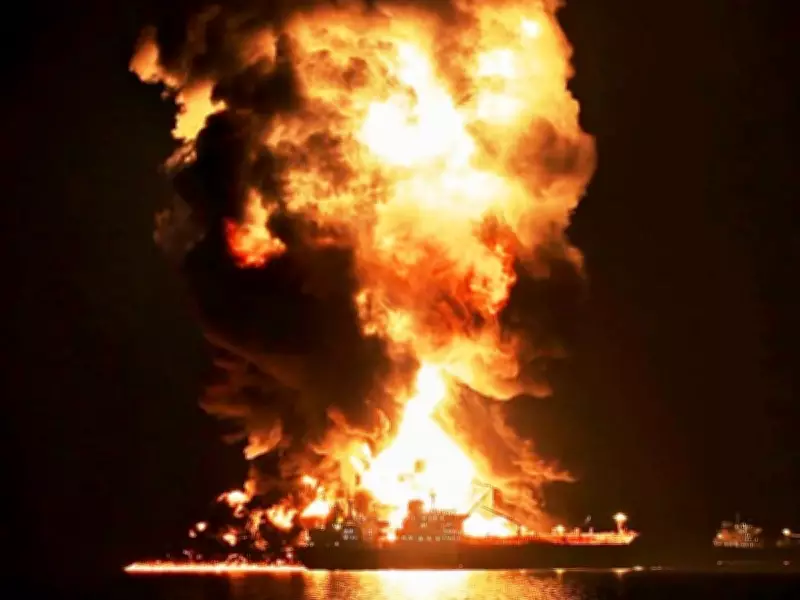
The Middle East conflict has created unprecedented turbulence in energy markets. Oil prices have swung wildly, reaching $119 per barrel at one point Monday before plummeting by more than $24 to close above $94. Recent attacks on commercial vessels in the Gulf have further destabilized the situation, with one tanker burning after being struck in the Khor al-Zubair port near Basra, Iraq.
"We have entered a new price regime here," said Ryan McKay, senior commodity strategist at TD Securities. "The likelihood of seeing these sky-high prices really just depends on the duration of this conflict. And as time goes on, it becomes more likely."
Potential for Extreme Price Scenarios
New forecasts suggest oil could potentially reach $200 per barrel if the Middle East conflict persists and continues disrupting global energy supplies. A TD Securities report released Wednesday indicates oil has been "repriced higher across all scenarios," with even an immediate end to hostilities unlikely to push Brent crude below $70 to $75 per barrel in the medium term.
McKay outlined different scenarios, noting that in the most optimistic outlook, prices would stabilize around $75. However, if the conflict continues for three months before the critical Strait of Hormuz reopens, prices could surge toward $150 per barrel by mid-April.
Royalty Revenue Roller-Coaster Intensifies
Tombe emphasized during his address at the University of Calgary's School of Public Policy that Alberta's fiscal situation faces unprecedented challenges. "We've talked about a royalty roller-coaster before, but we haven't seen anything yet," he stated, highlighting how global events now directly impact provincial finances.
The economist explained that resource revenues remain the key driver of Alberta's budget volatility, but current global conditions have amplified this effect. With approximately 20% of global oil supplies passing through the Strait of Hormuz, any disruption creates immediate price shocks that ripple through Alberta's royalty system.
Long-Term Implications for Provincial Planning
The extreme price variability creates significant challenges for long-term fiscal planning. Alberta's budget, which was already facing uncertainty, must now account for potential price swings of $100 or more per barrel within short timeframes. This makes accurate revenue forecasting nearly impossible and complicates essential government services planning.
Tombe's analysis suggests that even if prices stabilize at higher levels, the increased volatility means Alberta must prepare for more frequent and severe budget adjustments. The province's dependence on resource revenues leaves it particularly vulnerable to geopolitical events far beyond its control.
As global tensions continue to escalate, Alberta finds itself on the front lines of economic uncertainty, with its fiscal health tied directly to events unfolding thousands of kilometers away in the Middle East.