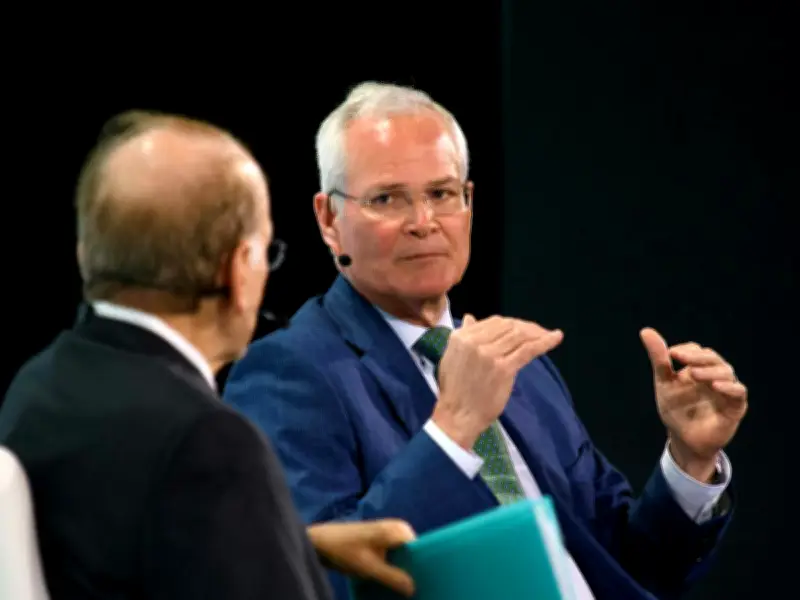
ExxonMobil's leaders were in a celebratory mood as they wound up the company's annual meeting in late May. They had just won a decisive victory over dissident shareholders opposing the oil company's proposal to move its legal domicile from New Jersey to Texas — a shift critics warned would dilute shareholder rights and set a precedent that other US corporations would follow.
Darren Woods, chair and chief executive of the world's largest non-state-owned oil company, told shareholders the group's oil and gas production was at a 40-year high and they could look forward to a future that would be “the brightest in the company's history.”
A Stunning Turnaround
Woods's upbeat assessment of Exxon's fortunes marks a stunning turnaround for the energy group. Five years earlier, a tiny hedge fund, Engine No. 1, which owned just 0.02 per cent of the company's shares, ousted three Exxon directors in a proxy battle waged over its weak climate policies and poor financial performance.

That followed a collapse in the company's share price during the pandemic when oil demand cratered due to lockdowns. For a brief moment, America's second-largest oil company Chevron surpassed its bitter rival in terms of market capitalization. Soon after, Exxon was dumped from the Dow Jones Industrial Average, the prestigious index of the top 30 listed US companies, a symbolic blow for an industry leader that traces its roots back to the founding of Standard Oil by business magnate John D. Rockefeller.
Woods Doubles Down on Oil
Some pundits questioned whether Woods, who was appointed chief executive in January 2017 and pursued a growth strategy focused on pumping more oil, could survive in an era when investors rewarded energy transition strategies. The election of three Engine No. 1 nominees to Exxon's board threatened to weaken his grip on strategy. But Woods, an electrical engineer from Kansas and 34-year Exxon veteran, did not waver.
While European rivals BP and Shell invested billions of dollars in wind and solar, Exxon and its partners committed US$60 billion to develop one of the world's largest oil discoveries in Guyana. In 2022 Exxon bought a stake in the world's biggest liquefied natural gas project in Qatar. A year later came the US$60 billion takeover of Pioneer Natural Resources, which made Exxon the largest producer and leaseholder in the Permian, the most prolific oilfield in the US.
Influencing Global Climate Policy
Woods has used his powerful role to influence global climate policy and regulation, as well as hammer green investor groups. According to the Financial Times, his aggressive stance has earned him the moniker "King of Big Oil" among industry observers. The 61-year-old executive answered only a handful of the 250 questions posed by shareholders during the virtual annual meeting, reflecting his firm control over the company's direction.
“When you step back and look across all of our businesses, it is clear nobody has built a kind of company we have,” Woods said during the meeting. Exxon's production levels are now at their highest in four decades, and the company's market value has rebounded strongly, surpassing Chevron and cementing its dominance in the sector.