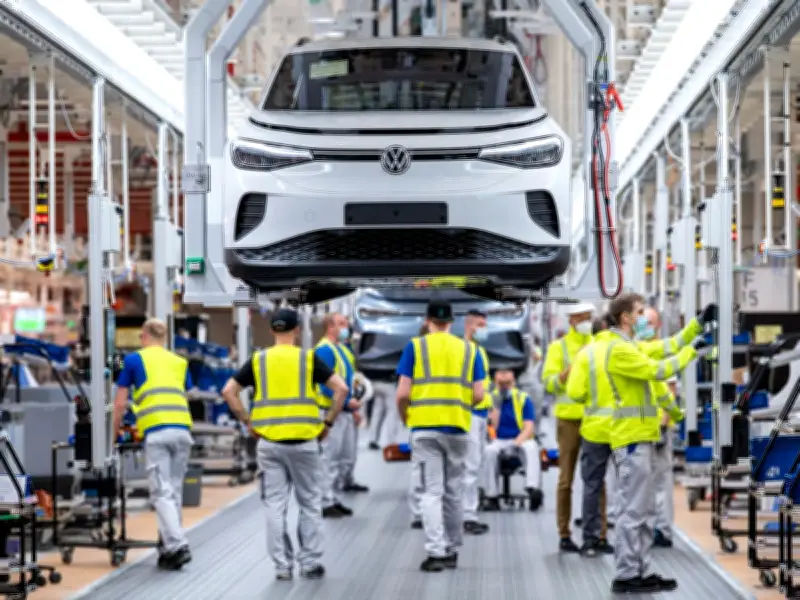
Volkswagen AG is planning to cut as many as 100,000 additional jobs and may close several factories in Germany, according to a report by Manager Magazin. The move is part of a sweeping restructuring effort by Chief Executive Officer Oliver Blume to make Europe’s largest automaker more competitive amid mounting pressures from US tariffs, weak demand in China, and rising competition from rivals such as BYD Co. and Stellantis NV.
Details of the Restructuring Plan
The plans, presented by Blume during a management board meeting earlier this week, include doubling previously announced staff reductions to up to 100,000, Manager Magazin reported Friday, citing people familiar with the matter. Volkswagen currently employs around 657,000 people globally. The report also indicated that the company may close four German factories in the medium term: an Audi site in Neckarsulm, and Volkswagen plants in Hanover, Zwickau, and Emden.
Blume’s renewed push involves cutting general overhead costs by €11 billion (US$12.5 billion) by the end of this decade. He is also considering separating components plants and the namesake Volkswagen brand to make the group leaner, the magazine said. The VW brand has long struggled with low profitability.

Broader Industry Struggles
Volkswagen’s streamlining efforts underscore the broader struggles of the German automotive industry. Mercedes-Benz Group AG plans to discuss deeper cost cuts with labour representatives, while BMW AG earlier this month issued a drastic profit warning that sent its shares tumbling. The challenges come as Chinese manufacturers aggressively expand into Europe, putting pressure on legacy automakers.
“Volkswagen has suffered from years of neglect in readjusting workforce numbers due to the stranglehold the regional government and trade unions,” said Matthias Schmidt, an independent auto analyst based near Hamburg. “Competition from Chinese manufacturers is hitting the German giant hardest.”
Union and Labour Opposition
Labour leaders quickly pushed back against the new plans. In a joint statement, the company’s works council and the IG Metall union said the plans “unsettle our workforce and the regions where we operate.” They added, “Should such plans be pursued, we would oppose them with all our might.”
Pushing through job cuts at Volkswagen is particularly difficult because worker representatives occupy half the seats on the carmaker’s supervisory board. The German state of Lower Saxony, which tends to side with unions, holds another two seats. This structure has often resulted in restructuring plans being watered down.
Progress and Market Reaction
Blume has already made some progress in streamlining operations. The company sold a 51% stake in its Everllence marine-engine unit to raise cash. About 28,000 workers have agreed to leave Volkswagen as part of a previously announced plan to reduce 50,000 workers across the group by 2030. Volkswagen has also reduced its production capacity from 12 million vehicles a year toward a more realistic nine million.
Volkswagen shares rose as much as 1.2% in Frankfurt following the report, though the stock is still down a quarter this year. A company spokesperson said Volkswagen “must undergo profound change” and that the executive board “has been working intensively over the past few months on a future-oriented plan to realign the company.” The spokesperson declined to comment on the specifics of the Manager Magazin report.