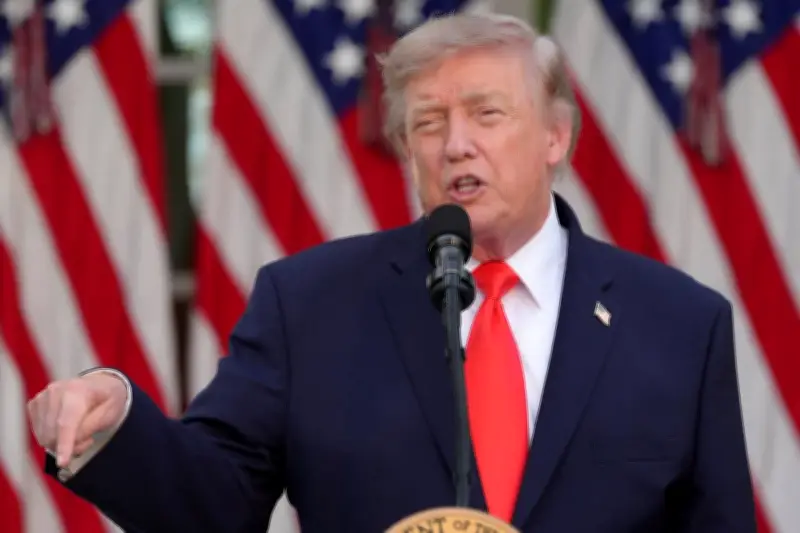
President Donald Trump has threatened to impose a 100% tariff penalty on any country that imposes a tax on digital services, escalating global trade tensions. The announcement was made on June 26, 2026, according to a report by The Associated Press.
Details of the Threat
Trump's warning targets nations that levy digital services taxes (DSTs), which are often aimed at large technology companies like Google, Apple, and Facebook. The proposed tariff would effectively double the cost of imports from those countries, potentially sparking retaliation and a broader trade war.
The move is seen as an effort to protect U.S. tech firms from what the administration views as discriminatory taxation. Several countries, including France, Italy, and the United Kingdom, have implemented or proposed DSTs, arguing that tech giants must pay their fair share of taxes where they generate revenue.

Impact on Trade Relations
Experts warn that such a tariff could disrupt global supply chains and increase costs for consumers. The threat comes amid ongoing negotiations over digital taxation at the Organisation for Economic Co-operation and Development (OECD), where more than 130 countries have agreed to a framework for reallocating taxing rights on multinational enterprises.
According to trade analysts, the 100% tariff would be unprecedented in its severity and could lead to a cascade of retaliatory measures from affected nations. The European Union has previously threatened to impose tariffs on U.S. goods in response to American trade actions.
Reactions from Affected Countries
French Finance Minister Bruno Le Maire stated, "Digital services taxes are a matter of fairness. We will not be intimidated by threats." Similarly, Italy's Economy Minister Giancarlo Giorgetti called the tariff proposal "unacceptable" and vowed to defend Italian interests.
The U.S. Trade Representative's office has not yet commented on the specifics of the threat. However, the administration has previously used tariffs as leverage in trade disputes, including a 25% tariff on steel and 10% on aluminum imports from several countries.
Potential Economic Consequences
The Peterson Institute for International Economics estimates that a 100% tariff on goods from countries with DSTs could reduce U.S. imports by up to $200 billion annually. Consumers would likely face higher prices for electronics, automobiles, and other imported goods.
American tech companies, while potentially benefiting from reduced tax burdens abroad, could face backlash and boycotts in foreign markets. The threat also risks undermining ongoing OECD negotiations, which aim to create a stable global tax framework.