

Global Markets Rebound as Trump Signals Potential End to Iran Conflict
Global share markets experienced a widespread rebound on Tuesday, March 24, 2026, following remarks from former U.S. President Donald Trump that hinted at a potential conclusion to the ongoing conflict with Iran. The positive shift in investor sentiment came even as Iranian officials denied any negotiations were taking place, creating a complex geopolitical backdrop for financial movements.
Market Reactions to Geopolitical Developments
The financial markets responded swiftly to the perceived de-escalation in Middle East tensions. Stock indices across major economies showed notable gains, while oil prices experienced a significant decline as traders anticipated reduced supply disruptions. This market movement represents a dramatic reversal from previous sessions dominated by concerns about prolonged conflict and its economic implications.
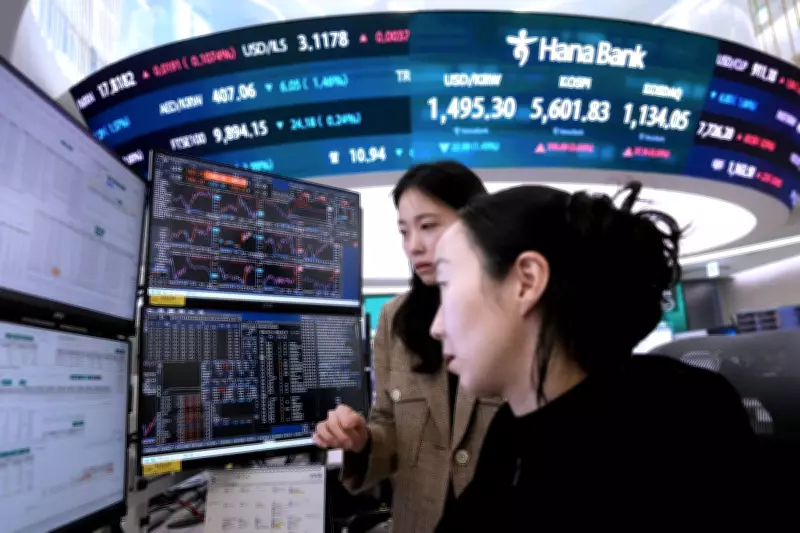
Currency traders at Hana Bank headquarters in Seoul, South Korea, closely monitored the Korea Composite Stock Price Index (KOSPI) and foreign exchange rates as the news unfolded. The visual of financial professionals watching market fluctuations in real-time underscored the immediate impact of geopolitical developments on global capital flows.

Broader Economic Context and Implications
The market rebound occurred against a backdrop of ongoing economic challenges, including inflationary pressures that have been exacerbated by geopolitical instability. The Iran conflict has been a significant driver of market turbulence in recent months, directly impacting the cost of living for consumers worldwide through elevated energy prices and supply chain disruptions.
Financial analysts noted that while the market response was positive, underlying economic fundamentals remain fragile. The potential resolution of geopolitical tensions could provide much-needed stability to global markets, but investors continue to monitor multiple risk factors including central bank policies, inflation trends, and other international conflicts.
Contrasting Official Statements and Market Interpretation
Despite Iranian denials of any peace negotiations, financial markets appeared to give substantial weight to Trump's comments. This divergence between official diplomatic statements and market interpretation highlights how geopolitical signals can sometimes influence financial markets more than verified diplomatic progress.
The situation demonstrates the complex relationship between political developments and economic outcomes, where perception often drives market behavior as much as concrete policy changes. Investors will continue to watch for further developments that might confirm or contradict the initial market optimism sparked by Trump's remarks.
This market movement represents a significant moment in the intersection of geopolitics and global finance, showing how quickly capital can respond to perceived shifts in international relations.






