

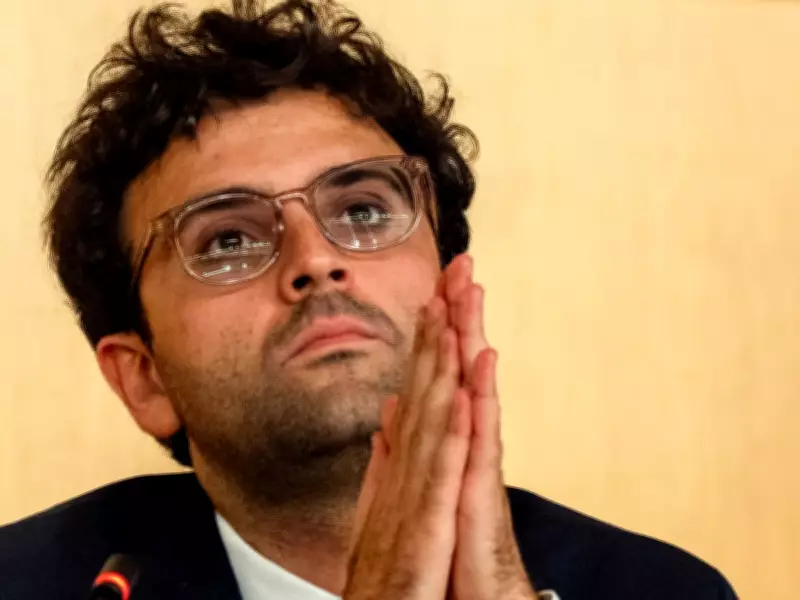
Kalshi CEO Tarek Mansour: 'We're Pricing the Future'
Tarek Mansour, the co-founder and chief executive of America's largest prediction market platform Kalshi, passionately advocates for these innovative financial tools as modern oracles that can educate the public and potentially reshape political discourse. In a recent interview, Mansour elaborated on his vision for prediction markets, touching on the concept of 'wisdom of the crowd,' the challenges of political polarization, and the notable involvement of advisor Donald Trump Jr..
The Philosophy Behind Prediction Markets
Mansour repeatedly emphasizes his deep belief in prediction markets, describing them as multifaceted instruments that serve as:
- A modern oracle for forecasting future events
- An innovative asset class for investors
- A public education tool on probabilities and outcomes
- A new form of journalism through data-driven insights
- A potential political savior by aggregating diverse opinions
"We're making the world a little bit smarter about the future, and I think that's a very valuable thing to build," Mansour explains. "It's not something that you should take as the Holy Grail truth, but it's better than the alternatives."

How Prediction Markets Operate
The fundamental concept behind platforms like Kalshi is both simple and powerful. Participants trade shares based on future events—such as whether it will rain in New York on a particular day. These shares are redeemable for $1 if the event occurs and $0 if it does not. The trading price before the event (for example, 74 cents) can therefore be interpreted as the market's collective probability assessment (74% chance of rain).
"When people talk about, 'We believe in markets,' what do they actually believe?" Mansour questions. "What it means is that you believe that they're a good way to figure out what the price of something is... And in this case, we're pricing the future."
Kalshi's Remarkable Growth and Valuation
Recent venture capital investments have valued Kalshi at an impressive US$11 billion, transforming both founders into paper billionaires. Mansour's co-founder, Luana Lopes Lara, has been recognized by Forbes as the world's youngest self-made woman billionaire. The two met while studying computer science and mathematics at MIT as international undergraduates—Mansour from Lebanon and Lopes Lara from Brazil—before beginning their careers at investment banks and hedge funds.
Personal Background and Market Origins
During the interview at Serafina, an Italian restaurant in Manhattan's Meatpacking District near Kalshi's offices, the 29-year-old CEO shared his origin story. Mansour, wearing a cream-colored hoodie and thick glasses with slightly tinted lenses, revealed he hasn't been sleeping well lately, his dark curly hair falling over one side of his forehead.
He recounted how in 2016, while working at Goldman Sachs Group Inc., his desk was actively trading on Brexit and the election of Donald Trump. They developed what became known as the "Trump trade"—a calendar spread that effectively created a short position on the S&P 500 timed to the week of the election.
This experience with political event trading helped shape his understanding of how markets could be used to predict and price future outcomes beyond traditional financial instruments.
The Restaurant Setting and Atmospheric Details
The interview took place in an unexpectedly empty Serafina restaurant that was actually locked when the journalist arrived at the appointed time of 11:30 AM. The waiter, Angel, unbolted the heavy door and seated the journalist at a corner table with a plush banquette. The establishment featured rough brick walls, unfinished wood floors, a few small tables, a large bar, and a radiant portrait of a woman decorating one wall.
Adding to the unusual atmosphere, Angel turned on dance music that blared through the empty restaurant just for the two occupants. Outside, the New York sky presented a threatening grey hue, while Kalshi traders were simultaneously forecasting a 74 percent chance of rain—a real-time example of the prediction markets in action.

The Broader Context of Prediction Markets
Prediction markets represent a growing segment of financial technology that seeks to quantify collective intelligence. When these markets achieve sufficient size and liquidity, they theoretically capture and broadcast what economists call the "wisdom of the crowd"—the aggregated knowledge of diverse participants often proving more accurate than individual expert predictions.
Mansour's vision extends beyond simple event forecasting to positioning Kalshi as a platform that can potentially mitigate political polarization by objectively quantifying probabilities of various outcomes, though this ambitious goal faces significant challenges in today's divided political landscape.





