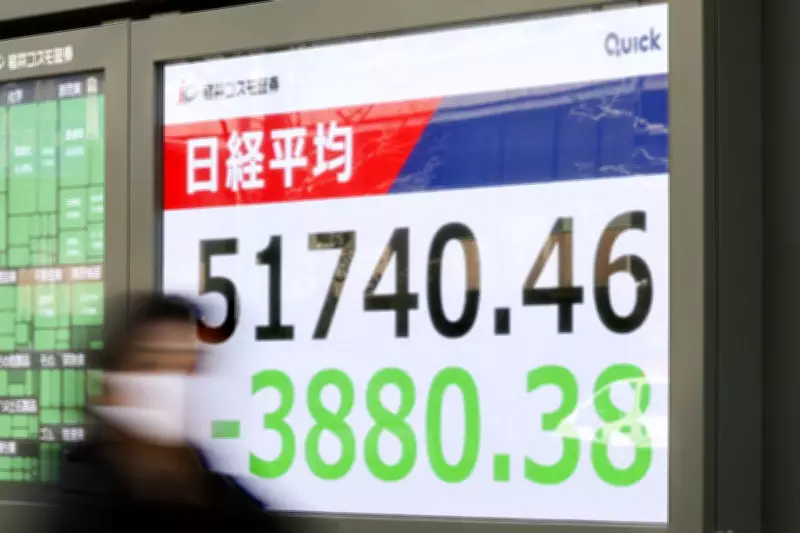
Global financial markets entered a period of significant volatility on Monday, March 9, 2026, as fears of a widening conflict involving Iran sent shockwaves through international trading floors. The immediate catalyst was a dramatic surge in crude oil prices, which breached the critical threshold of $110 per barrel. This sharp increase in energy costs triggered a broad sell-off in equity markets worldwide, with investors fleeing riskier assets amid growing anxiety over potential economic repercussions.
Market Reaction to Geopolitical Tensions
The sell-off was pronounced across major indices. In Asia, Japan's benchmark Nikkei index fell sharply, reflecting the region's sensitivity to energy price fluctuations. European and North American markets opened with heavy losses, extending the downward trend. Analysts pointed to the direct impact of higher oil prices on corporate profitability and consumer spending power, which could stifle economic growth and exacerbate inflationary pressures already present in many economies.
Broader Economic Implications
The surge past $110 a barrel represents a psychological and economic milestone. Energy analysts warn that sustained prices at this level could lead to increased costs for transportation, manufacturing, and heating, effectively acting as a tax on consumers and businesses alike. Central banks, which have been grappling with inflation for several years, may face renewed pressure to maintain or even tighten monetary policy, potentially slowing economic activity further.

This market movement underscores the fragile interdependence of global energy markets and financial stability. Historical data suggests that oil price spikes often precede or coincide with periods of economic uncertainty or recession. The current situation is further complicated by the geopolitical source of the disruption, making the duration and ultimate resolution highly unpredictable.
Investor Sentiment and Future Outlook
Market sentiment has turned decidedly cautious. Traders are closely monitoring diplomatic developments in the Middle East, as any escalation or de-escalation could prompt rapid price reversals. Portfolio managers are advising a defensive stance, emphasizing holdings in sectors less sensitive to energy costs or those that may benefit from inflation, such as certain commodities or utilities.
Furthermore, the volatility highlights the ongoing challenges in the global transition to renewable energy. While investment in green technology continues, the immediate dominance of fossil fuels in the world's energy mix means geopolitical events in oil-producing regions retain immense power to disrupt financial markets and economic planning worldwide.