Investors are confronting a significantly cloudier outlook for Federal Reserve monetary policy as escalating military tensions in the Middle East grip global financial markets. The conflict involving Iran has injected fresh volatility, sending oil prices surging and complicating the central bank's inflation fight.
Market Turmoil Reshapes Rate Expectations
Recent developments have forced major financial institutions to reassess their projections for Federal Reserve interest rate adjustments. Morgan Stanley has joined other Wall Street peers in pushing back forecasts for anticipated rate cuts, citing persistent inflation pressures that are now exacerbated by geopolitical instability.
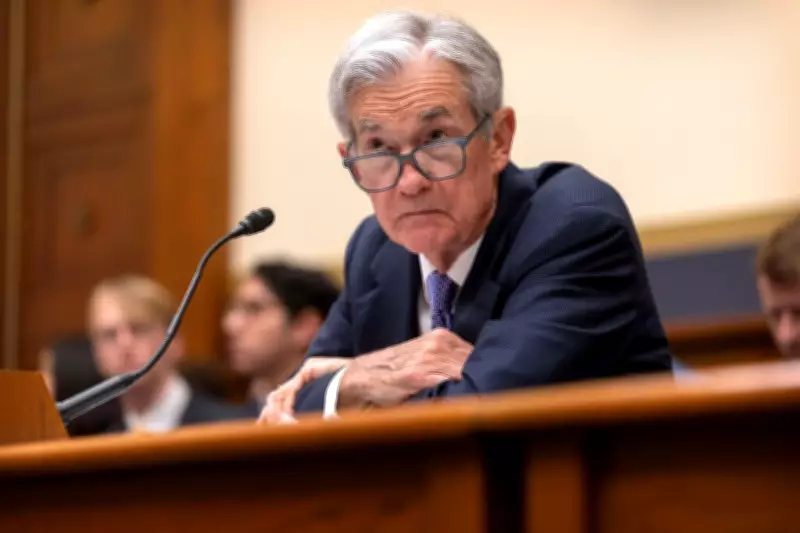
The situation presents a complex challenge for Fed Chair Jerome Powell and the Federal Open Market Committee as they navigate conflicting economic signals. While domestic economic indicators had previously suggested a path toward monetary easing, the new geopolitical reality threatens to reignite inflationary forces through energy markets.

Oil Price Surge Complicates Inflation Picture
Brent crude futures have climbed sharply following the escalation of Middle East hostilities, with prices approaching levels not seen since earlier volatility periods. This development poses a direct threat to the Federal Reserve's inflation containment efforts, as higher energy costs typically filter through to broader consumer prices.
"The geopolitical premium in oil markets has returned with vengeance," noted one market analyst. "This creates a perfect storm for central bankers trying to engineer a soft landing while containing price pressures."
Global Financial Markets React
Equity markets have experienced notable declines, particularly in emerging market segments, as investors seek safer assets amid the uncertainty. The traditional flight to quality has strengthened the U.S. dollar while putting pressure on riskier assets across multiple sectors.
European markets face additional strain as the European Union scrambles to contain energy cost impacts from the Middle East conflict. The situation has exposed vulnerabilities in global energy supply chains and highlighted the interconnected nature of modern financial systems.
Broader Economic Implications
The market turbulence arrives at a delicate moment for global economic coordination. Trade negotiations between the United States and Canada are reportedly lagging behind progress with Mexico, according to U.S. Trade Representative Katherine Tai, adding another layer of complexity to North American economic relations.
Meanwhile, the Canadian government has announced substantial investments in domestic munitions production, earmarking $1.4 billion for facilities in Quebec and Ontario. This defense spending initiative reflects broader concerns about supply chain security in an increasingly volatile global landscape.
As investors recalibrate their expectations, the Federal Reserve's upcoming policy meetings will be scrutinized for any signals about how central bankers plan to navigate this new environment of geopolitical uncertainty combined with persistent domestic inflation concerns.